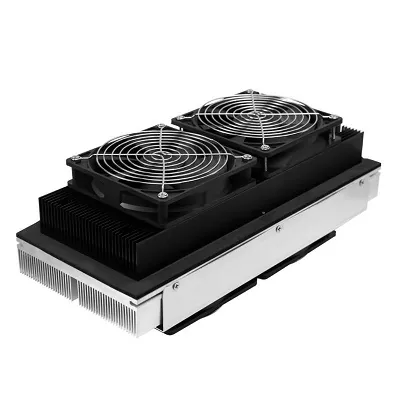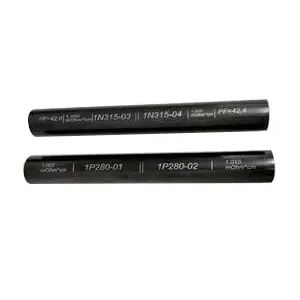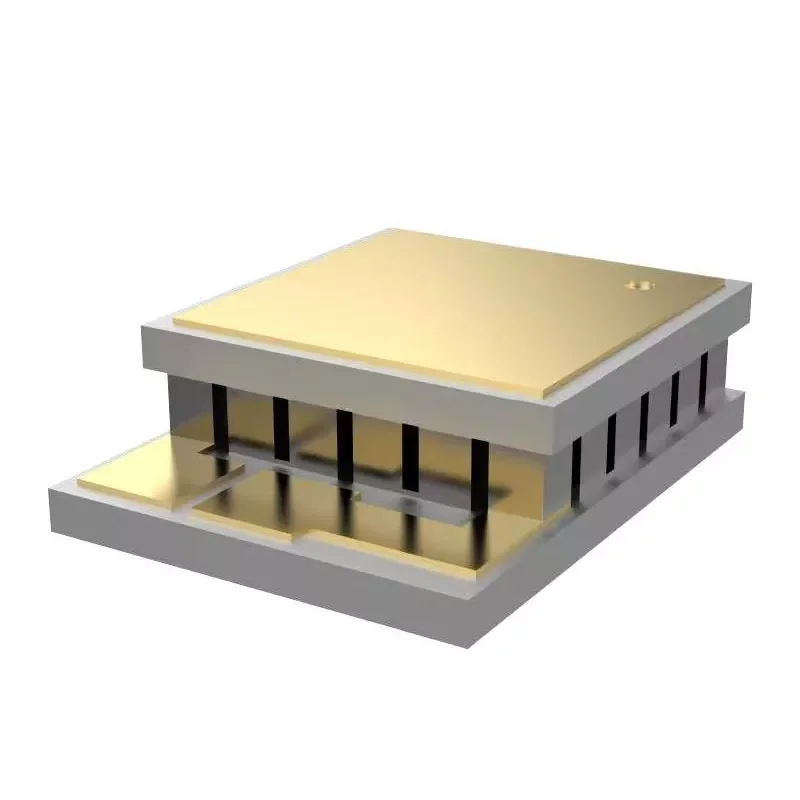
Precision equipment—laser diodes, CCD sensors, analytical instruments, medical devices—has a thermal requirement that is measured in fractions of a degree. A drift of 0.5°C can shift a laser wavelength, introduce noise into a sensor, or compromise the accuracy of a measurement. The Thermoelectric Cooler selected for these applications must do more than provide cooling capacity. It must provide stable, repeatable, and predictable thermal control over the life of the equipment. The performance data that a supplier provides is the basis for that selection. If the data is incomplete, measured under unrealistic conditions, or not representative of the actual operating point, the cooler will underperform in the field. For procurement engineers and design teams, knowing which performance data matters is the difference between a reliable thermal design and a costly redesign.
This guide is written for buyers who are evaluating Thermoelectric Coolers for precision equipment. We will explain the key performance parameters—temperature differential, cooling capacity, coefficient of performance, current and voltage requirements, thermal stability, and reliability—and how each one affects the precision application. We will also provide guidance on how to read a performance curve, how to compare data from different suppliers, and the criteria for evaluating a supplier. We will provide detailed product parameters from our factory at Fuzhou X-Meritan Technology Co., Ltd. Whether you are cooling a photodetector, a reference crystal, or a precision laser, this guide will help you select the right cooler based on the right data.
Temperature differential, or ΔT, is the difference between the hot side and the cold side of the Thermoelectric Cooler. It is the first data point to examine because it defines the cooler's fundamental capability. A single-stage cooler can achieve a maximum ΔT of about 65°C to 70°C, but the cooling capacity at that ΔT is zero. In practice, the cooler is operated at a ΔT where it can provide the required cooling capacity. The data sheet should provide a curve of ΔT versus cooling capacity at a specified hot-side temperature. The buyer must examine this curve to determine whether the cooler can achieve the required ΔT at the required cooling load. The table below shows how to read the ΔT data.
| Parameter | What It Tells You | What to Check |
| Maximum ΔT | Theoretical limit at zero load | Not the operating point |
| ΔT at Required Load | Actual temperature difference achievable | Must meet or exceed the application requirement |
| Hot-Side Temperature | Reference for the ΔT data | Must match the actual heat sink temperature |
| ΔT vs. Current | Effect of input current on ΔT | Shows the optimal operating current |
At X-Meritan, our factory provides complete ΔT versus cooling capacity curves for every Thermoelectric Cooler we manufacture. The curves are measured at multiple hot-side temperatures and input currents so that the buyer can evaluate the cooler at the actual operating point. Our goal is to provide the data that our customers need to make an accurate selection.
The cooling capacity curve shows the amount of heat the Thermoelectric Cooler can pump at a given ΔT and input current. It is typically presented as a family of curves, one for each input current, with ΔT on the horizontal axis and cooling capacity on the vertical axis. The curve intersects the vertical axis at the maximum cooling capacity (at ΔT = 0) and the horizontal axis at the maximum ΔT (at zero cooling capacity). The operating point is where the application's required cooling load intersects the curve for the selected input current. The buyer must ensure that the operating point is within the cooler's capability and that there is adequate margin for variation in ambient temperature and load. The table below explains how to read the curve.
| Curve Feature | Meaning | Selection Implication |
| Vertical Axis Intercept | Maximum cooling capacity at ΔT = 0 | Upper limit of cooling capability |
| Horizontal Axis Intercept | Maximum ΔT at zero load | Upper limit of temperature differential |
| Curve Shape | Nonlinear relationship between ΔT and capacity | Capacity drops rapidly at high ΔT |
| Current Family | Curves for different input currents | Higher current increases capacity but also heat load |
| Operating Point | Intersection of load line and current curve | Must be within the cooler's capability with margin |
At our factory, we provide cooling capacity curves at multiple hot-side temperatures and input currents for our Thermoelectric Coolers. We also provide application support to help our customers determine the operating point for their specific load and ambient conditions. Our goal is to ensure that the selected cooler has adequate capacity and margin for the precision application.
The coefficient of performance (COP) is the ratio of cooling capacity to input power. It is a measure of the cooler's efficiency. For precision equipment, COP matters for two reasons. First, a higher COP means lower power consumption and less heat rejection, which is important in compact enclosures where heat dissipation is limited. Second, a higher COP means that the cooler generates less internal heat, which reduces the thermal load on the hot side and improves the stability of the cold side. The COP of a Thermoelectric Cooler decreases as ΔT increases, so the buyer must evaluate the COP at the actual operating point, not at the maximum ΔT. The table below shows the COP at different ΔT values.
| ΔT | Typical COP | Implication |
| 10°C | 1.5 - 2.0 | High efficiency, low power |
| 20°C | 1.0 - 1.5 | Moderate efficiency |
| 30°C | 0.6 - 1.0 | Lower efficiency, higher power |
| 40°C | 0.3 - 0.6 | Low efficiency, significant heat rejection |
| 50°C | 0.1 - 0.3 | Very low efficiency, not practical for most applications |
At our factory, we provide COP data for our Thermoelectric Coolers across the full range of ΔT and input current. We can help our customers evaluate the trade-off between cooling capacity and power consumption for their specific application. Our goal is to help our customers achieve the required thermal performance with the lowest practical power consumption.
The electrical data for a Thermoelectric Cooler includes the maximum input current, the maximum input voltage, and the AC ripple tolerance. The maximum input current is the current at which the cooler achieves its maximum cooling capacity. The maximum input voltage is the voltage at which the cooler achieves its maximum ΔT. The AC ripple tolerance is the maximum allowable ripple in the DC power supply; excessive ripple reduces the cooler's performance and can damage the module. The buyer must specify a power supply that meets these requirements and that provides adequate filtering to keep the ripple within tolerance. The table below summarizes the electrical data that should be specified.
| Parameter | Description | Specification Requirement |
| Maximum Input Current | Current at maximum cooling capacity | Power supply must provide at least this current |
| Maximum Input Voltage | Voltage at maximum ΔT | Power supply must provide at least this voltage |
| AC Ripple Tolerance | Maximum allowable ripple | Typically < 5% of DC value |
| Operating Voltage Range | Range of voltage for stable operation | Must cover the application's operating point |
At our factory, we provide complete electrical data for our Thermoelectric Coolers, including the maximum current and voltage, the ripple tolerance, and the recommended power supply specifications. We can help our customers select a power supply that meets the cooler's requirements. Our goal is to ensure that the cooler operates reliably and efficiently in the precision application.
Thermal stability and control accuracy are critical for precision equipment. The Thermoelectric Cooler must maintain the cold-side temperature within a narrow band—often +/- 0.1°C or better—over time and under varying ambient conditions. The stability depends on the cooler's thermal mass, the control system, and the quality of the thermal interface. The control accuracy depends on the sensor, the controller, and the response time of the cooler. The buyer should request data on the cooler's temperature stability and control accuracy, and should evaluate the control system that will be used. The table below summarizes the stability and accuracy parameters.
| Parameter | Description | Typical Requirement |
| Temperature Stability | Variation over time at steady state | +/- 0.1°C or better |
| Control Accuracy | Difference between setpoint and actual | +/- 0.05°C or better |
| Response Time | Time to reach setpoint after change | Depends on thermal mass and controller |
| Thermal Interface | Contact between cooler and load | High-conductivity interface material |
At our factory, we provide thermal stability data for our Thermoelectric Coolers and can recommend controllers and thermal interface materials that meet the precision requirements. We can also work with our customers to design a thermal control system that achieves the required stability and accuracy. Our goal is to provide a complete thermal solution, not just a cooler.
Reliability data is essential for precision equipment because a cooler failure can cause equipment downtime, data loss, or safety issues. The supplier should provide data on the cooler's expected life, failure rate, and performance degradation over time. The expected life is typically expressed as the number of hours at a specified operating condition before the cooling capacity drops below a defined threshold. The failure rate is often expressed as the mean time between failures (MTBF). The performance degradation is the gradual loss of cooling capacity due to thermal cycling and material aging. The buyer should evaluate this data against the application's reliability requirements. The table below summarizes the reliability data that should be provided.
| Parameter | Description | What to Evaluate |
| Expected Life | Hours at operating condition | Must exceed application's service life |
| MTBF | Mean time between failures | Must meet application's reliability target |
| Performance Degradation | Loss of capacity over time | Must remain within acceptable limits |
| Thermal Cycling Endurance | Number of cycles before failure | Must exceed application's cycle count |
At our factory, we provide reliability data for our Thermoelectric Coolers based on accelerated life testing and field data. We can help our customers evaluate the reliability of the cooler for their specific application. Our goal is to provide coolers that meet the reliability requirements of precision equipment.
The following table provides the key product parameters for our Thermoelectric Coolers for precision equipment. These coolers are available in single-stage and multi-stage configurations to meet different temperature differential and cooling capacity requirements. Our factory can also produce custom coolers to meet specific requirements.
| Parameter | Single-Stage | Multi-Stage |
| Maximum ΔT (Th=27°C) | 65°C - 70°C | 90°C - 130°C |
| Cooling Capacity | Up to 200W | Up to 50W (at high ΔT) |
| Input Voltage | 12V - 48V DC | 12V - 48V DC |
| Maximum Current | Up to 10A | Up to 15A |
| COP at ΔT=20°C | 1.0 - 1.5 | 0.5 - 1.0 |
| Temperature Stability | +/- 0.1°C (with controller) | +/- 0.05°C (with controller) |
| Expected Life | 50,000 - 100,000 hours | 30,000 - 50,000 hours |
| MOQ | 10 pieces | 10 pieces |
| Lead Time | 2 - 4 weeks | 3 - 6 weeks |
At our factory, we manufacture our Thermoelectric Coolers to meet these specifications and more. We provide complete performance data, electrical data, thermal stability data, and reliability data for every cooler we supply. Our goal is to provide our customers with the data they need to select the right cooler for their precision application.
Question 1: What is the most important performance data for a precision thermoelectric cooler?
Answer: The most important data is the cooling capacity curve at the actual operating point. This curve shows the cooling capacity at the required ΔT and input current, and it is the basis for determining whether the cooler can meet the thermal load. The ΔT versus current curve, the COP, and the thermal stability data are also important. At Fuzhou X-Meritan Technology Co., Ltd., we provide all of this data for our Thermoelectric Coolers.
Question 2: How do I read a cooling capacity curve?
Answer: The cooling capacity curve is a family of curves, one for each input current, with ΔT on the horizontal axis and cooling capacity on the vertical axis. The operating point is where the required cooling load intersects the curve for the selected current. The curve intersects the vertical axis at the maximum cooling capacity (ΔT=0) and the horizontal axis at the maximum ΔT (zero cooling capacity). The buyer should ensure that the operating point is within the cooler's capability with adequate margin.
Question 3: Why does COP matter for precision equipment?
Answer: COP matters because it determines the power consumption and the heat rejection. A higher COP means lower power consumption and less internal heat generation, which improves the stability of the cold side and reduces the thermal load on the hot side. For precision equipment in compact enclosures, a high COP is important for maintaining stable temperature control.
Question 4: What reliability data should I request from a supplier?
Answer: Request the expected life, the MTBF, the performance degradation over time, and the thermal cycling endurance. The expected life should exceed the application's service life. The MTBF should meet the application's reliability target. The performance degradation should remain within acceptable limits. At Fuzhou X-Meritan Technology Co., Ltd., we provide this data based on accelerated life testing and field data.
Question 5: How do I achieve +/- 0.1°C temperature stability?
Answer: Achieving +/- 0.1°C stability requires a combination of a high-quality Thermoelectric Cooler, a precise temperature controller, a high-resolution sensor, and a well-designed thermal interface. The cooler should have low thermal mass and a fast response time. The controller should use PID control with a high-resolution ADC. The sensor should be located close to the load. The thermal interface should use a high-conductivity material to minimize contact resistance. Our team can help you design a thermal control system that meets your stability requirement.
Evaluating Thermoelectric Coolers for precision equipment requires more than a single number. The buyer must examine the ΔT versus cooling capacity curve at the actual operating point, the COP, the electrical requirements, the thermal stability and control accuracy, and the reliability data. Each of these parameters affects the cooler's ability to maintain the precise temperature that the equipment requires. By requesting complete and accurate data from the supplier, and by evaluating that data against the application's requirements, buyers can select a cooler that delivers stable, reliable performance over the life of the equipment. At Fuzhou X-Meritan Technology Co., Ltd., our factory provides complete performance data, electrical data, stability data, and reliability data for our Thermoelectric Coolers. We work with our customers to ensure that the selected cooler meets their precision requirements.
Whether you are cooling a laser diode, a CCD sensor, an analytical instrument, or a medical device, we invite you to contact us to discuss your requirements. We can provide samples, detailed data, and application support. Our commitment to quality and customer satisfaction has made us a trusted partner for precision thermal management projects around the world.
Contact Fuzhou X-Meritan Technology Co., Ltd. today to discuss your Thermoelectric Cooler requirements and discover how our performance data and application support can help you achieve precise thermal control.