
Abstract
Compact, localized temperature management has become a defining requirement across optical, medical, automotive, and research equipment. This engineering overview examines how modern Thermoelectric Cooler Assemblies are designed, the material systems that underpin their performance, and the mechanical and thermal properties that determine long-term reliability. Design considerations for custom configurations, production quality standards, and application-specific selection criteria are presented in a structured format suitable for technical decision-makers.
Table of Contents
- What Are Thermoelectric Cooler Assemblies and How Do They Work
- Core Material Systems Behind Modern Assemblies
- Mechanical and Thermal Properties That Matter
- Application Domains Across Industries
- Design Considerations for Custom Assemblies
- Quality, Production, and Compliance
- Frequently Asked Questions
What Are Thermoelectric Cooler Assemblies and How Do They Work
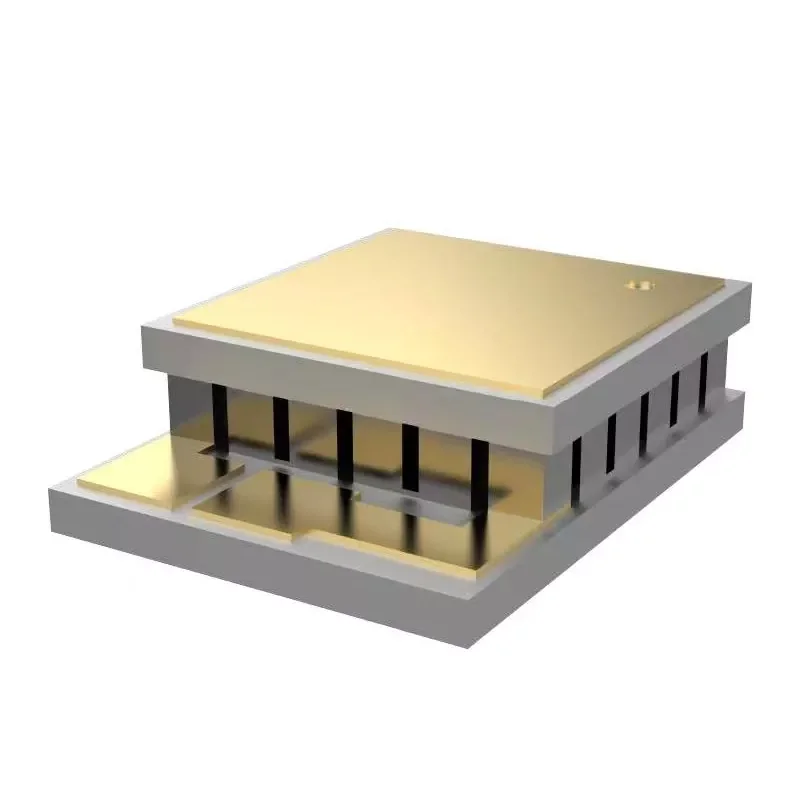
A thermoelectric cooler assembly is more than a collection of semiconductor pellets. It is a complete thermal management subsystem that integrates thermoelectric materials, electrical interconnects, ceramic substrates, thermal interfaces, and often control electronics into a package designed to move heat with precision. Understanding how these assemblies function — and how their components interact — is essential for engineers specifying thermal solutions in space-constrained, vibration-sensitive, or precision-critical equipment.
The Peltier Effect in Assembly Form
When direct current flows through a circuit formed by two dissimilar semiconductor materials, one junction absorbs heat while the other releases it. This reversible phenomenon, known as the Peltier effect, forms the operating principle of every thermoelectric cooling assembly. Reversing the current direction swaps the hot and cold sides, enabling a single assembly to provide either cooling or heating according to the control requirement.
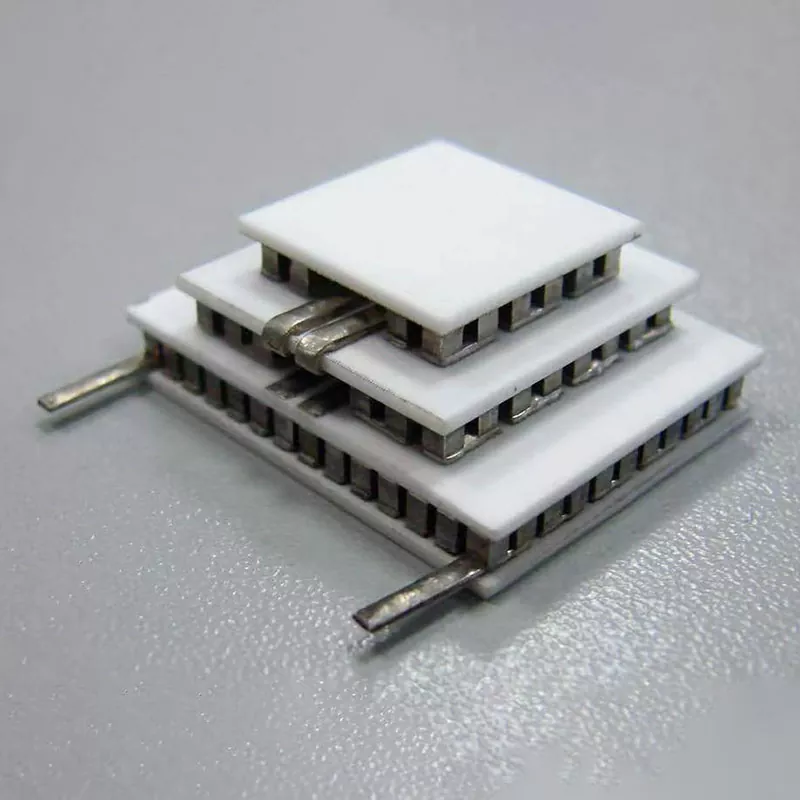
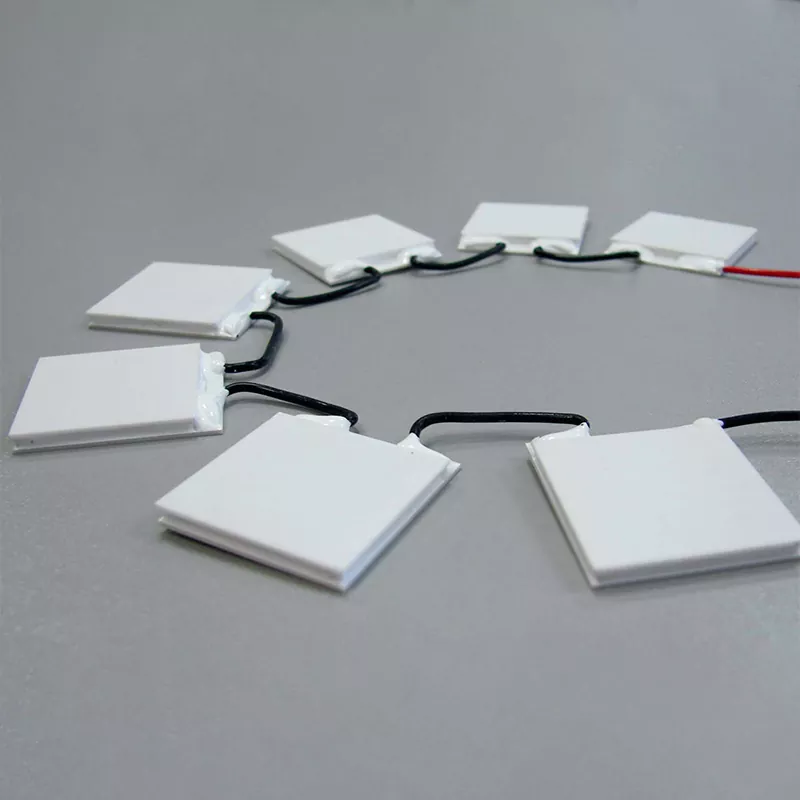
In a practical assembly, dozens to hundreds of P-type and N-type semiconductor pellets are arranged electrically in series and thermally in parallel. The pellets are sandwiched between ceramic substrates that conduct heat while providing electrical insulation. Metal traces and solder joints connect the pellets into a continuous circuit. The completed assembly can be as small as a few square millimeters or as large as several square centimeters, depending on the required cooling capacity.
From Material to Module to Assembly
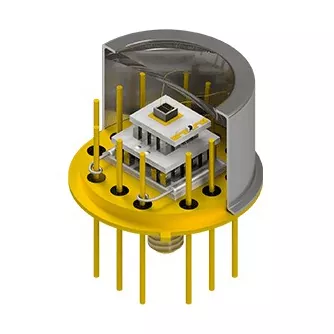
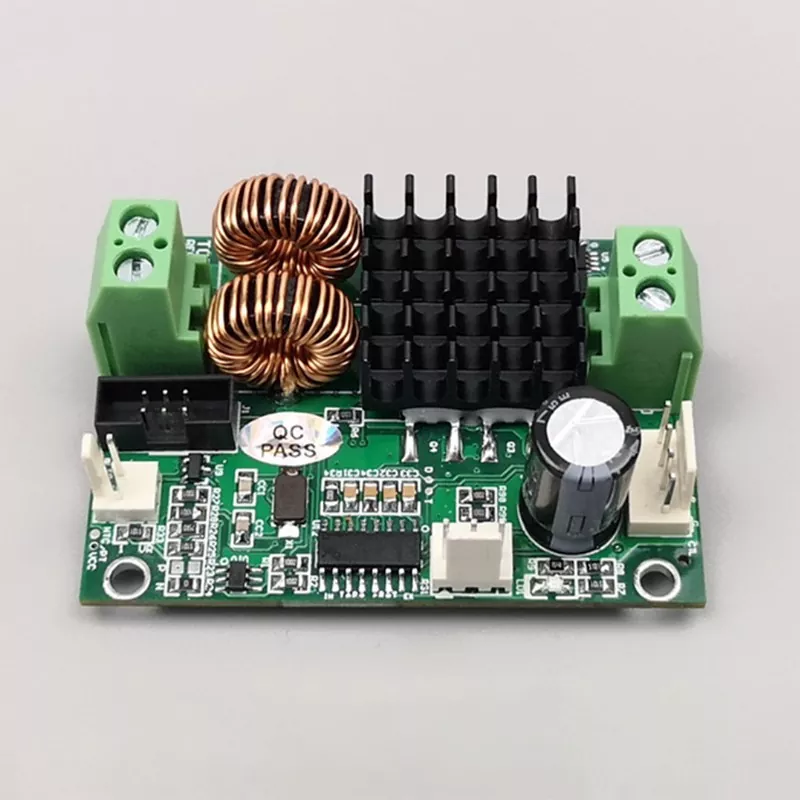
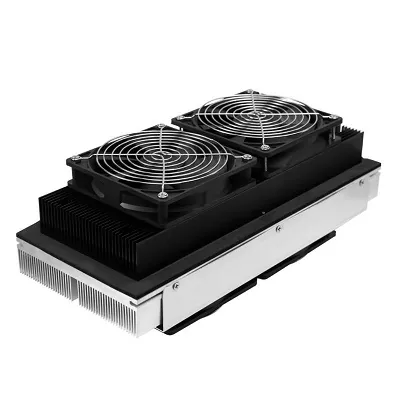
The distinction between a material, a module, and an assembly matters. Thermoelectric materials are the raw semiconductor compounds — extruded ingots, slices, or pellets — that exhibit the Peltier effect. A module, often called a TEC, consists of these pellets assembled between ceramic plates with electrical connections. An assembly adds application-specific elements: mounting hardware, thermal interface materials, heat sinks, fans, temperature sensors, control electronics, and sealing or encapsulation to protect against moisture and contamination.
This layered progression means that performance at the assembly level depends not only on the intrinsic properties of the thermoelectric material but also on every interface, joint, and packaging decision made during integration. A superior material paired with a poor thermal interface will underperform a modest material with an optimized assembly. This is why suppliers who control both material development and assembly production can evaluate performance in the context of the final application rather than in isolation.
Core Material Systems Behind Modern Assemblies
Bismuth telluride (Bi₂Te₃) and its related alloys remain the dominant material system for near-room-temperature thermoelectric cooling. Within this family, Bi₂Te₃-Sb₂Te₃ compositions are widely used for P-type elements, while Bi₂Te₃-Bi₂Se₃ compositions serve N-type roles. The specific composition, doping level, and processing route determine the electrical conductivity, Seebeck coefficient, and thermal conductivity that ultimately govern assembly performance.
Extruded Materials and High-Pressure Deformation
High-pressure plastic deformation extrusion produces dense, textured thermoelectric materials with improved intergranular bonding. This structure supports subsequent cutting and thinning operations, allowing elements to be processed to thicknesses down to 0.2 mm depending on the component design and manufacturing conditions. The extrusion process yields ingots with diameters of 25 mm, 30 mm, or 35 mm and lengths of 120 mm or 240 mm, providing flexibility for different slicing and machining requirements.
Electrical conductivity for these extruded materials typically ranges from 870 to 1430 Ω⁻¹·cm⁻¹, a window that accommodates a variety of module designs and drive electronics. The final material grade, element geometry, and processing conditions are determined according to the specific thermoelectric cooler design and its intended application, rather than being fixed by catalog specifications alone.
Thin Element Capability
The ability to produce thin thermoelectric elements has direct implications for assembly design. Thinner elements reduce thermal resistance across the module, improving response speed and enabling more compact form factors. However, thin elements also impose stricter requirements on mechanical handling, soldering, and interface stability. A material structure that resists chipping and cracking during processing is therefore essential for achieving reliable thin-element assemblies.
Mechanical and Thermal Properties That Matter
Thermoelectric materials must survive not only electrical and thermal loads but also the mechanical stresses of assembly, mounting, and thermal cycling. Compressive strength, shear strength, elastic modulus, and thermal expansion behavior all influence whether a module maintains its integrity over thousands of operating hours.
Strength and Elastic Properties
P-type and N-type materials exhibit different mechanical characteristics. In extruded Bi₂Te₃-Sb₂Te₃ systems, P-type material typically shows compressive strength of approximately 54.0 MPa and shear strength of 16.0 MPa, while N-type material reaches 66.0 MPa compressive and 21.0 MPa shear. Young's modulus values — 47.0 GPa for P-type and 42.0 GPa for N-type — indicate the stiffness that governs stress distribution during mounting and thermal expansion.
Poisson's ratio for both types is approximately 0.30, meaning that axial compression produces lateral expansion at a predictable ratio. This information is critical when calculating the mounting pressure that an assembly can withstand without fracturing the ceramic substrate or cracking the semiconductor pellets.
Coefficient of Thermal Expansion
Thermal expansion mismatch between the thermoelectric material, solder joints, and ceramic substrates is a primary driver of long-term degradation. The coefficient of thermal expansion (CTE) varies with temperature and direction relative to the extrusion axis. At −25°C, N-type material expands at 10.2 × 10⁻⁶/K along the extrusion direction and 12.5 × 10⁻⁶/K across it, while P-type material shows 10.6 × 10⁻⁶/K and 10.8 × 10⁻⁶/K respectively. At +150°C, these values increase to 15.5 × 10⁻⁶/K and 18.3 × 10⁻⁶/K for N-type, and 15.8 × 10⁻⁶/K and 19.9 × 10⁻⁶/K for P-type.
| Property | P Type | N Type |
|---|---|---|
| Compressive Strength | 54.0 MPa | 66.0 MPa |
| Shear Strength | 16.0 MPa | 21.0 MPa |
| Young's Modulus | 47.0 GPa | 42.0 GPa |
| Poisson's Ratio | 0.30 | 0.30 |
| Temperature | Direction | N Type | P Type |
|---|---|---|---|
| −25°C | Along extrusion | 10.2 × 10⁻⁶/K | 10.6 × 10⁻⁶/K |
| −25°C | Across extrusion | 12.5 × 10⁻⁶/K | 10.8 × 10⁻⁶/K |
| +50°C | Along extrusion | 13.3 × 10⁻⁶/K | 14.0 × 10⁻⁶/K |
| +50°C | Across extrusion | 16.6 × 10⁻⁶/K | 18.0 × 10⁻⁶/K |
| +150°C | Along extrusion | 15.5 × 10⁻⁶/K | 15.8 × 10⁻⁶/K |
| +150°C | Across extrusion | 18.3 × 10⁻⁶/K | 19.9 × 10⁻⁶/K |
These values inform the selection of solder alloys, the design of compliant interfaces, and the acceptable thermal cycling range for a given assembly. Matching CTE across all materials in the stack reduces shear stress at the joints and extends operational life.
Application Domains Across Industries
The compact form factor and solid-state operation of modern assemblies have driven adoption across a remarkably diverse set of industries. Each application imposes unique constraints on size, power consumption, temperature range, and environmental protection, but all benefit from the absence of moving parts and the ability to switch between heating and cooling electronically.
Fiber Optic Communications
Optical modules and laser components are sensitive to temperature variation because emission wavelength shifts with junction temperature. Even a fraction of a degree of drift can push a laser outside its specified channel. Thermoelectric assemblies provide localized temperature stabilization that maintains wavelength accuracy across ambient fluctuations, supporting dense wavelength-division multiplexing and high-speed optical transmission.
Medical and Industrial Equipment
Medical diagnostic instruments, analytical equipment, and industrial process control systems often require controlled temperature conditions within compact equipment structures. Polymerase chain reaction (PCR) thermocyclers, for example, depend on rapid and precise temperature cycling to amplify DNA. Solid-state thermoelectric technology enables heating and cooling rates that mechanical refrigeration cannot match, while maintaining uniformity across multi-well plates.
Smart Automotive Electronics
Automotive electronic systems operate in compact spaces and under changing environmental conditions. LiDAR sensors, camera modules, and radar systems all contain components whose performance varies with temperature. Thermoelectric assemblies can be developed for selected components where localized thermal management is required, stabilizing laser diodes and image sensors against extreme under-hood temperature swings without introducing vibration that would disturb optical alignment.
Consumer Electronics
Compact electronic products often have limited space for conventional cooling structures. Thermoelectric technology provides localized temperature management without mechanical moving parts, making it suitable for portable cooling devices, high-performance computing components, and wearable thermal regulation systems. The low operating voltage of thermoelectric assemblies allows direct powering from battery packs or vehicle electrical systems.
Research and Laboratory Equipment
Research equipment frequently has application-specific temperature requirements that standard cooling solutions cannot meet. Thermoelectric configurations can be adapted to the required operating conditions and equipment structure, whether the need is sub-ambient cooling for detector arrays, stable temperature control for optical experiments, or rapid thermal cycling for materials research.
Design Considerations for Custom Assemblies
When standard modules do not meet the requirements of a specific thermal management architecture, custom assemblies become necessary. The design process begins with a thorough review of the application requirements and proceeds through material selection, component design, assembly configuration, and sample evaluation before volume production. Specifying a custom assembly requires clear answers to a defined set of technical questions.
Information Needed for TEC Selection
| Information | Purpose |
|---|---|
| Heat Load | Defines the required cooling capacity |
| Target Temperature | Establishes the required controlled temperature |
| Ambient Temperature | Defines the surrounding thermal condition |
| Installation Dimensions | Determines the available space |
| Power Supply | Establishes the electrical operating conditions |
| Heat Dissipation Method | Defines the hot-side thermal path |
| Sensor Location | Identifies the temperature measurement point |
| Operating Cycle | Helps assess repeated thermal operation |
| Quantity | Supports sample and production planning |
A drawing or physical reference is also valuable when the assembly must match an existing equipment structure. For new projects, the technical requirements are reviewed before the assembly configuration is finalized, ensuring that material selection, component geometry, and thermal management strategy are aligned with the intended operating conditions.
Development Process Flow
Custom development typically follows a structured sequence that moves from application review through material selection, component design, assembly configuration, evaluation, and production. This progression allows technical risks to be identified and addressed before committing to volume manufacturing. For existing components, a drawing or physical reference can be used as the basis for reproduction or modification. For new designs, the review process establishes the requirements that will guide every subsequent decision.
When considering Thermoelectric Cooler Assemblies for a custom application, engineers should also evaluate whether sub-ambient operation is required. Temperatures below 0°C are achievable when the module configuration, thermal load, hot-side conditions, and control system are suitable for the required range. Condensation management becomes critical in these applications, requiring insulation, sealing, or drainage provisions.
Quality, Production, and Compliance
Assembly quality depends on material consistency as well as process control during soldering, reflow, dispensing, electrical connection, sealing, and inspection. A defect at any of these stages can compromise thermal performance, electrical reliability, or long-term stability. Production facilities for thermoelectric assemblies therefore include specialized equipment for each step of the manufacturing sequence.
Production Capabilities
- Automated soldering and reflow processes for consistent joint quality
- Precision dispensing for thermal interface and sealing materials
- Cutting and thinning operations for thin-element configurations
- Sealing and curing systems for moisture protection
- Printing and related assembly operations for electrical interconnects
- Inspection and testing facilities to verify performance before shipment
Standards and Documentation
Quality management systems following ISO 9001:2015 provide a framework for consistent production and continuous improvement. RoHS and REACH compliance information is available for applicable products and configurations, with specific documentation confirmed according to the supplied material or assembly. These standards matter particularly for medical, automotive, and consumer electronics applications where regulatory requirements are stringent and traceability is essential.
X-Meritan supports thermoelectric material development, component customization, and assembly design across optical, medical, industrial, automotive, electronic, and research applications. The integrated approach allows material performance to be evaluated in relation to the final application, supporting both standard supply and customized solutions based on drawings, prototypes, or application specifications.
Frequently Asked Questions
Can thermoelectric cooler assemblies provide both cooling and heating?
Yes. Reversing the electrical current changes the direction of heat transfer, allowing a thermoelectric assembly to provide either cooling or heating according to the control requirement. This bidirectional capability enables precise temperature regulation without an additional heating element, simplifying system architecture and reducing component count.
Can thermoelectric systems operate below 0°C?
Yes. Sub-ambient operation can extend below 0°C when the thermoelectric configuration, thermal load, hot-side conditions, and control system are suitable for the required temperature range. Multi-stage cascaded assemblies can achieve even lower temperatures in vacuum environments. Condensation management becomes essential in these applications to prevent moisture-related degradation.
Do thermoelectric cooler assemblies have moving mechanical parts?
No. Thermoelectric devices use solid-state semiconductor elements rather than compressors, motors, or other mechanical moving parts. This makes them suitable for applications where vibration needs to be minimized, such as optical systems, precision instrumentation, and automotive sensing. The absence of moving parts also contributes to long operational life and quiet performance.
Is high-flow ventilation required with a thermoelectric assembly?
A thermoelectric assembly does not inherently require continuous high-flow ventilation, but the heat transferred to the hot side still needs to be dissipated effectively. The appropriate heat-rejection method — natural convection, forced air, liquid cooling, or conduction to a chassis — depends on the complete equipment design, the heat load, and the ambient conditions. Undersizing the hot-side thermal path will erode performance regardless of the module quality.
What information is needed to specify a custom assembly?
Key parameters include heat load, target temperature, ambient temperature, installation dimensions, power supply characteristics, heat dissipation method, sensor location, operating cycle, and quantity. A drawing or physical reference is also useful when the assembly must match an existing equipment structure. For new projects, technical requirements are reviewed before the assembly configuration is finalized.
What material system is used for near-room-temperature cooling?
Bismuth telluride (Bi₂Te₃) and its related alloys remain the dominant material system for near-room-temperature thermoelectric cooling. Bi₂Te₃-Sb₂Te₃ compositions are commonly used for P-type elements, while Bi₂Te₃-Bi₂Se₃ compositions serve N-type roles. The specific composition, doping, and processing route determine the electrical and thermal transport properties that govern assembly performance.
Every precision thermal challenge has a solid-state solution waiting to be engineered. Whether the requirement calls for sub-ambient cooling of an optical module, stable temperature control for a medical diagnostic instrument, or localized thermal management in an automotive sensor package, the right assembly configuration and material strategy make the difference between adequate and exceptional performance.
Contact Us to Discuss Your Custom Assembly Requirements