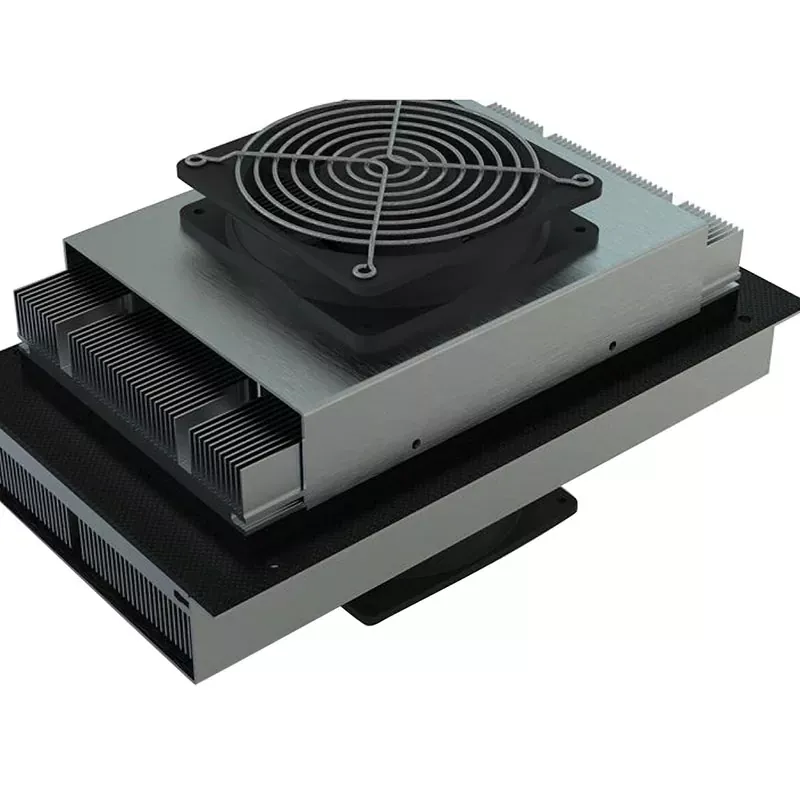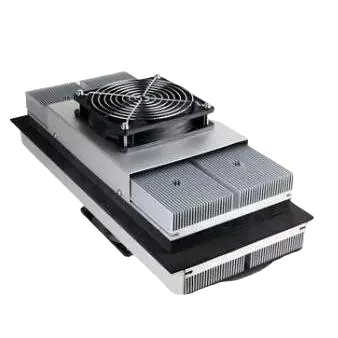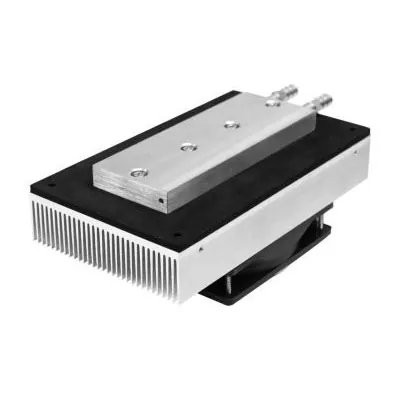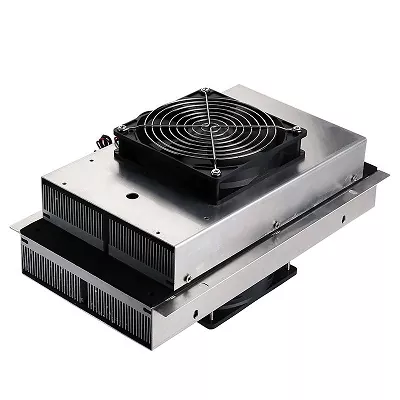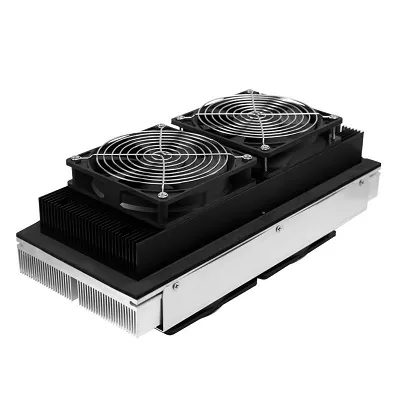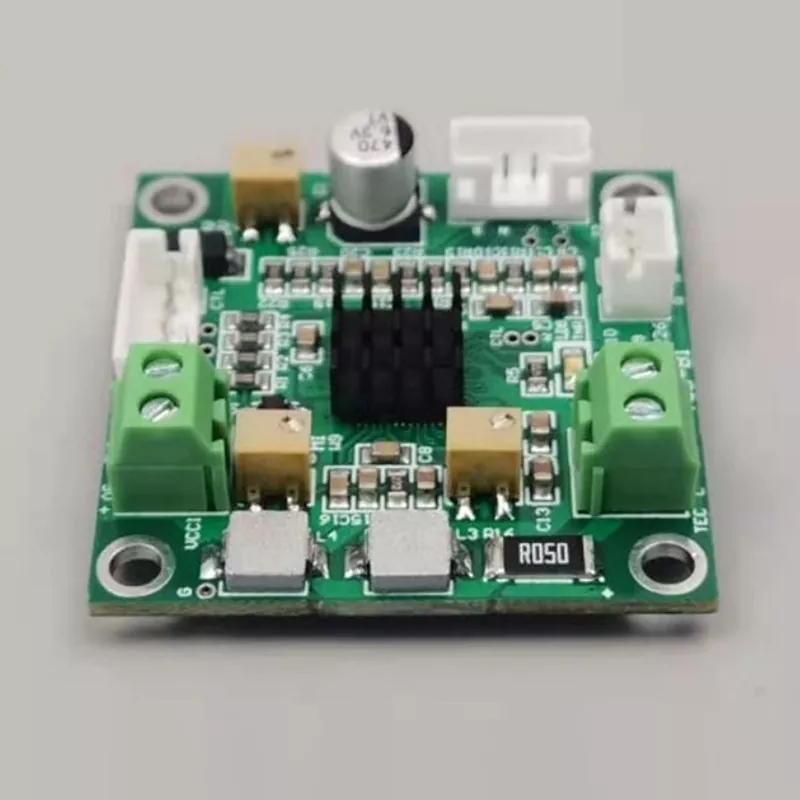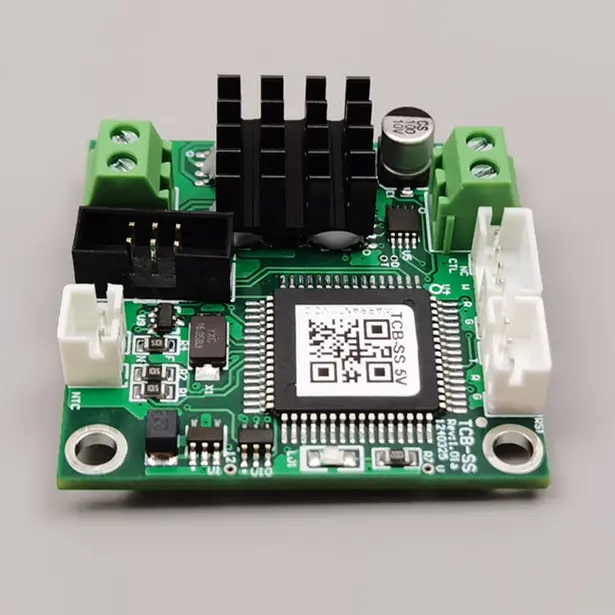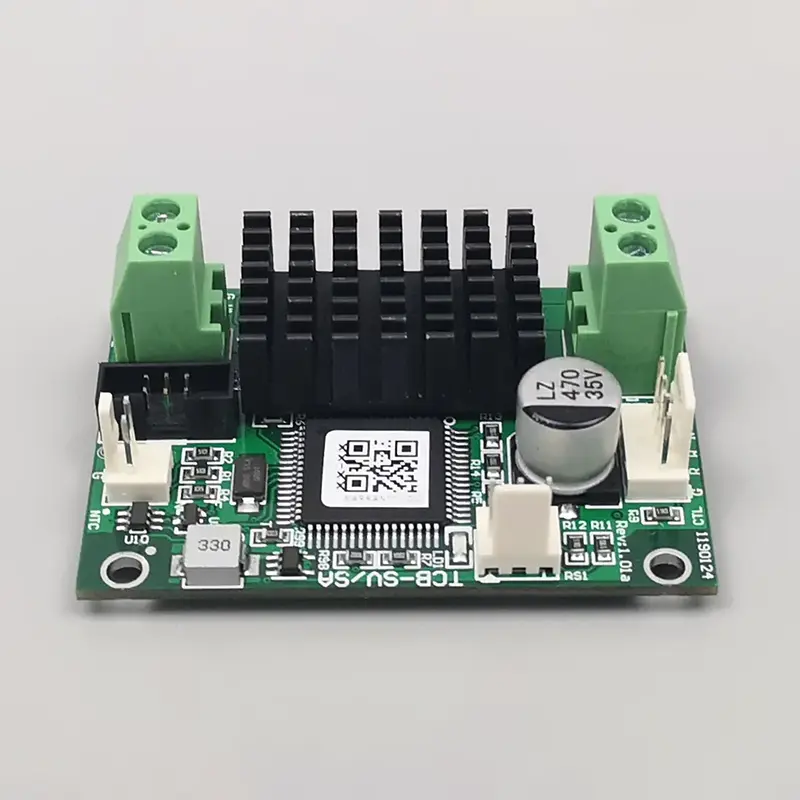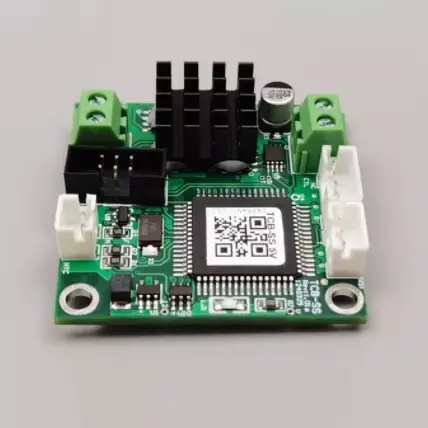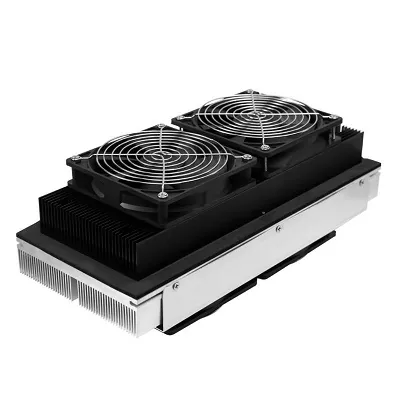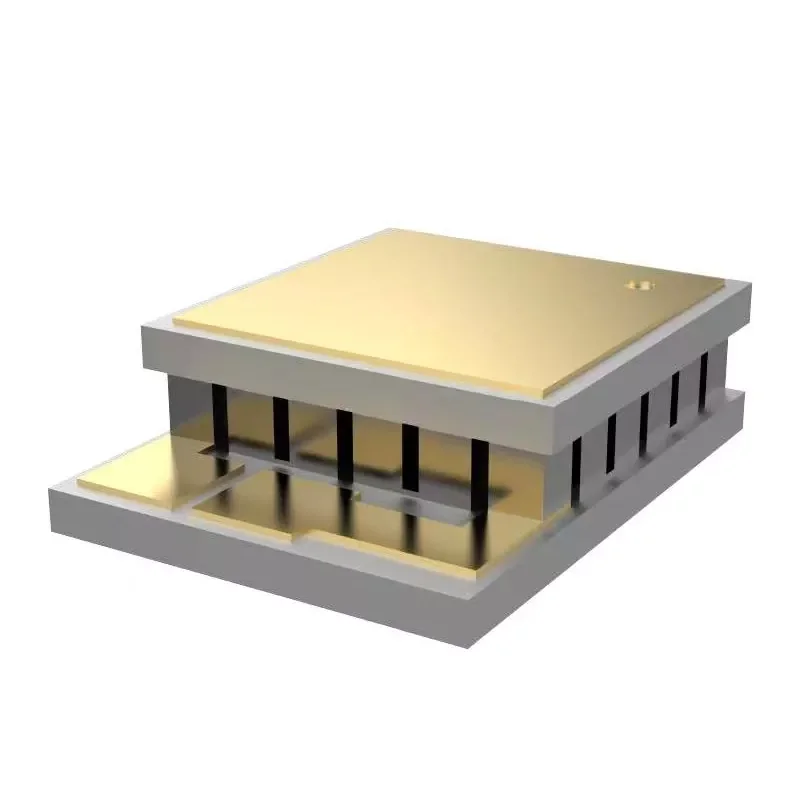
Our Thermoelectric Cooler Assemblies are developed for equipment requiring compact, localized, and controllable temperature management. X-Meritan supports thermoelectric material development, TEC component customization, and assembly design for optical, medical, industrial, automotive, electronic, and research applications.
Our thermoelectric materials are based on Bi₂Te₃-related systems for temperature-control applications around ambient conditions. We also produce extruded Bi₂Te₃-Sb₂Te₃ materials for TEC component manufacturing, with material and processing options selected according to the requirements of the finished component.
X-Meritan develops extruded Bi₂Te₃-Sb₂Te₃ thermoelectric materials using a high-pressure plastic deformation process. The extrusion process produces a dense, textured structure with improved intergranular bonding, supporting subsequent cutting and thinning of the material.
This material structure is useful for TEC components requiring dimensional consistency and mechanical resistance during processing. Depending on the component design and manufacturing conditions, thermoelectric elements can be processed to thicknesses down to 0.2 mm.
|
Parameter |
Specification |
|
Material System |
Bi₂Te₃-Sb₂Te₃ based |
|
Ingot Diameter |
25 mm / 30 mm / 35 mm |
|
Ingot Length |
120 mm / 240 mm |
|
Electrical Conductivity |
870–1430 Ω⁻¹·cm⁻¹ |
|
Thin Element Capability |
Down to 0.2 mm, depending on design and processing |
|
Property |
P Type |
N Type |
|
Compressive Strength |
54.0 MPa |
66.0 MPa |
|
Shear Strength |
16.0 MPa |
21.0 MPa |
|
Young’s Modulus |
47.0 GPa |
42.0 GPa |
|
Poisson’s Ratio |
0.30 |
0.30 |
|
Temperature |
Direction |
N Type |
P Type |
|
-25°C |
Along extrusion |
10.2 × 10⁻⁶/K |
10.6 × 10⁻⁶/K |
|
-25°C |
Across extrusion |
12.5 × 10⁻⁶/K |
10.8 × 10⁻⁶/K |
|
+50°C |
Along extrusion |
13.3 × 10⁻⁶/K |
14.0 × 10⁻⁶/K |
|
+50°C |
Across extrusion |
16.6 × 10⁻⁶/K |
18.0 × 10⁻⁶/K |
|
+150°C |
Along extrusion |
15.5 × 10⁻⁶/K |
15.8 × 10⁻⁶/K |
|
+150°C |
Across extrusion |
18.3 × 10⁻⁶/K |
19.9 × 10⁻⁶/K |
The final material grade, element geometry, and processing conditions are determined according to the TEC design and intended application.
Optical modules and laser components can be sensitive to temperature variation. TEC assemblies can provide localized temperature stabilization where consistent operating conditions are required.
Medical and industrial equipment may require controlled temperature conditions within compact equipment structures. Solid-state thermoelectric technology can be considered for applications involving localized cooling or heating.
Automotive electronic systems may operate in compact spaces and under changing environmental conditions. TEC solutions can be developed for selected components where localized thermal management is required.
Compact electronic products may have limited space for conventional cooling structures. Thermoelectric technology can provide localized temperature management without mechanical moving parts.
Research equipment often has application-specific temperature requirements. TEC configurations can be adapted to the required operating conditions and equipment structure.
TEC assembly quality depends on material consistency as well as assembly processes such as soldering, reflow, dispensing, electrical connection, sealing, and inspection.
X-Meritan's production facilities include equipment for soldering, reflow, dispensing, cutting, sealing, curing, printing, and related assembly operations. Specialized production lines and testing facilities support component assembly and production inspection.
The quality management system follows ISO 9001:2015. RoHS and REACH compliance information is available for applicable products and configurations, with specific documentation confirmed according to the supplied material or assembly.
X-Meritan supports customized TEC components and assemblies based on customer drawings, physical samples, technical specifications, or equipment requirements.
The development process can follow:
Application Review → Material Selection → TEC Component Design → Assembly Configuration → Sample Evaluation → Production
For existing components, a drawing or physical sample can be used as the reference for reproduction or modification. For new projects, the technical requirements are reviewed before the assembly configuration is finalized.
Samples can be produced for customer evaluation and approval before volume production when required.
The following information helps determine a suitable TEC configuration:
|
Information |
Purpose |
|
Heat Load |
Defines the required cooling capacity |
|
Target Temperature |
Establishes the required controlled temperature |
|
Ambient Temperature |
Defines the surrounding thermal condition |
|
Installation Dimensions |
Determines the available space |
|
Power Supply |
Establishes the electrical operating conditions |
|
Heat Dissipation Method |
Defines the hot-side thermal path |
|
Sensor Location |
Identifies the temperature measurement point |
|
Operating Cycle |
Helps assess repeated thermal operation |
|
Quantity |
Supports sample and production planning |
A drawing or physical sample is also useful when the assembly needs to match an existing equipment structure.
Yes. Reversing the electrical current changes the direction of heat transfer, allowing a TEC to provide either cooling or heating according to the control requirement.
Yes. Sub-ambient operation can extend below 0°C when the TEC configuration, thermal load, hot-side conditions, and control system are suitable for the required temperature range.
No. Thermoelectric devices use solid-state semiconductor elements rather than compressors, motors, or other mechanical moving parts. This makes them suitable for applications where vibration needs to be minimized.
A TEC does not inherently require continuous high-flow ventilation, but the heat transferred to the hot side still needs to be dissipated effectively. The appropriate heat-rejection method depends on the complete equipment design.