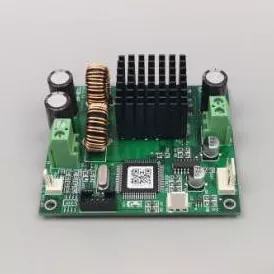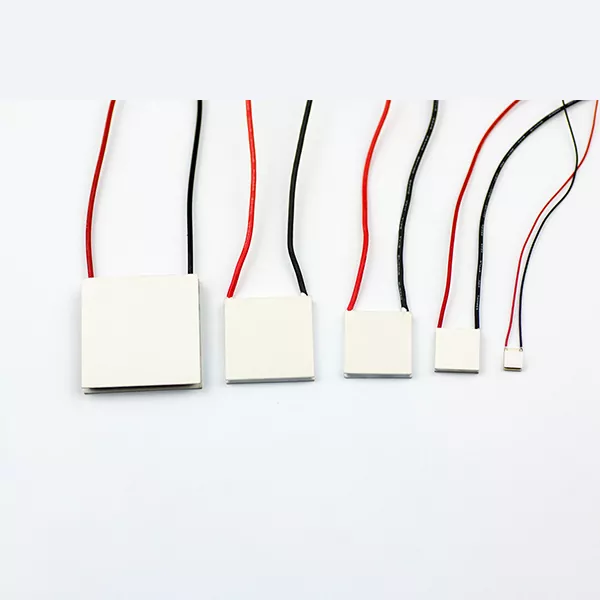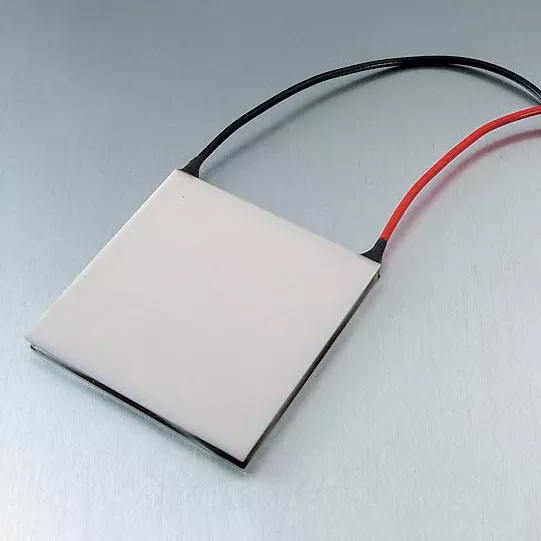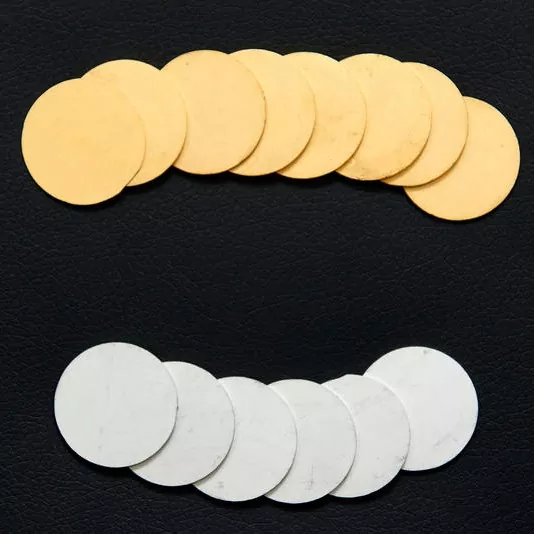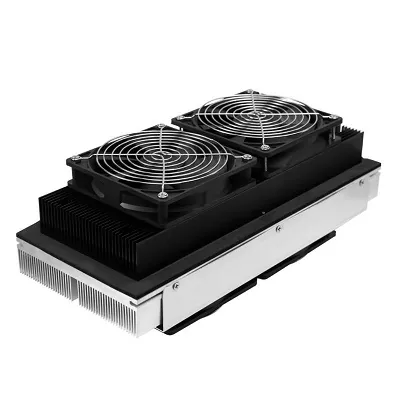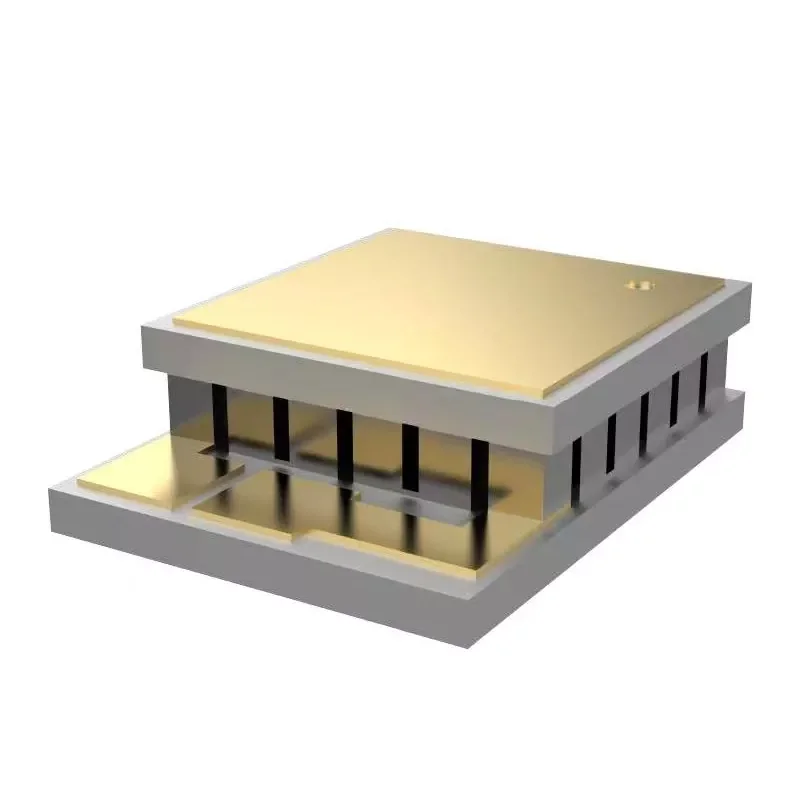
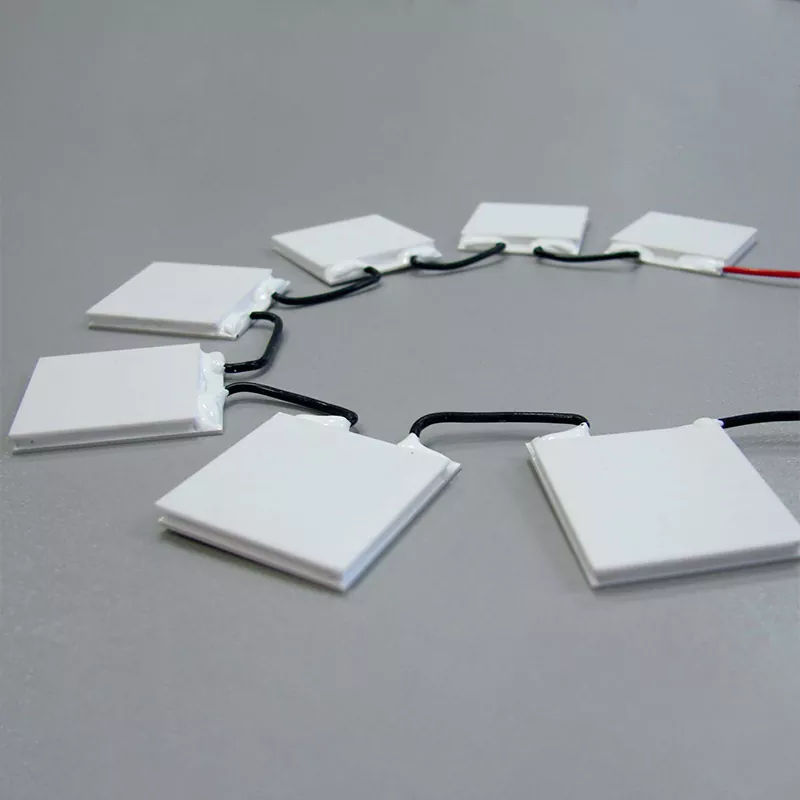
X-Meritan supplies thermoelectric coolers (TECs) designed for continuous heat pumping in industrial equipment. These modules operate on the Peltier effect and contain no compressors, refrigerants, or moving parts. They are used where maintenance access is limited, vibration is not acceptable, or precise temperature control is required.
The high-capacity series targets systems with significant heat loads. Typical examples include laser diode arrays, semiconductor process equipment, and analytical instruments that generate constant thermal output.
We manufacture High Cooling Capacity TE Coolers for Industrial Applications in our own facility. This includes thermoelectric material preparation, ingot processing, pellet dicing, module assembly, and final testing. Control over these steps allows us to adjust material composition, pellet geometry, and solder selection to match specific operating conditions.
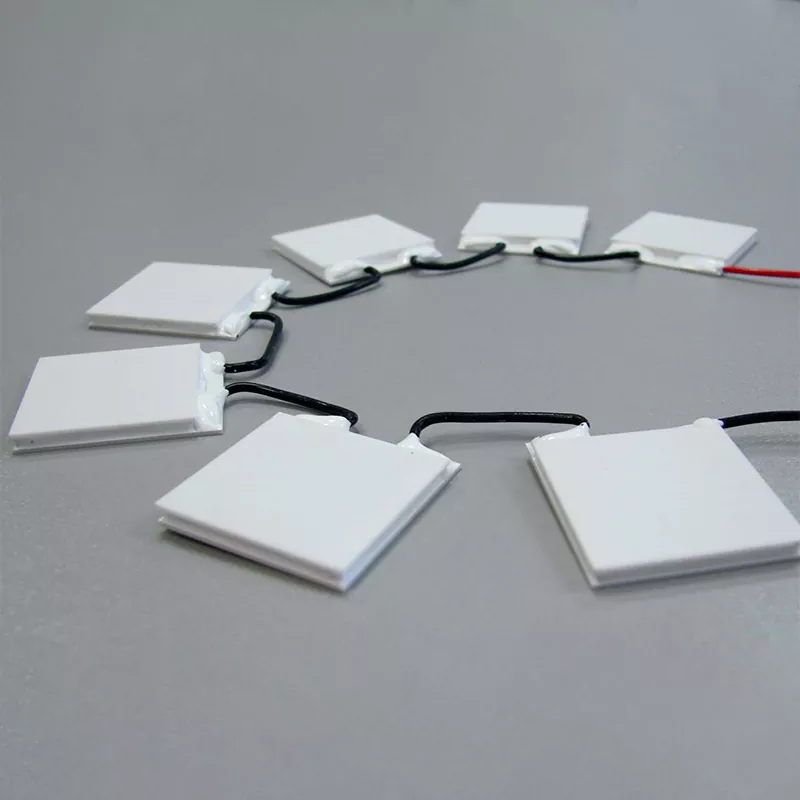
Standard modules cover a range of cooling capacities. The table below lists common parameters. Custom configurations are available for different voltages, dimensions, and hot-side temperature requirements.
|
Parameter |
Typical Range / Options |
Notes |
|
Max Cooling Capacity (Qmax) |
20 W to 400 W |
Measured at Th = 27°C in vacuum |
|
Max Temperature Difference (ΔTmax) |
68 K to 74 K |
No heat load applied |
|
Operating Voltage |
12 V, 24 V, 48 V DC |
Custom voltages on request |
|
Operating Current |
3 A to 15 A |
Depends on pellet count and size |
|
Hot Side Temperature (Th) |
Up to 120°C |
High-temperature versions available for Th > 150°C |
|
Ceramic Substrate |
Alumina (Al₂O₃) or Aluminum Nitride (AlN) |
AlN offers higher thermal conductivity |
|
Surface Flatness |
≤ 0.02 mm |
Measured across module surface |
|
Solder Composition |
BiSn or PbSn |
PbSn for high-temperature environments |
|
Sealing |
Epoxy perimeter seal |
Not hermetic; additional encapsulation available |
|
Dimensions (L × W × H) |
20×20×3.5 mm to 62×62×4.8 mm |
Custom sizes within this range |
|
Lead Wire Length |
100 mm to 300 mm |
Teflon insulated; custom lengths available |
Specifications are verified on a batch basis using a thermal test station. A test report can be provided with each shipment upon request.
Important note on Qmax: Qmax is measured with zero temperature difference between the hot and cold sides. In real operation, the cold side is always colder than the hot side, so the actual heat pumping capacity is lower. For example, a module rated at 200 W Qmax might only remove 80 W when ΔT is 30 K. Selection must be based on the actual operating point, not the Qmax number alone.
A High Cooling Capacity TE Coolers for Industrial Applications is a solid-state heat pump. Direct current moves heat from the cold side to the hot side. The hot side must be connected to a heat sink or cold plate to reject the pumped heat plus the electrical input power. If the hot side is not cooled effectively, heat flows back to the cold side and net cooling capacity drops.
The outer plates are made of alumina or aluminum nitride. They provide electrical insulation while conducting heat. Surface flatness is controlled to ensure good thermal contact with the heat source and heat sink. A thermal interface material (TIM) is recommended between the ceramic surface and the mounting surface.
N-type and P-type bismuth telluride pellets are connected in series by copper electrode traces. The number and size of pellets determine the module's voltage, current, and cooling capacity. We use multi-layer plating on the copper traces to prevent oxidation during long-term operation.
The hot side temperature is the single most important factor affecting TEC performance. Every 10°C increase in hot side temperature typically reduces cooling capacity by 5–10% and lowers the maximum achievable ΔT. For high-capacity modules, forced air cooling, liquid cooling, or heat pipe assemblies are recommended. Passive heatsinks are rarely sufficient above 100 W of total heat rejection.
A moisture-resistant epoxy seal surrounds the internal semiconductor array. This seal does not provide hermetic sealing, but it protects the pellets and electrodes from condensation and airborne contaminants in normal industrial environments. For high humidity, washdown, or outdoor conditions, additional encapsulation is required.
X-Meritan produces TEC modules in-house. The manufacturing sequence is:
Thermoelectric material ingot preparation
Extrusion and dicing of semiconductor pellets
Automated pellet placement and soldering
Ceramic substrate metallization
Final assembly and electrical testing
Each production batch is tested for internal resistance, cooling capacity, and visual defects. Test records are maintained for traceability. 建议插入工厂实拍照片或产线流程图片
Test Methods
|
Test Item |
Method |
|
Qmax |
Thermal test station, Th = 27°C, vacuum |
|
ΔTmax |
No-load test, Th = 27°C |
|
Electrical Resistance |
Four-wire DC resistance measurement |
|
Thermal Cycling |
Customer-defined protocol |
|
High Temperature Storage |
Customer-defined protocol |
Actual test standards and acceptance criteria are agreed with the customer before volume production. Contact us to discuss your specific requirements.
The following certifications and compliance statements are currently being updated.
● ISO 9001:2015 – Quality management system
● ISO 14001 – Environmental management system
● RoHS compliance
● REACH compliance
● CE marking (if applicable)
● UL certification (if applicable)
We will provide copies of valid certificates upon request. Please contact us to confirm the current status.
Standard modules cover many industrial cooling tasks. For high-volume or specialized projects, we offer custom engineering in the following areas:
● Custom footprint and height
● Higher temperature solder and substrates for Th > 150°C
● Multi-stage TEC modules for deeper temperature differentials
● Pre-mounted heat sinks or cold plates
● Integrated temperature sensors (NTC or RTD)
● Special lead wire configurations or connectors
A typical custom project follows this process:
1. Customer provides thermal load, cold side temperature, ambient conditions, and space constraints.
2. Our engineers simulate the required module and provide a recommended configuration.
3. We produce samples for customer validation.
4. Upon approval, we proceed to mass production.
Instead of listing generic advantages, here are the specific capabilities that differentiate our modules:
We control the process from raw ingot to finished device. This includes material composition, pellet size, and doping levels. Most TEC suppliers purchase pre-made pellets or wafers and only assemble modules. Because we handle the material itself, we can adjust the ZT value and optimize for specific temperature ranges.
Every production batch is tested for Qmax, ΔTmax, and internal resistance. Test reports are available to customers. This allows you to verify that the modules meet your specifications before integrating them into your system.
Many suppliers require large minimum orders for custom dimensions or parameters. We maintain flexible production scheduling, so custom projects with moderate volumes are feasible. Contact us with your requirement even if the expected annual quantity is only a few hundred pieces.
When you contact X-Meritan, you speak with engineers who have access to the production data and test results. This reduces the back-and-forth typical of trading companies and shortens the sample evaluation cycle.
High cooling capacity TEC modules are used in environments where active liquid cooling is not practical or where precise temperature control is required.
Cooling for laser diodes and photodetectors in fiber optic systems
Thermal management for outdoor telecom cabinets
Temperature stabilization for power amplifiers and RF modules
Cooling of wafer chucks and process chambers
Thermal control for laser marking and cutting heads
Temperature stabilization for optical benches
PCR thermal cyclers and sample block cooling
Temperature control for reagent storage compartments
Cooling of CCD and CMOS image sensors
Cooling for LiDAR sensors in autonomous vehicles
Seat ventilation systems
Portable refrigerated containers
To specify a high-capacity TEC, prepare the following information before contacting us:
Required cooling load (in watts) at the cold side. This is the heat generated by the component you need to cool.
Target cold side temperature and tolerance. For example, 25°C ± 0.5°C.
Maximum hot side temperature you can accept, based on your heat sink and ambient conditions.
Ambient temperature range the system will operate in.
Available heat sink type and thermal resistance. Forced air, liquid cooling, or heat pipe.
DC voltage available and maximum current draw allowed.
Installation space constraints: length, width, height, and mounting hole pattern.
Thermal cycling requirements: how many cycles per day, temperature swing, and expected lifetime.
Environmental conditions: humidity, dust, chemical exposure, or outdoor use.
Once you provide these details, we can recommend a specific module or design a custom solution. We will also provide performance curves showing cooling capacity versus temperature difference for the recommended operating current.
A: You need to know the heat load to be removed (in watts), the maximum allowed temperature for the cooled object, the ambient temperature, and the available heat sink performance on the hot side. Provide these values to our engineers, and we will recommend a module and operating current.
A: Qmax is the maximum heat pumping capacity when the temperature difference between hot and cold sides is zero. In real operation, there is always a temperature difference. The actual cooling capacity decreases as ΔT increases. Our datasheets include performance curves for different operating currents.
A: Yes. The maximum hot side temperature is specified for each module. Exceeding this temperature can degrade the solder joints and reduce module life. Always design the hot side heat sink so that Th stays within the rated limit under worst-case ambient conditions.
A: TEC modules have no moving parts, so mechanical wear is not a factor. However, thermal cycling causes stress at solder joints and can eventually lead to increased internal resistance. Selected high-capacity designs have been evaluated through thermal cycling tests. Actual cycle life depends on temperature range, current, ramp rate, mounting stress, and operating humidity. Test data can be provided for qualified projects.
A: Yes. For each production batch, we can provide a summary of tested parameters. For larger orders, we can perform additional reliability testing such as thermal cycling, high temperature storage, and humidity exposure per agreed protocols.
A: No. The standard epoxy seal is moisture-resistant but not hermetic. For applications with high humidity, condensation, or direct water contact, additional encapsulation or a custom housing is required.
To request a recommendation or sample, please provide the following information:
● Heat load to be removed (W)
● Required cold side temperature or temperature difference
● Ambient temperature range
● Available space for the TEC and heat sink
● Power supply voltage available
● Expected annual quantity
Our engineering team responds within one business day. We provide samples for evaluation before volume orders.
Address
Building C2, R&F Center, Shangpu Road, Taijiang District, Fuzhou City, Fujian Province, China
Tel
Ready to start your next thermal management project or request a competitive price quote? The X-meritan engineering and sales team is standing by to analyze your project requirements, recommend suitable standard TEC models, or discuss fully custom thermoelectric cooler manufacturing options.
Simply fill out the inquiry form with your operating parameters—such as heat load, ambient temperature, target cold-side temperature, dimensions, and estimated annual volume. Our technical sales engineers will review your thermal constraints and respond with a detailed quotation and engineering assessment within 24 business hours.