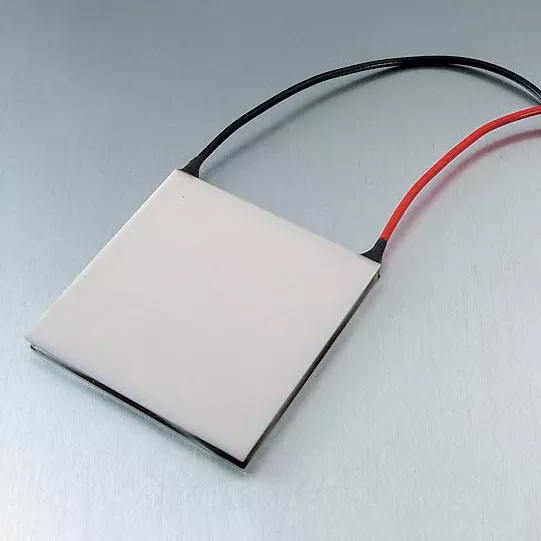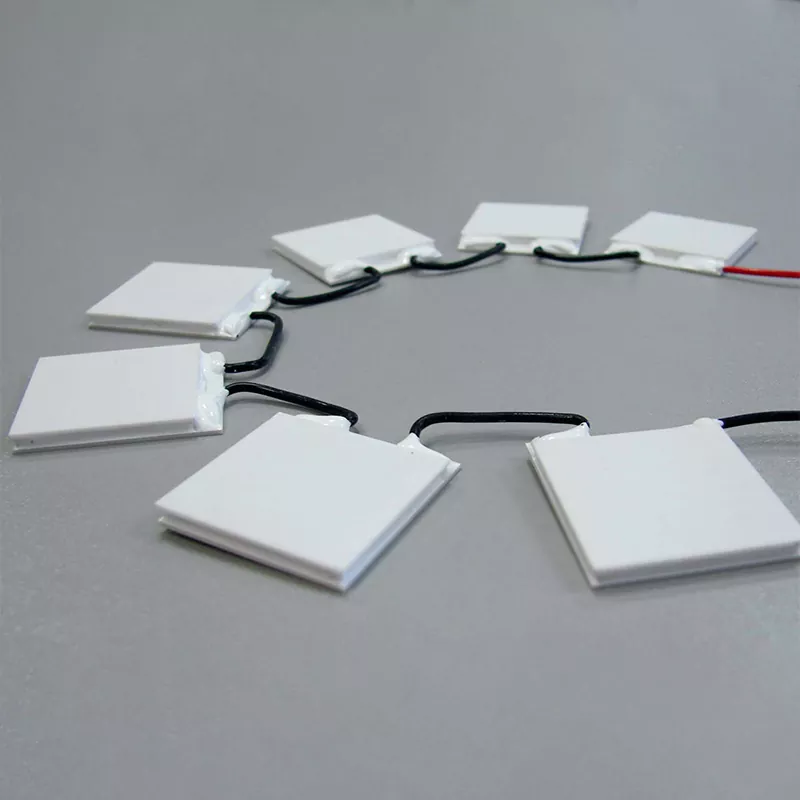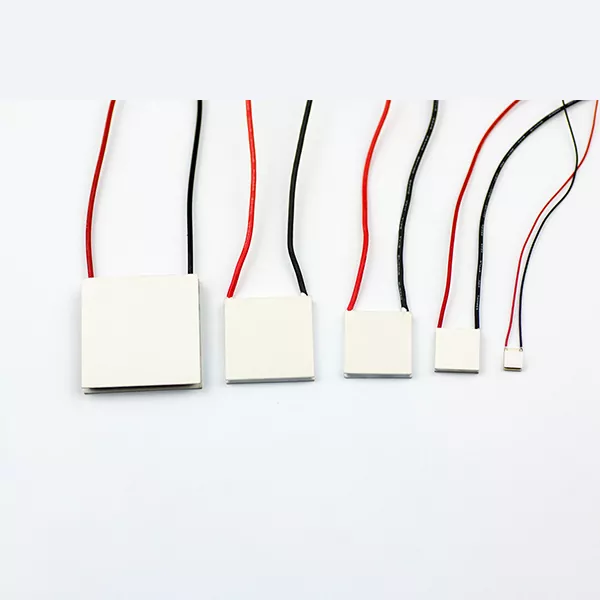
X-Meritan supplies General Thermoelectric Coolers for applications that require moderate heat pumping without compressors, refrigerants, or moving parts. This category covers standard thermoelectric modules used in portable cooling boxes, small electronic enclosures, laboratory equipment, and similar tasks where simplicity and compact size matter more than maximum performance.
For heat loads above approximately 60 W, or for applications that need a larger temperature difference under load, our high-capacity thermoelectric cooler series is a better fit. This page focuses on the general purpose range.
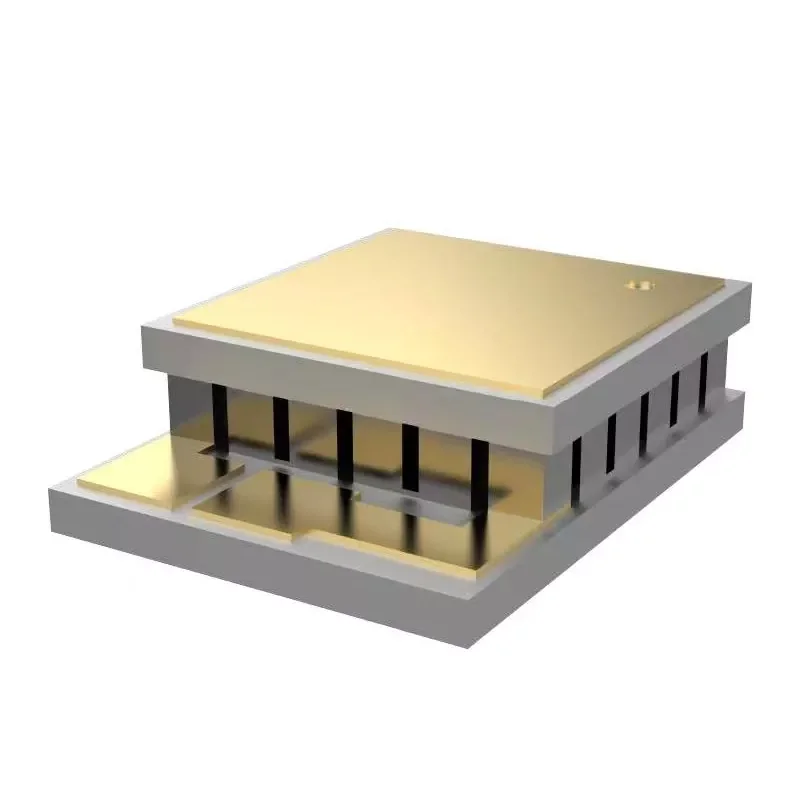
A general TE cooler is a solid-state heat pump. When direct current passes through the module, one ceramic face absorbs heat and the other releases it. The heat-releasing side must be attached to a heat sink. Without proper heat removal, the module temperature rises and cooling performance drops quickly.
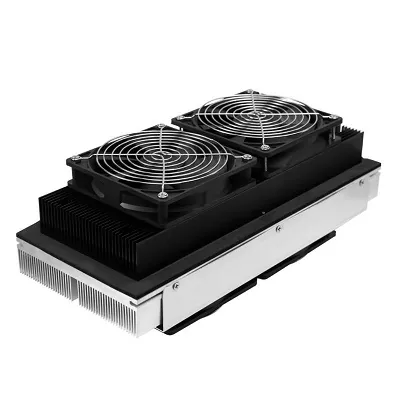
A complete cooling system also needs a DC power source and usually a fan. When these components are combined into a single unit, it becomes a thermoelectric cooler assembly. We can supply the module alone or as a pre-assembled unit with heat sink and fan included.
|
Parameter |
Range or Options |
Notes |
|
Maximum heat pumping (Qmax) |
5 W to 60 W |
Measured at 27°C hot side, zero temperature difference |
|
Maximum temperature difference (ΔTmax) |
65 K to 72 K |
No heat load applied |
|
Rated voltage |
3 V to 24 V DC |
Common values: 5 V, 12 V, 24 V |
|
Rated current |
1 A to 6 A |
Depends on number and size of semiconductor pellets |
|
Hot side temperature limit |
Up to 100°C |
Higher ratings available on request |
|
Ceramic substrate |
Alumina (Al₂O₃) |
Standard for this series |
|
Surface flatness |
≤ 0.03 mm |
Sufficient for most mounting methods |
|
Solder type |
BiSn |
Lead-free; PbSn option for high temperature use |
|
Perimeter seal |
Epoxy |
Moisture resistant, not hermetic |
|
Footprint |
15×15 mm to 40×40 mm |
Thickness 3.3 mm to 4.0 mm |
|
Lead wire length |
80 mm to 200 mm |
PVC or Teflon insulation |
All values are checked on a batch basis. A test summary can be shipped with each order.
Qmax is not the same as usable cooling power. Qmax is measured when there is no temperature difference between the two sides. In real operation there is always a difference. For example, a module rated at 30 W Qmax might deliver only 14 W when the cold side is 25 K below the hot side. Use the performance curve for your operating point, not the Qmax number alone.
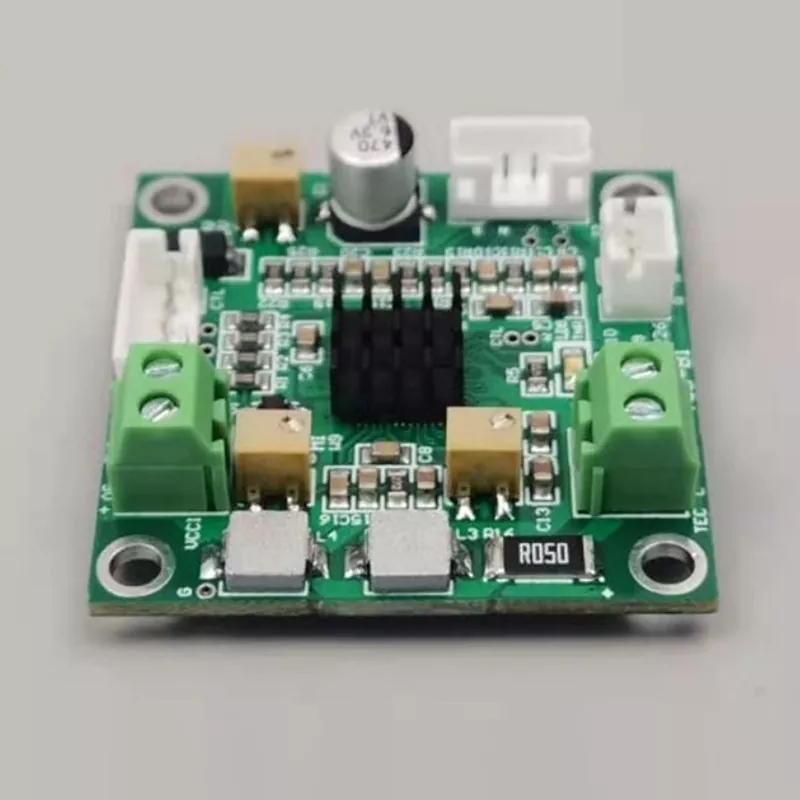
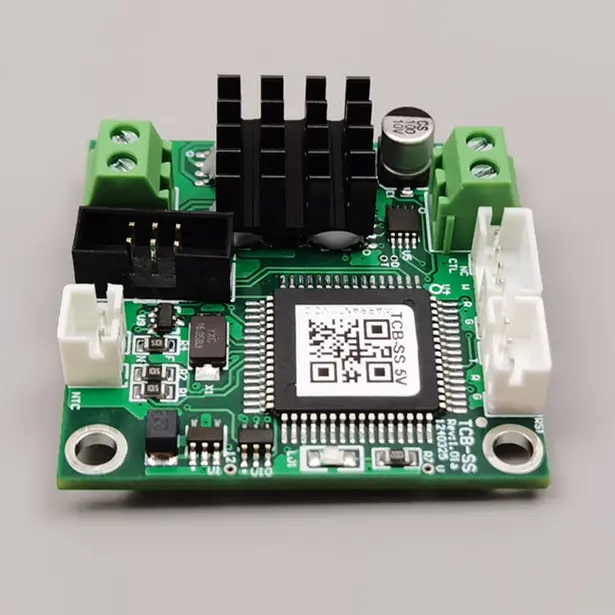
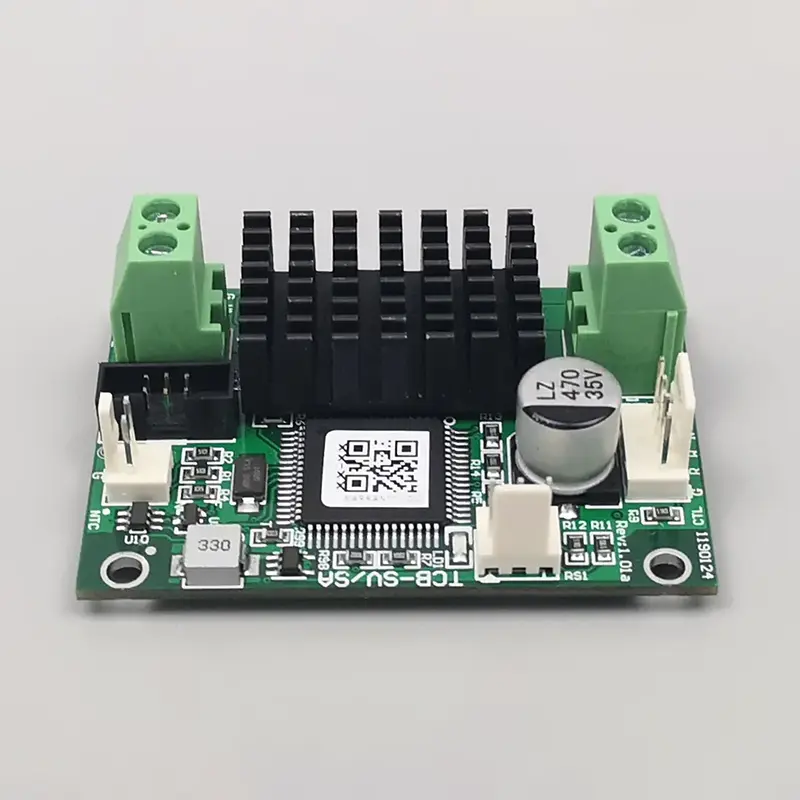
When the application requires a stable cold side temperature, pair the general TE cooler with a temperature controller. The controller reads a sensor such as an NTC thermistor and adjusts the current or voltage to the module. This feedback loop compensates for changes in ambient temperature and heat load.
A simple on-off thermostat is enough for a portable cooler. A PID temperature controller is recommended for laboratory stages, sample holders, or any process that must hold temperature within a narrow band. We can recommend a compatible controller and sensor for your module and heat sink combination.
Inside each module, bismuth telluride based thermoelectric materials form many small semiconductor pairs. These pairs are connected electrically in series and sandwiched between two ceramic plates. The plates provide electrical isolation and a flat mounting surface.
For most general purpose cooling jobs, the standard material composition works well. If your project requires a shift in the optimal operating temperature range, we can adjust the thermoelectric material formulation. This is uncommon for everyday cooling but available for custom orders.
The internal array is protected by a thin epoxy seal. The seal blocks dust and light moisture but is not designed for continuous condensation or direct water exposure. In humid or outdoor environments, use a sealed enclosure or request additional encapsulation.
X-Meritan has produced thermoelectric coolers for more than 10 years. The production area is maintained as a clean environment to reduce dust on ceramic surfaces and solder joints. Automated equipment handles pellet placement and reflow soldering.
Each batch is tested on a dedicated semiconductor cooler testing platform. The test procedure includes:
|
Test Item |
Method |
|
Qmax |
Thermal test station, 27°C hot side, vacuum |
|
ΔTmax |
No-load test |
|
Electrical resistance |
Four-wire DC measurement |
|
Visual inspection |
Magnified check for cracks, voids, and misalignment |
|
Insulation resistance |
500 VDC between terminals and ceramic |
Production records are kept for traceability. We can provide a batch report with each shipment. Evaluation samples are available before volume orders.
Before choosing a general TE cooler, confirm these points:
1. Heat load – Estimate the heat that must be removed. Add a margin of 50% to 100% over the expected value.
2. Cold side temperature – The lower the target temperature relative to ambient, the less heat the module can pump.
3. DC voltage – 12 V is common for mobile use, 24 V for industrial cabinets, 5 V for small USB devices.
4. Assembly space – Include module thickness, heat sink, fan, and thermal interface material in the total height.
5. Environment – Humidity, dust, and vibration affect sealing and lifetime.
If any point is unclear, send us the project details. We will recommend a module and provide the performance curve.
Portable coolers and wine cabinets Quiet, compact modules for small insulated boxes and car refrigerators.
Electronic and control cabinets Spot cooling for power supplies, battery compartments, and sealed controllers where adding ventilation is not practical.
Small appliances Water dispensers, beverage coolers, and personal cooling devices often use one module with a heatsink and fan.
Laboratory stages and sample holders Combined with a temperature controller and an NTC thermistor, the module holds a sample block at a fixed temperature.
Not always. Many portable coolers run the module continuously from a DC source. The inside temperature drops until heat leaking in equals the heat pumped out. A basic thermostat saves battery power and prevents overcooling.
The hot and cold sides swap. The module is not damaged as long as current and voltage stay within ratings. This feature is useful for systems that need both heating and cooling.
The heat sink must dissipate the pumped heat plus the electrical input power. A practical rule is to size the heat sink for 1.5 to 2 times the module's maximum electrical power. For a 12 V, 4 A module (48 W electrical), plan for 70 to 100 W of total heat removal.
Multi-stage modules exist but are not part of the general range. Stacking reduces usable heat load and adds complexity. For most everyday cooling tasks, a single module with a good heat sink works better. We can discuss multi-stage options for special projects.
Standard production uses lead-free solder and materials that meet RoHS requirements. Documentation can be provided with the order.
Yes. We can build a thermoelectric cooler assembly with module, heat sink, fan, and wiring. This is often easier for customers who prefer not to handle thermal interface material and mounting themselves.