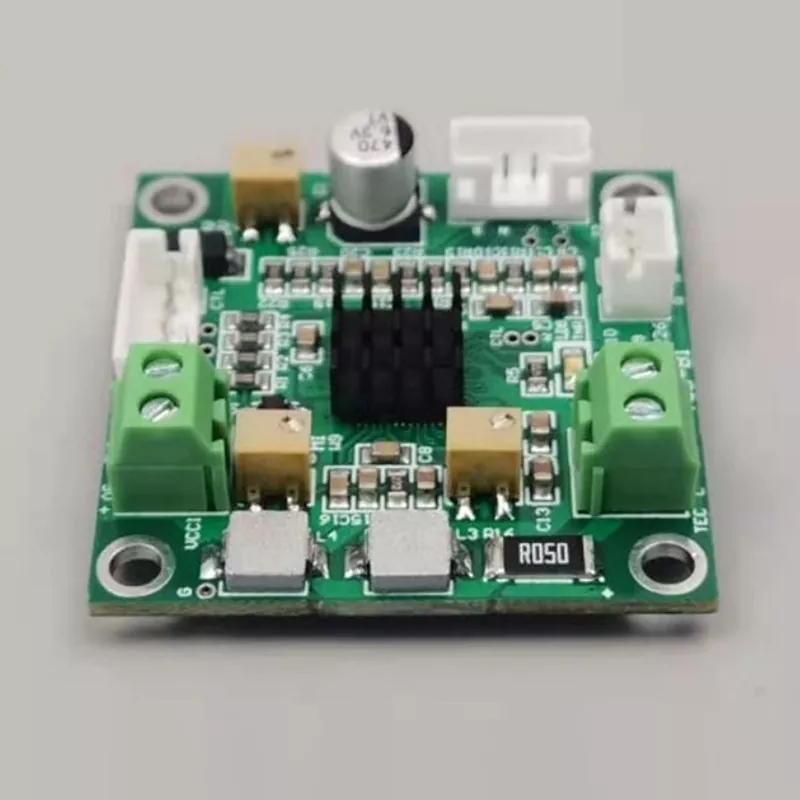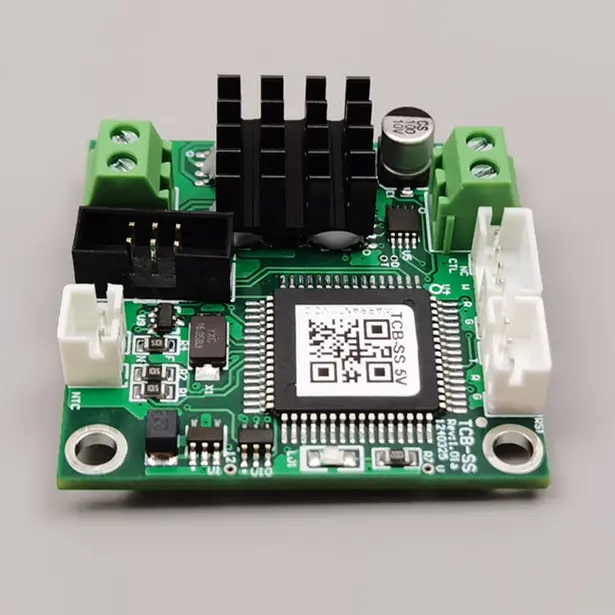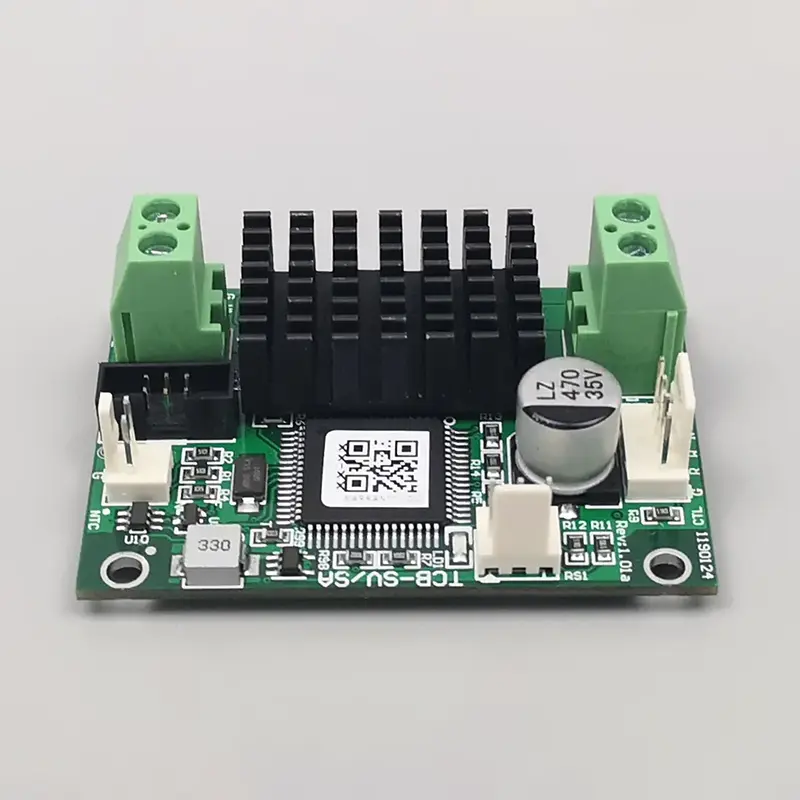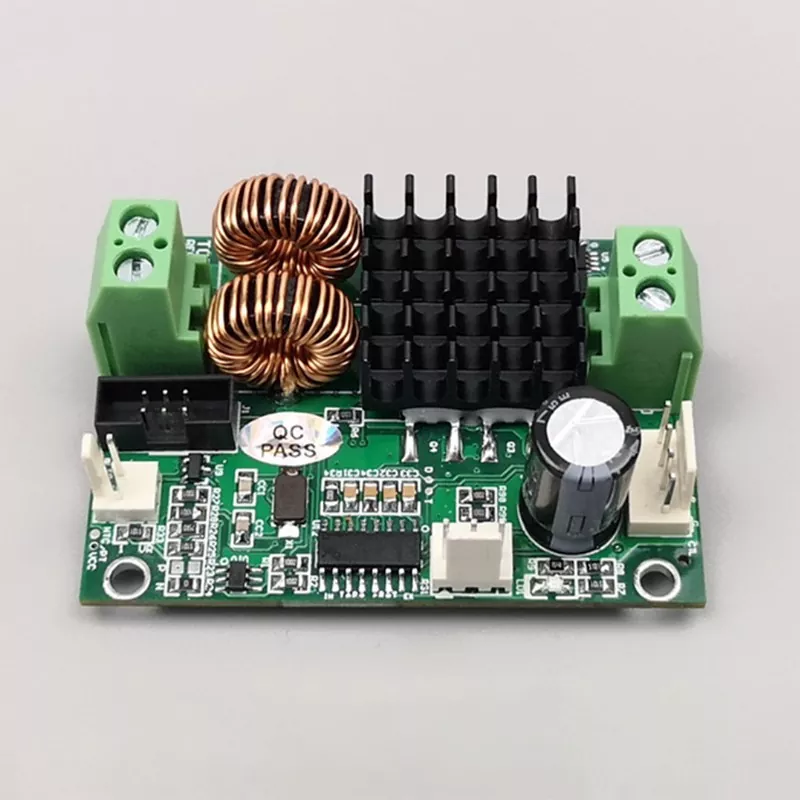
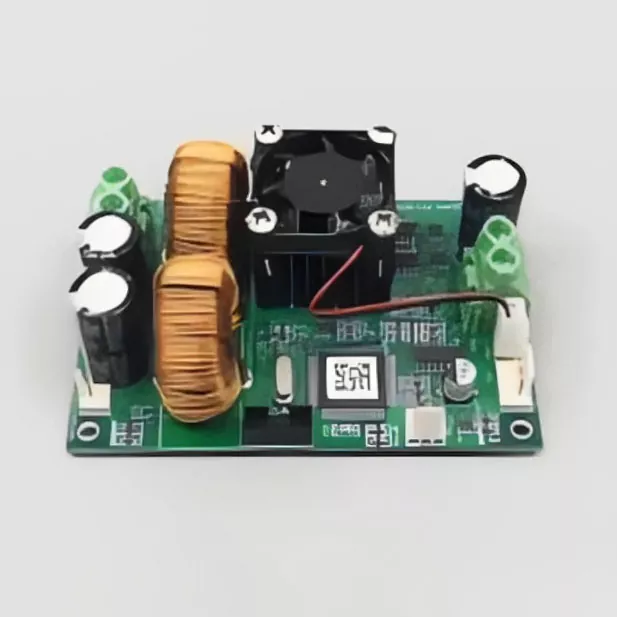
X-Meritan manufactures PID Temperature Controllers used in industrial heating and cooling systems. These devices read a temperature signal from a sensor, compare it to a setpoint, and adjust the output to keep the process temperature stable. Common applications include plastic extrusion, packaging machinery, laboratory furnaces, and food processing lines.
The controller is not a standalone heating device. It provides the control signal that drives a relay, solid-state relay (SSR), or analog output. The actual heating or cooling is performed by external elements such as cartridge heaters, band heaters, or cooling valves.
PID stands for Proportional, Integral, and Derivative. The controller continuously measures the difference between the setpoint and the actual temperature. This difference is called the error.
The proportional term produces an output proportional to the current error. The integral term accumulates past errors and corrects steady-state offset. The derivative term responds to the rate of change and helps reduce overshoot.
In practice, the user or the controller's auto-tune function sets three parameters: proportional band, integral time, and derivative time. Correct tuning is essential. A poorly tuned PID loop will oscillate or respond slowly. ON-OFF control is simpler and is used where the process tolerates temperature swings.
|
Parameter |
Specification |
Notes |
|
Input type |
Thermocouple (K, J, E, T, N, R, S, B) / RTD (PT100, PT1000) / Analog (4-20 mA, 0-10 V, 0-5 V) |
Selectable by model |
|
Control mode |
PID, ON-OFF, manual |
Auto-tune available on most models |
|
Output type |
Relay SPST (3 A / 250 VAC), SSR drive (12 VDC / 30 mA), Analog (4-20 mA, 0-10 V) |
One or two outputs depending on model |
|
Display accuracy |
±0.5% FS or ±1 digit |
FS means full scale of selected range |
|
Sampling period |
0.1 s to 0.5 s |
Faster sampling for low thermal mass systems |
|
Setpoint range |
Full input range |
Configurable |
|
Power supply |
85 VAC to 265 VAC, 50/60 Hz |
Wide voltage input |
|
Operating temperature |
0°C to 50°C |
Higher ambient requires derating |
|
Operating humidity |
0% to 85% RH, non-condensing |
Condensation damages electronics |
|
Dimensions |
48×48 mm, 72×72 mm, 96×96 mm, 48×96 mm |
Panel mount standard sizes |
|
Display |
Dual LED or LCD |
Process value and setpoint |
|
Communication |
RS485 Modbus RTU (optional) |
For SCADA or PLC integration |
|
Alarm output |
1 or 2 relay outputs |
High/low deviation, band, or absolute alarms |
All specifications are verified at final test. A calibration certificate can be provided with each unit.
The controller must match the temperature sensor and the load switching device. The table below summarizes common combinations.
|
Application |
Typical Sensor |
Recommended Output |
Reason |
|
Plastic extrusion barrel heating |
K thermocouple |
SSR drive |
Fast switching, long life |
|
Lab muffle furnace |
S thermocouple |
SSR drive or relay |
High temperature range |
|
Food baking oven |
PT100 |
Relay or analog |
Moderate switching frequency |
|
Hot melt glue system |
K thermocouple |
Relay |
Simple, low cost |
|
Milk pasteurization |
PT100 |
Analog (4-20 mA) |
Proportional valve control |
A mismatch between input type and sensor causes wrong readings. A mismatch between output and load switching device causes failed control or component damage.
ON-OFF control turns the output fully on when the temperature drops below the setpoint and fully off when it rises above the setpoint plus a hysteresis band. This method is simple and works for systems with large thermal mass where temperature swings are acceptable.
PID control modulates the output continuously or in rapid bursts. It maintains the temperature close to the setpoint with minimal oscillation. PID is required for processes that need tight temperature tolerance, such as laboratory incubators, injection molding nozzles, and laser diode temperature control.
The auto-tune function in X-Meritan controllers calculates initial PID parameters by introducing a controlled disturbance and measuring the process response. After auto-tune, manual fine-tuning is often still needed for optimal performance.
Incorrect wiring is the most common cause of field failures. The following points should be checked during installation:
Thermocouple input: Use the correct thermocouple extension wire. Do not use copper wire. The polarity must match. The cold junction compensation built into the controller assumes the terminal block is at a known temperature. Avoid placing the controller near hot air sources that cause terminal temperature drift.
RTD input: Use three-wire or four-wire connection to cancel lead resistance. Two-wire connection introduces measurement error, especially with long cable runs.
SSR output: The controller's SSR output is a low-voltage DC pulse. It must be connected to the control input of an external SSR. Do not connect it directly to a heating element.
Relay output: Use a snubber circuit across inductive loads to protect the relay contacts. The relay life is rated for a specific number of operations at a given current. Frequent switching at high current shortens life.
Power supply: The wide voltage input accepts most industrial mains. But voltage spikes from nearby motors or contactors can damage the controller. Use a surge protector or line filter if the power line is noisy.
Grounding: Connect the ground terminal to a proper earth. This reduces electrical noise and improves safety.
To select a PID Temperature Controller, answer these questions:
Thermocouples cover a wide temperature range and respond quickly. RTDs are more accurate and stable at lower temperatures but slower. Analog inputs are used when the temperature signal comes from a transmitter.
The controller range must cover the expected operating range. Using a controller with a wider range than needed reduces resolution. For example, a K thermocouple controller with a 0-1370°C range shows 1°C resolution. A controller with a 0-400°C range might show 0.1°C resolution.
If using an SSR, select the SSR drive output. If using a mechanical contactor, relay output is appropriate. If the final control element is a proportional valve or SCR power controller, use an analog output.
The display accuracy specification is ±0.5% FS or ±1 digit. For a 0-400°C range, that is ±2°C. If the process requires ±0.5°C control, the controller alone cannot achieve it. Sensor accuracy, heat loss, and system tuning also contribute to the final control accuracy.
Alarm outputs are useful for over-temperature protection. RS485 Modbus allows the controller to be monitored and adjusted from a PLC or computer. These options add cost, so select only what the application requires.
PID controllers regulate the temperature of extrusion barrels, hot runner manifolds, and heat sealing bars. Consistent temperature prevents material degradation and ensures seal quality.
Muffle furnaces, drying ovens, and constant temperature baths rely on PID controllers for repeatable conditions. The slow thermal response of these systems requires careful tuning of the integral term.
Commercial ovens, fryers, and pasteurizers use PID controllers to meet food safety and quality standards. The controller often works with a PT100 sensor for accurate low-temperature measurement.
Soldering stations, reflow ovens, and curing ovens need tight temperature profiles. The PID controller works with SSR outputs for rapid switching and fine control.
A: ON-OFF control toggles the output between full on and full off. The temperature swings around the setpoint. PID control continuously adjusts the output to hold the temperature almost constant. Use PID when the process tolerates only a small deviation.
A: Auto-tune is a feature that automatically calculates the PID parameters. It works by turning the output on and off in a controlled manner and measuring how the system responds. Run auto-tune during initial setup or when the thermal load changes significantly. After auto-tune, verify performance and make manual adjustments if needed.
A: Overshoot usually means the proportional band is too narrow or the integral time is too short. The controller is applying too much output before the temperature reaches the setpoint. Increase the proportional band or reduce the integral action. Auto-tune can help find a starting point.
A: Some models support heat/cool dual output. They provide one output for heating and another for cooling. This is useful for systems that require both, such as plastic extruders with air cooling fans. Check the model specifications to confirm dual output availability.
A: The controller input type must match the sensor. For thermocouples, the type letter (K, J, T, etc.) must match. For RTDs, the resistance curve (PT100 or PT1000) must match. Using the wrong setting will result in incorrect temperature readings. Most controllers have a configuration parameter to select the input type.
A: With proper installation and cooling, the electronics can operate for many years. The relay output is the most common wear item. Relay contact life is specified by the manufacturer and depends on switching frequency and current. SSR outputs have no mechanical wear but can fail due to overheating or overvoltage.
A: Yes. Our engineers can assist with initial setup and tuning for specific applications. Provide details of your thermal system, including heater power, sensor type, and load characteristics. We respond within one business day.
Address
Building C2, R&F Center, Shangpu Road, Taijiang District, Fuzhou City, Fujian Province, China
Tel
Ready to start your next thermal management project or request a competitive price quote? The X-meritan engineering and sales team is standing by to analyze your project requirements, recommend suitable standard TEC models, or discuss fully custom thermoelectric cooler manufacturing options.
Simply fill out the inquiry form with your operating parameters—such as heat load, ambient temperature, target cold-side temperature, dimensions, and estimated annual volume. Our technical sales engineers will review your thermal constraints and respond with a detailed quotation and engineering assessment within 24 business hours.