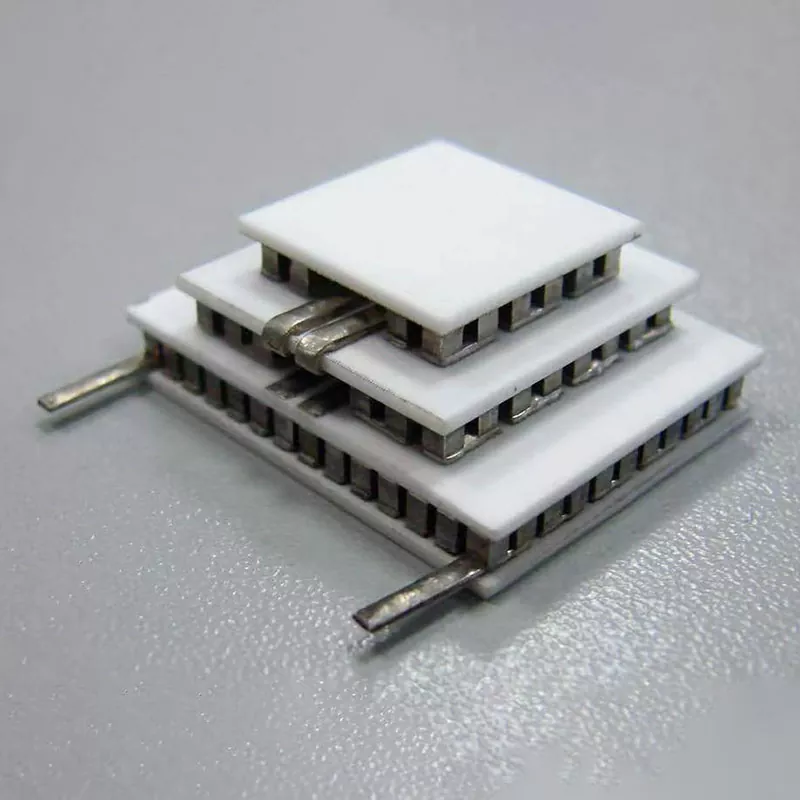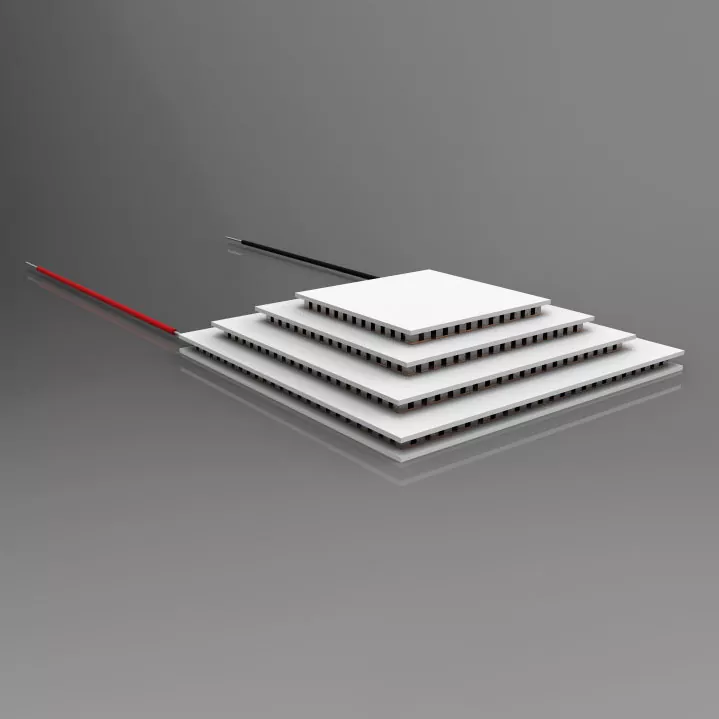
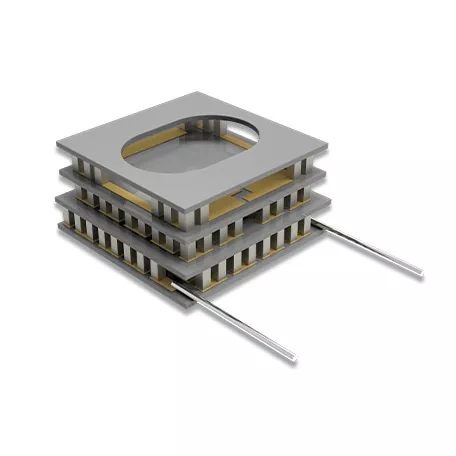
X-Meritan's Two-Stage Thermoelectric Coolers use a two-stage series structure in which the first thermoelectric stage provides an intermediate cooling stage for the second. Under suitable operating conditions, this cascade configuration can achieve a greater temperature differential than a single-stage TEC.
The modules use solid-state thermoelectric elements and DC power, with no compressors or other moving mechanical parts. They are suitable for localized temperature control where compact construction, low vibration, and controlled low-temperature operation are required.
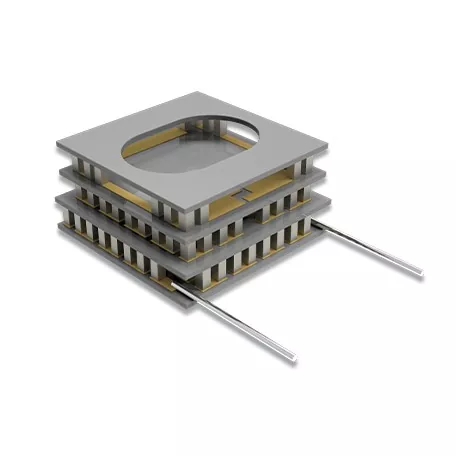
A two-stage TEC consists of two thermoelectric stages connected through an intermediate thermal interface:
Cold Side → First Stage → Intermediate Interface → Second Stage → Hot Side
The first stage removes heat from the controlled area, while the second stage transfers heat toward the hot side. The second stage therefore handles the heat transferred from the first stage as well as the electrical input to the module.
The achievable temperature differential depends on the thermal load, hot-side temperature, operating current, and heat-rejection conditions.
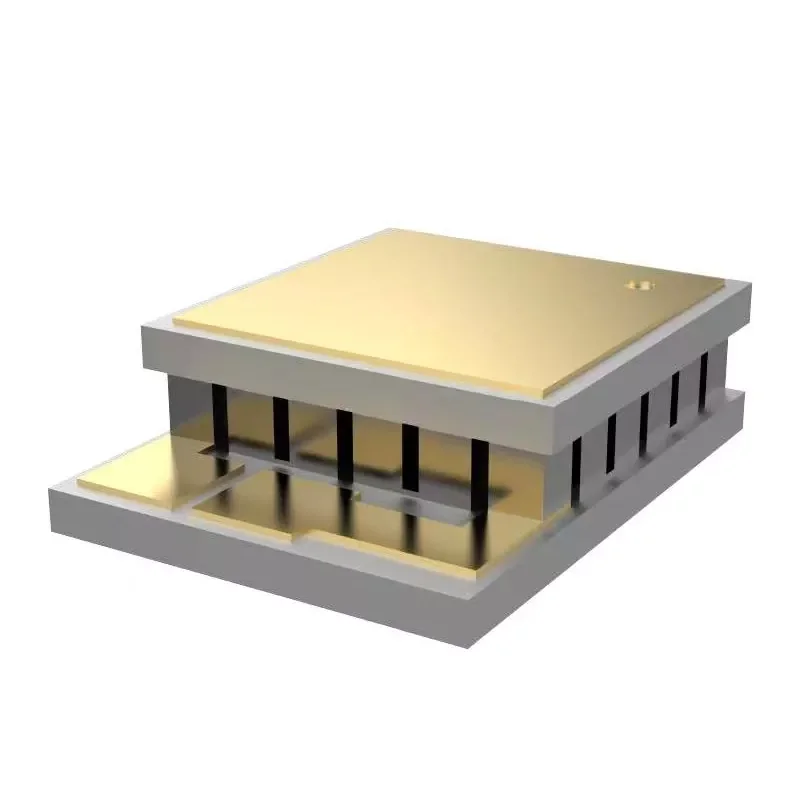
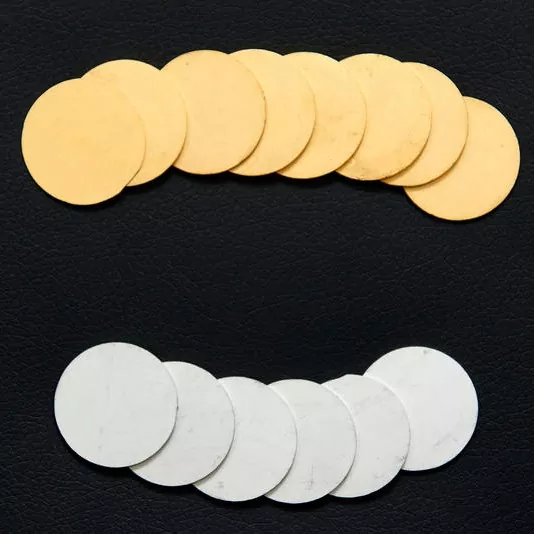
Aluminum oxide (Al₂O₃) ceramic substrates provide electrical insulation and structural support for the thermoelectric module while forming the thermal surfaces between the thermoelectric elements and the external thermal system.
P-type and N-type semiconductor elements form the thermoelectric core and provide the electrical and thermal conversion required for cooling. X-Meritan uses Bi₂Te₃-based thermoelectric materials for ambient and low-temperature temperature-control applications.
The two thermoelectric stages are mechanically and thermally connected through an intermediate interface. Its thermal and mechanical characteristics need to be considered when designing the complete module.
The module operates from a direct-current power source. Electrical configuration, power leads, and operating conditions are determined according to the module structure and application requirements.
X-Meritan has capabilities covering thermoelectric material development, production, component manufacturing, assembly, and testing. Its TEC components use extruded Bi₂Te₃-Sb₂Te₃-based materials.
The extrusion process applies high-pressure plastic deformation to form a dense, textured structure. This supports subsequent cutting and thinning processes and allows the production of small thermoelectric elements.
|
Parameter |
Specification |
|
Material System |
Bi₂Te₃-Sb₂Te₃ based |
|
Ingot Diameter |
25 mm / 30 mm / 35 mm |
|
Ingot Length |
120 mm / 240 mm |
|
Electrical Conductivity |
870–1430 Ω⁻¹·cm⁻¹ |
|
Thin Element Capability |
Down to 0.2 mm, depending on design and processing |
The final material grade and element dimensions are selected according to the module structure and manufacturing requirements.
A two-stage configuration is generally considered when the required temperature differential exceeds the practical range of a single-stage design.
|
Factor |
Single-Stage TEC |
Two-Stage TEC |
|
Thermoelectric Stages |
One |
Two |
|
Temperature Differential |
Suitable for moderate requirements |
Suitable for larger differential requirements |
|
Thermal Structure |
Simpler |
More complex |
|
Intermediate Interface |
Not applicable |
Required |
|
Hot-Side Heat Rejection |
Important |
More demanding |
|
Typical Use |
General temperature control |
Lower-temperature applications requiring a larger differential |
Two-Stage Thermoelectric Coolers can provide localized temperature control for infrared detectors and related sensing components where a larger temperature differential is required.
For CCD-based imaging systems, thermoelectric cooling can maintain the sensor at a controlled operating temperature where the thermal requirement exceeds the practical range of a single-stage module.
The solid-state construction of thermoelectric modules can be considered for aerospace and satellite communication equipment where equipment architecture, available space, and vibration requirements limit the use of conventional mechanical cooling systems.
Two-stage thermoelectric technology can be applied to biochemical analysis equipment and laboratory cold stages requiring controlled low-temperature conditions.
TEC modules can provide a controlled thermal environment for low-temperature characteristic testing of electronic components and other temperature-sensitive devices.
X-Meritan supports customized thermoelectric modules based on customer drawings, samples, dimensions, and application requirements.
A typical development process is:
Requirement Review → Structure Design → Sample Production → Performance Evaluation → Confirmation → Production
For new designs, key engineering inputs include the target temperature range, thermal load, available installation space, power conditions, and hot-side heat-rejection method.
The X-Meritan team has more than 10 years of experience in semiconductor thermal management, with capabilities covering thermoelectric material development, component manufacturing, assembly, and testing.
Production equipment includes soldering, reflow, dispensing, cutting, sealing, curing, and printing equipment, supported by dedicated assembly and testing facilities.
The quality management system follows ISO 9001:2015. RoHS and REACH compliance documentation is available for applicable products and configurations, with specific documentation confirmed according to the supplied module.
For engineering evaluation and TEC selection, the following information is useful:
|
Required Information |
Purpose |
|
Target Cold-Side Temperature |
Defines the required cooling condition |
|
Hot-Side Temperature |
Establishes the thermal boundary |
|
Heat Load |
Determines the required cooling capacity |
|
Available Dimensions |
Defines the installation space |
|
Power Supply |
Determines electrical operating conditions |
|
Heat-Rejection Method |
Establishes the hot-side cooling condition |
|
Control Method |
Defines temperature regulation requirements |
|
Operating Cycle |
Helps evaluate repeated operation |
A product drawing, existing module, or test data can also be provided when the new module needs to replace or match an existing design.
Two-Stage Thermoelectric Coolers are considered when a single-stage module cannot provide the required cold-side condition under the specified thermal load and hot-side temperature.
Yes. Sub-ambient operation below 0°C is possible when the module design, heat load, hot-side conditions, and control system are suitable for the required temperature range.
The target cold-side temperature, hot-side temperature, heat load, available dimensions, power supply, and heat-rejection method are among the main parameters used for selection.
Yes. X-Meritan can develop modules according to customer drawings, samples, dimensional requirements, electrical conditions, and application requirements.
Address
Building C2, R&F Center, Shangpu Road, Taijiang District, Fuzhou City, Fujian Province, China
Tel
Ready to start your next thermal management project or request a competitive price quote? The X-meritan engineering and sales team is standing by to analyze your project requirements, recommend suitable standard TEC models, or discuss fully custom thermoelectric cooler manufacturing options.
Simply fill out the inquiry form with your operating parameters—such as heat load, ambient temperature, target cold-side temperature, dimensions, and estimated annual volume. Our technical sales engineers will review your thermal constraints and respond with a detailed quotation and engineering assessment within 24 business hours.