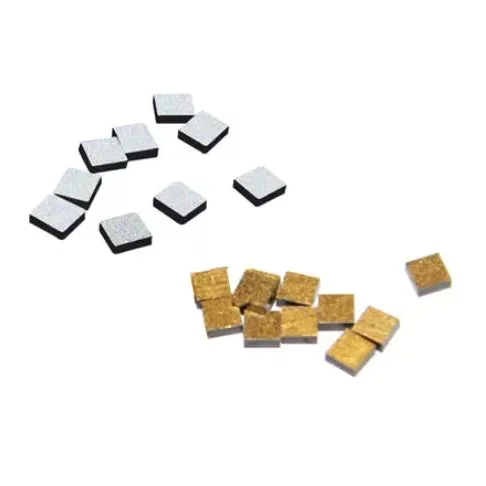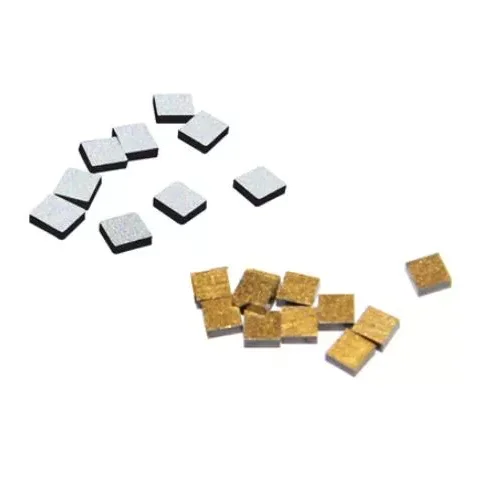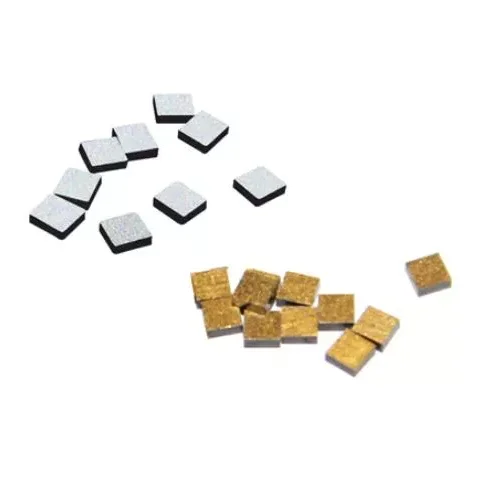
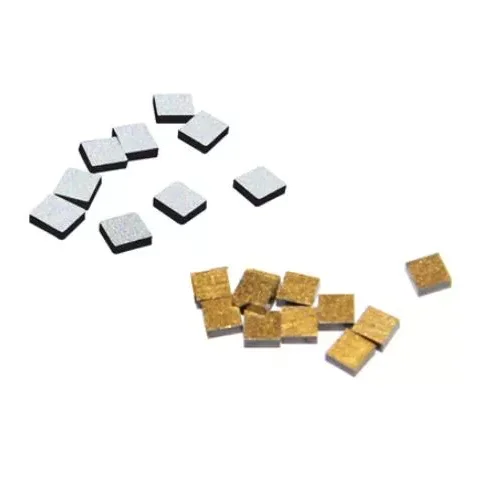
Low-Temperature NTC thermistors from X-Meritan are designed for temperature sensing in low-temperature and cryogenic environments where a defined resistance-temperature response is required. The sensing element is manufactured from a sintered composite of metal oxides, providing the negative temperature coefficient needed to detect temperature changes through resistance variation.
The thermistor can be configured for applications including cryogenic liquid level detection, motor winding temperature monitoring, new energy equipment, industrial automation, and specialized laboratory or medical systems. Resistance characteristics, sensor dimensions, encapsulation, lead wires, and other specifications can be adapted to the requirements of the equipment.
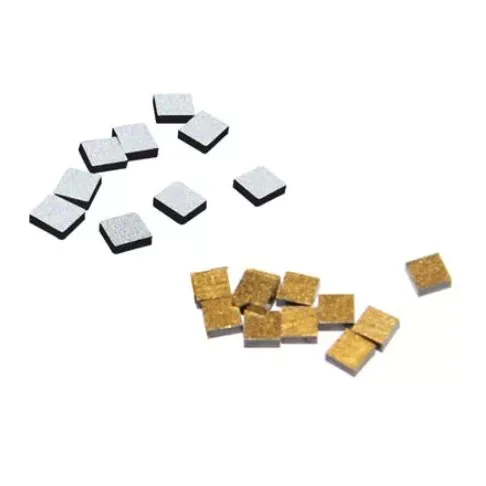
NTC stands for Negative Temperature Coefficient. Its fundamental characteristic is that electrical resistance changes inversely with temperature.
Lower Temperature → Higher Resistance
Higher Temperature → Lower Resistance
When the surrounding temperature changes, the resistance of the sintered metal-oxide sensing material changes accordingly. The measurement circuit determines temperature by measuring this resistance and comparing it with the thermistor's specified resistance-temperature (R/T) characteristic.
The electrical behavior of the thermistor is defined by its resistance-temperature relationship and the tolerances associated with the specified parameters.
|
Parameter |
Description |
|
R25 |
Nominal resistance measured at 25°C |
|
B Value |
Characterizes the resistance-temperature relationship over a specified temperature range |
|
Resistance Tolerance |
Permitted deviation from the nominal resistance |
|
B-Value Tolerance |
Permitted deviation of the B value |
|
Operating Temperature |
Specified sensing temperature range |
|
Rated Power |
Maximum allowable power under specified conditions |
Actual values should be taken from the applicable product specification or test data for the selected configuration. For low-temperature applications, the electrical characteristics should be evaluated across the actual sensing range rather than from the 25°C resistance value alone.
The thermistor can be configured for liquid level detection in cryogenic media such as liquid nitrogen and liquid oxygen.
The detection principle is based on changes in the thermal condition around the sensing element. When the element changes between liquid-covered and vapor-exposed conditions, its resistance changes accordingly. A measurement or control circuit can use this resistance variation to identify the corresponding liquid-level condition.
For this application, the sensing position, target temperature range, R/T characteristic, encapsulation, and installation method need to be considered together. The configuration should also be evaluated against the actual medium and equipment structure, particularly for applications involving cryogenic liquids.
The thermistor can be embedded within motor windings to monitor temperature changes during operation.
Installed close to the winding, the NTC provides a temperature-dependent electrical signal that can be connected to a protection or control circuit. Changes in winding temperature produce corresponding resistance changes, allowing the system to identify abnormal thermal conditions and initiate the required monitoring or protection response.
Motor applications require careful consideration of sensor dimensions, insulation requirements, lead-wire construction, resistance characteristics, and installation position. The sensor must fit within the available winding space while maintaining the required electrical insulation and connection arrangement.
The thermistor can also be integrated into equipment where low-temperature feedback is required for process control, protection, or thermal management.
Applicable areas include new energy equipment, industrial automation systems, laboratory equipment, medical cooling systems, and specialized cooling modules. The appropriate configuration depends on the operating temperature, electrical interface, installation conditions, and required sensing characteristics.
X-Meritan has more than 10 years of experience in semiconductor thermal management, with capabilities covering material development, component manufacturing, assembly, testing, and thermal management solution design.
Its production and testing facilities support processes including soldering, reflow, dispensing, cutting, sealing, curing, and printing. Thermistor quality evaluation can include material inspection, element production, sintering, encapsulation, electrical testing, R/T testing, dimensional inspection, and final verification according to the applicable product requirements.
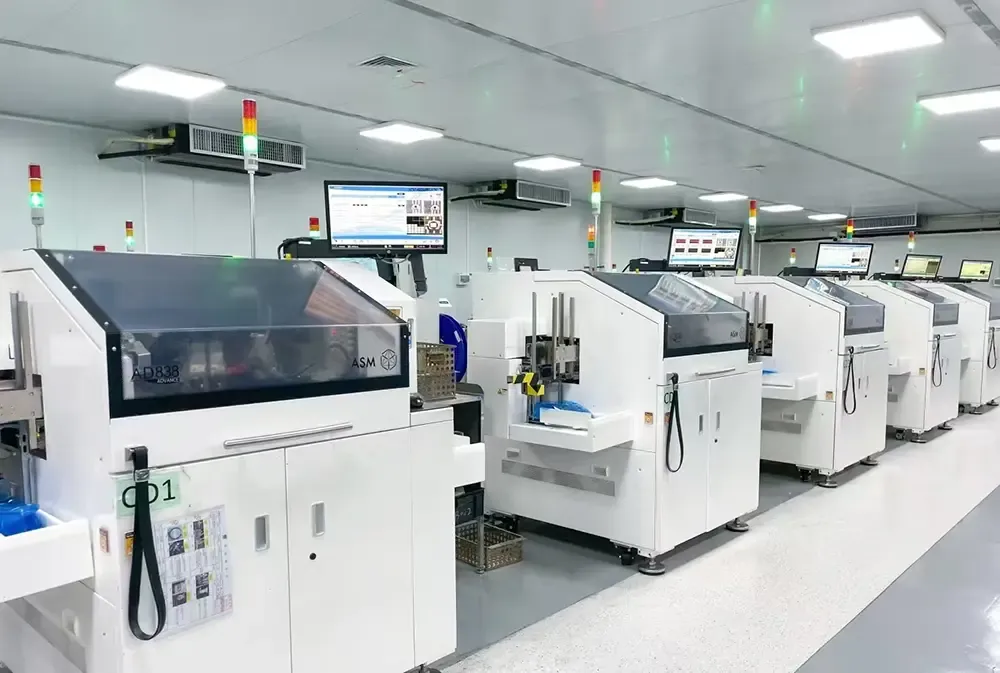
A typical production and inspection sequence is:
Material Preparation → Element Production → Sintering → Encapsulation → Electrical Testing → R/T Testing → Final Inspection
The company's quality management system is certified to ISO 9001:2015. RoHS and REACH compliance can be provided for applicable products and configurations.
Customer drawings and samples can also be used as development references when a standard configuration does not meet the requirements of the target equipment. Sample verification can be completed before volume production to confirm the required electrical and mechanical specifications.
NTC stands for Negative Temperature Coefficient. An NTC thermistor has a resistance that decreases as temperature increases and increases as temperature decreases. This predictable relationship allows the component to be used for temperature measurement, monitoring, and protection.
R25 is the nominal resistance measured at 25°C, while the B value describes the resistance-temperature relationship over a specified temperature range. Both are used together with the applicable R/T characteristic when evaluating a thermistor.
An NTC can be configured for cryogenic liquid level detection when its resistance-temperature characteristics, packaging, installation position, and electrical interface are suitable for the application. The final configuration should be verified against the required operating temperature, medium, and equipment conditions.
Yes. A thermistor can be designed for embedded motor-winding temperature monitoring when its dimensions, insulation, lead configuration, temperature range, and electrical characteristics are compatible with the motor structure.
Address
Building C2, R&F Center, Shangpu Road, Taijiang District, Fuzhou City, Fujian Province, China
Tel
Ready to start your next thermal management project or request a competitive price quote? The X-meritan engineering and sales team is standing by to analyze your project requirements, recommend suitable standard TEC models, or discuss fully custom thermoelectric cooler manufacturing options.
Simply fill out the inquiry form with your operating parameters—such as heat load, ambient temperature, target cold-side temperature, dimensions, and estimated annual volume. Our technical sales engineers will review your thermal constraints and respond with a detailed quotation and engineering assessment within 24 business hours.