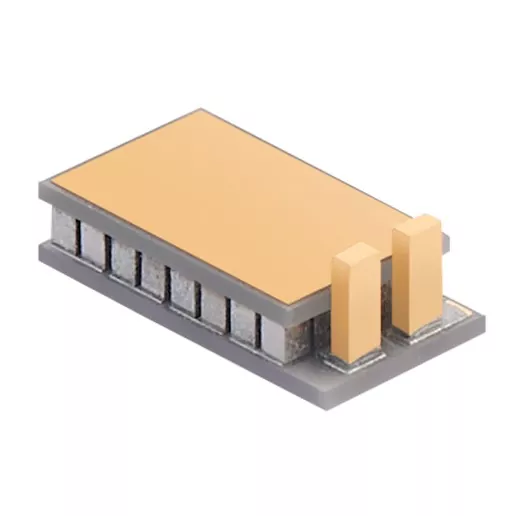
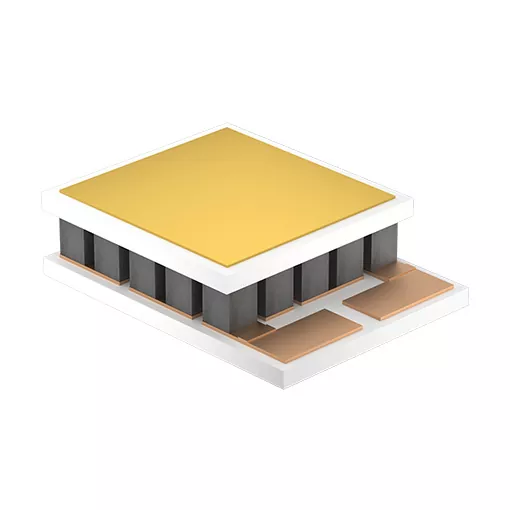
The laser transmitter inside Micro Thermoelectric Coolers for LiDAR generates heat during operation, while the surrounding temperature can vary significantly between different operating environments. If the laser temperature changes beyond its required operating range, the optical device may not maintain the required operating condition.
A Micro-TEC can be installed directly at the laser module to actively pump heat away from the temperature-sensitive component. Unlike a passive heat sink, it does not rely only on natural or forced heat dissipation.
For compact LiDAR assemblies, the main application value is localized temperature control. The cooler can be positioned close to the laser source without requiring a compressor, refrigerant circuit, or moving mechanical components.
|
Item |
Available Configuration |
|
Product |
Micro Thermoelectric Cooler / Micro-TEC |
|
Cooling Technology |
Semiconductor Peltier cooling |
|
Size |
Micro-sized configurations down to a few millimeters |
|
Power Consumption |
Less than 1 W in applicable configurations |
|
Structure |
Solid-state, no compressor or moving mechanical parts |
|
Refrigerant |
None |
|
Mounting |
Standard or customized |
|
Header |
Available for applicable configurations |
|
Customization |
Samples and drawings supported |
|
Application |
LiDAR laser modules and temperature-sensitive optoelectronic components |
The actual cooling capacity, current, voltage, dimensions, and thermal performance depend on the selected Micro-TEC configuration and the heat load of the LiDAR component.
Micro Thermoelectric Coolers for LiDAR has limited internal space because the laser, detector, optical components, electronic circuits, and heat dissipation structures are integrated into one assembly.
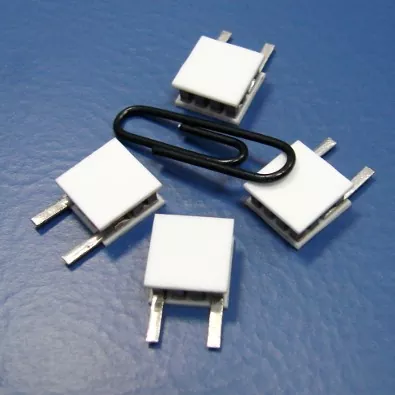
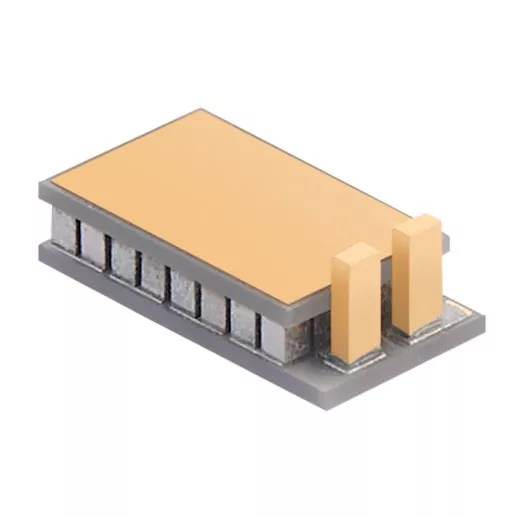
Our Micro-TECs can be manufactured in micro-sized configurations down to a few millimeters. This allows the cooler to be positioned close to the laser or other heat-sensitive component instead of occupying space as a separate refrigeration system.
For customized LiDAR assemblies, the product dimensions can be evaluated according to the available installation space, component position, mounting structure, and electrical interface.
Power consumption is an important design parameter when the Micro-TEC is integrated into a vehicle LiDAR or other compact electronic system.
Our Micro Thermoelectric Coolers can operate at less than 1 watt in applicable configurations. The actual power requirement depends on the selected product design and the thermal load that needs to be controlled.
For engineering evaluation, customers should provide the target cooling temperature, heat load, available voltage, and installation dimensions so that the appropriate Micro-TEC configuration can be selected.
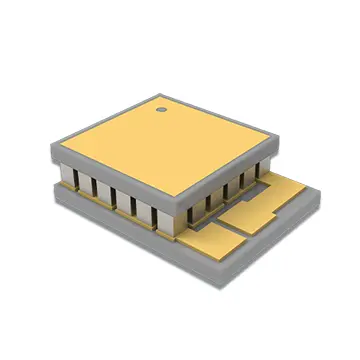
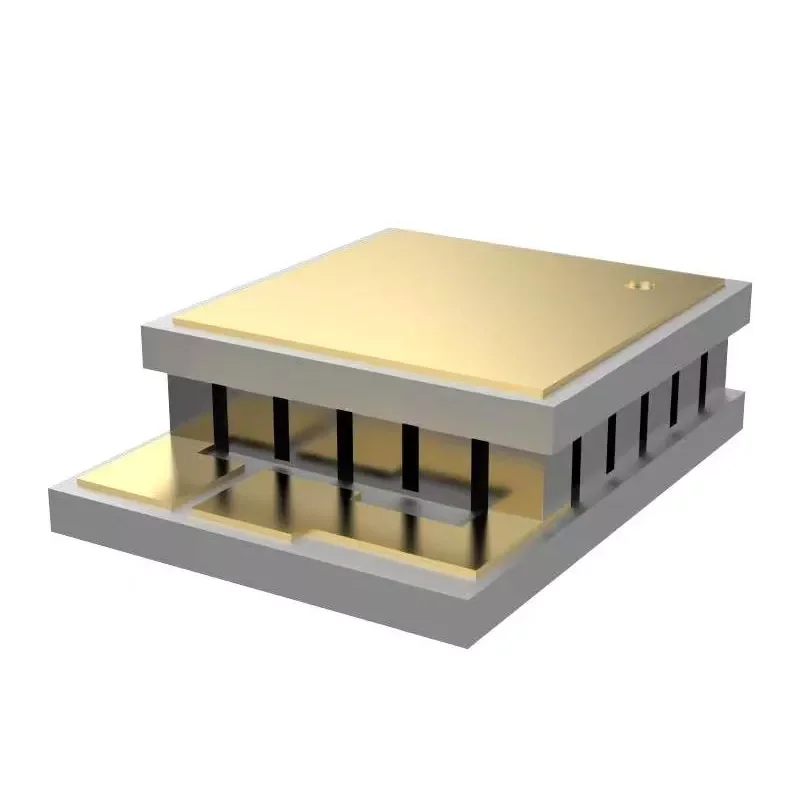
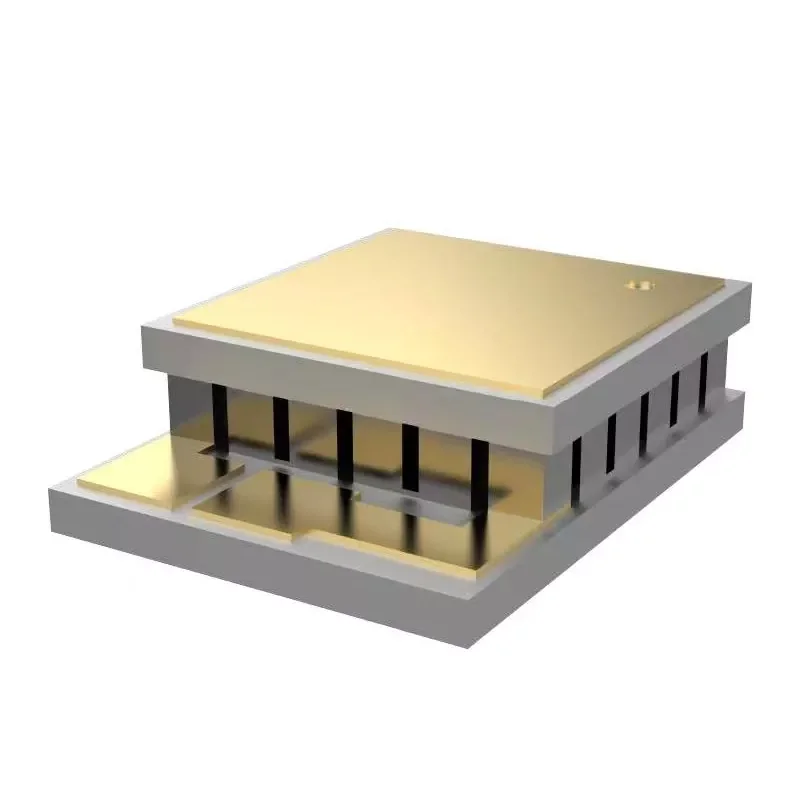
The Micro Thermoelectric Coolers for LiDAR uses semiconductor thermoelectric materials between ceramic substrates to transfer heat when electrical current is applied.
The component has:
● No compressor
● No refrigerant
● No mechanical moving parts
● Compact solid-state construction
● Direct electrical control
This structure is useful for LiDAR modules where the cooling component needs to be installed close to the laser and integrated into a limited mechanical space.
The Micro-TEC is used to control the temperature of the target component rather than simply lowering the temperature of the entire LiDAR housing.
When electrical power is applied, heat is transferred from the cold side to the hot side. The cold side is placed near the laser or other temperature-sensitive component, while the hot side must be connected to an effective heat dissipation path.
The thermal design therefore needs to consider both sides of the Micro-TEC:
Target Component → Micro-TEC Cold Side → Micro-TEC Hot Side → LiDAR Heat Dissipation Structure
If the hot side cannot remove the transferred heat effectively, the cooling performance of the entire system will be reduced.
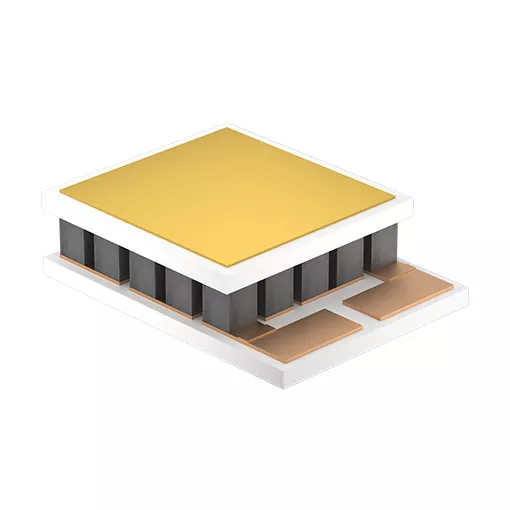
For LiDAR designs requiring a defined mechanical interface, we can provide Micro Thermoelectric Coolers with headers.
The header configuration can be evaluated according to:
● Available installation space
● Mounting structure
● Component position
● Electrical connection
● Assembly requirements
For non-standard structures, customers can provide an existing sample or engineering drawing. We evaluate the structure before sample production.
A standard Micro-TEC may not match the dimensions or thermal requirements of a specific LiDAR module. We support customized products based on customer samples or drawings.
The customization process can cover:
Dimensions → Electrical Parameters → Mounting Structure → Header Configuration → Thermal Requirements
Before mass production, samples are produced for customer confirmation. This allows the Micro-TEC to be checked against the actual LiDAR assembly before the production quantity is released.
For a new LiDAR cooling project, customers can provide the following information:
|
Required Information |
Purpose |
|
Laser or component dimensions |
Determines the available cooling contact area |
|
Heat load |
Determines the required cooling capacity |
|
Target temperature |
Defines the required temperature-control condition |
|
Available voltage |
Determines the electrical configuration |
|
Maximum allowable current |
Defines the operating limit |
|
Installation space |
Determines the Micro-TEC dimensions |
|
Mounting structure |
Determines the mechanical configuration |
|
Hot-side heat dissipation method |
Determines the system-level thermal performance |
|
Existing sample or drawing |
Used for customized design evaluation |
If some parameters are not yet available, an existing Micro-TEC sample or LiDAR assembly drawing can be used as the starting point for technical evaluation.
The thermal interface between the Micro-TEC and the laser module directly affects heat transfer.
The cold side should maintain sufficient contact with the target component, and an appropriate thermal interface material (TIM) can be used when required by the assembly design.
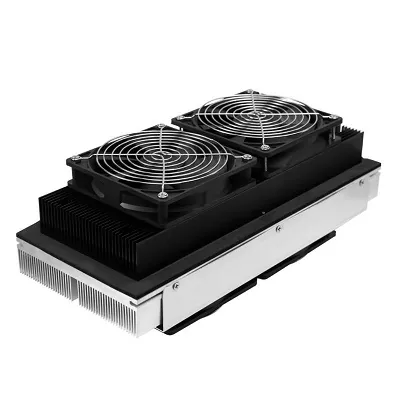
The hot side requires an effective heat dissipation path. A heat sink, housing, or other cooling structure should be designed to remove the heat transferred by the Micro-TEC.
The Micro-TEC must also be operated within its specified electrical parameters. The maximum IMAX current must not be exceeded, because excessive current can damage the thermoelectric semiconductor junction.
X-Meritan manufactures Micro Thermoelectric Coolers and also controls the preparation of upstream thermoelectric materials.
Our production capabilities cover:
● Thermoelectric material preparation
● Precision component processing
● Welding
● Assembly
● Micro-packaging
● Customized Micro-TEC production
This manufacturing structure supports projects that require non-standard Micro-TEC dimensions, mounting structures, or electrical configurations.
For customized LiDAR applications, the product can be developed from the material and component level rather than being limited to an existing standard cooler.
For customized LiDAR cooling projects, we follow a sample-based development process:
Customer Drawing / Sample → Technical Evaluation → Product Design → Sample Production → Sample Confirmation → Mass Production
The sample confirmation stage allows the dimensions, mounting structure, electrical connection, and assembly compatibility to be checked before mass production.
Micro Thermoelectric Coolers can be used for temperature control of:
● LiDAR laser transmitters
● Temperature-sensitive optoelectronic components
● Compact optical modules
● Automotive LiDAR assemblies
● Other miniature electronic components requiring localized active cooling
X-Meritan has more than 10 years of experience in miniature semiconductor cooling and provides Micro-TEC products for international markets.
The company has obtained ISO and CE certifications and exports products to Europe, North America, South America, Southeast Asia, and other markets.
Our technical experience covers optical fiber communications, industrial medical equipment, smart automotive electronics, consumer electronics, and research applications.
The most useful information includes the component heat load, target temperature, available voltage, maximum current, installation dimensions, mounting structure, and hot-side heat dissipation method. A drawing or existing Micro-TEC sample can also be used for evaluation.
X-Meritan can manufacture Micro-TEC configurations down to a few millimeters, depending on the required structure and performance. The final dimensions need to be confirmed according to the application.
Yes. We support customization based on customer drawings or samples. The product is sampled and confirmed before mass production.
Yes. Header configurations are available for applications that require a defined mounting or connection structure. The exact header design is confirmed according to the LiDAR assembly.
Yes, applicable configurations can operate at less than 1 W. Actual power consumption depends on the Micro-TEC design, operating conditions, and thermal load.
The two most important points are cold-side thermal contact and hot-side heat dissipation. The cold side needs effective contact with the target component, while the hot side must have a sufficient path to remove the transferred heat.
Continuous operation depends on the selected Micro-TEC configuration and its specified electrical and thermal operating conditions. The product should be operated within the specified voltage and current limits, and the hot side must be adequately cooled.
Exceeding the specified IMAX current can cause excessive electrical and thermal stress and may damage the thermoelectric semiconductor junction. The Micro-TEC should therefore be operated within its specified electrical range.
X-Meritan provides Micro Thermoelectric Coolers for LiDAR with micro-sized structures, solid-state Peltier cooling, customized mounting configurations, and sample-based development.
For a new LiDAR cooling project, send us your drawing, sample, installation dimensions, heat load, target temperature, or existing Micro-TEC specification. We can evaluate the requirements and develop the corresponding Micro-TEC for sample confirmation before mass production.
Address
Building C2, R&F Center, Shangpu Road, Taijiang District, Fuzhou City, Fujian Province, China
Tel
Ready to start your next thermal management project or request a competitive price quote? The X-meritan engineering and sales team is standing by to analyze your project requirements, recommend suitable standard TEC models, or discuss fully custom thermoelectric cooler manufacturing options.
Simply fill out the inquiry form with your operating parameters—such as heat load, ambient temperature, target cold-side temperature, dimensions, and estimated annual volume. Our technical sales engineers will review your thermal constraints and respond with a detailed quotation and engineering assessment within 24 business hours.