News

Why Do Thermoelectric Materials Need a Diffusion Barrier Layer?

2026-10-13 0 Leave me a message

If you are sourcing Thermoelectric Materials for module manufacturing, you have probably encountered the term "diffusion barrier layer." You may have wondered why it is necessary, what it does, and whether it is worth the additional cost. The answer is that the diffusion barrier layer is not an optional accessory; it is a critical component that determines the lifetime and reliability of the thermoelectric module. Without it, the module will degrade rapidly at operating temperatures, and its performance will decline until it fails. For a procurement engineer, understanding the diffusion barrier layer is essential for making informed purchasing decisions and for evaluating the total cost of ownership of the thermoelectric materials you buy.


The purpose of this guide is to explain why Thermoelectric Materials need a diffusion barrier layer and to help buyers specify and source the right materials for their application. We will cover the degradation mechanisms that occur without a barrier, the materials used for barrier layers, the selection criteria for different thermoelectric materials, and the supplier evaluation process. We will also provide detailed product specifications from our factory at Fuzhou X-Meritan Technology Co., Ltd. Whether you are manufacturing thermoelectric modules for power generation or cooling, this guide will give you the technical foundation you need to make a confident purchasing decision.

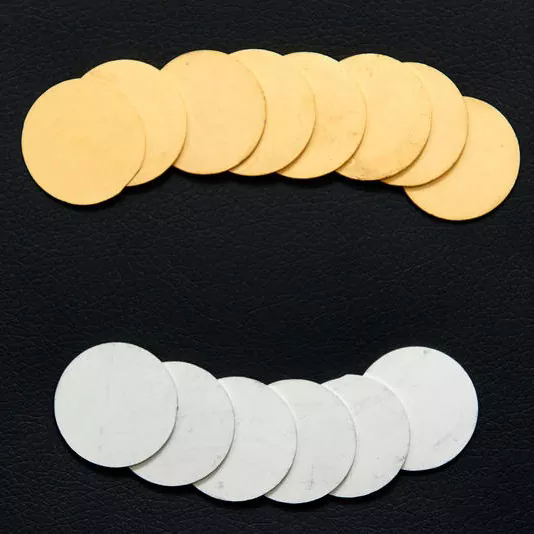
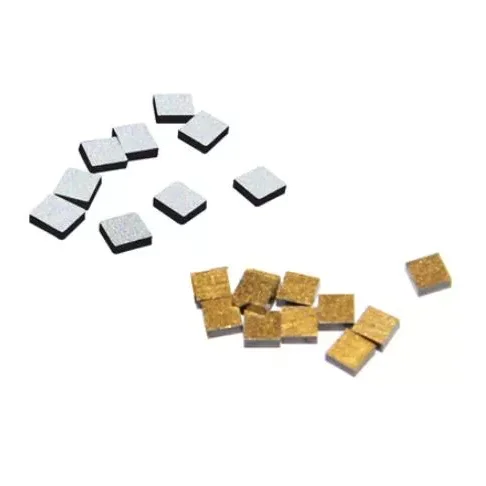
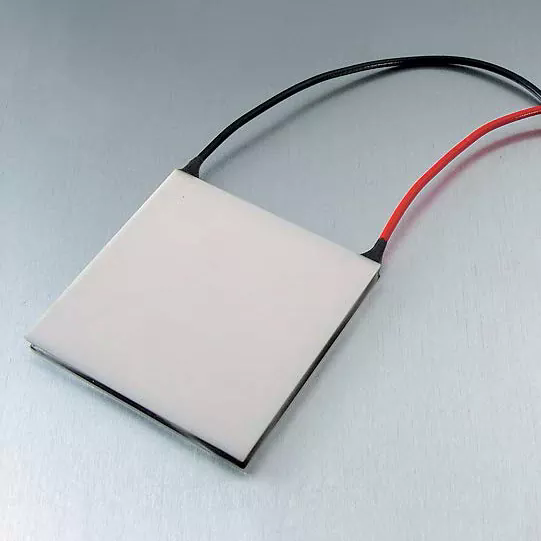
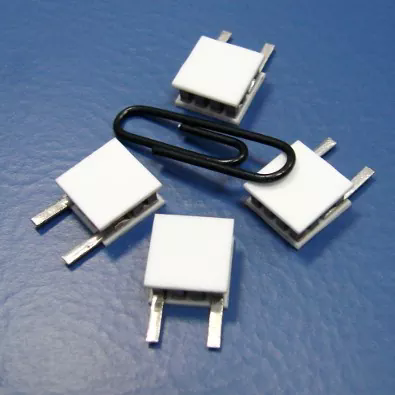
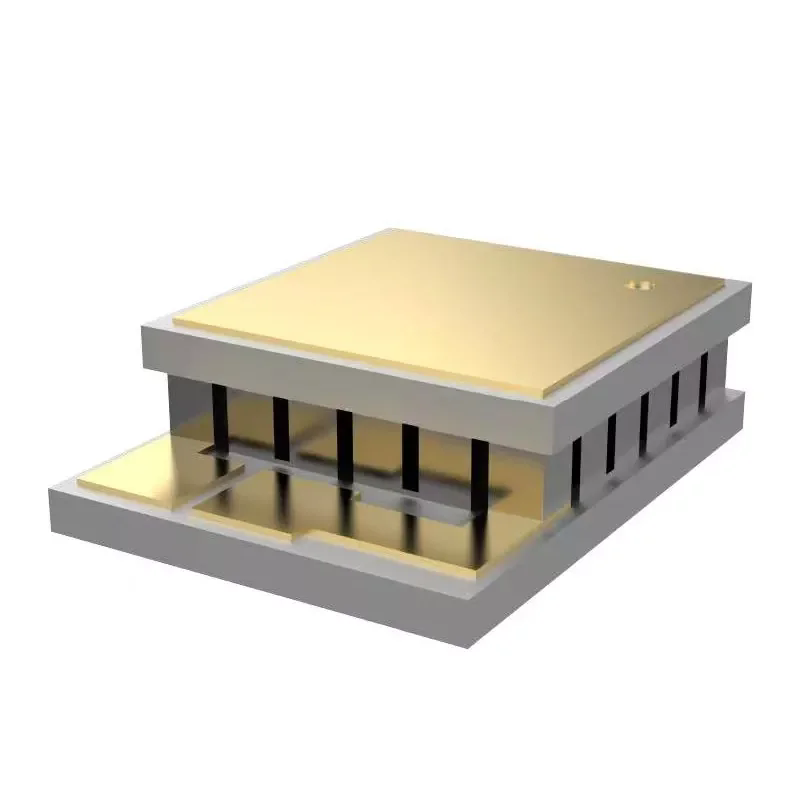
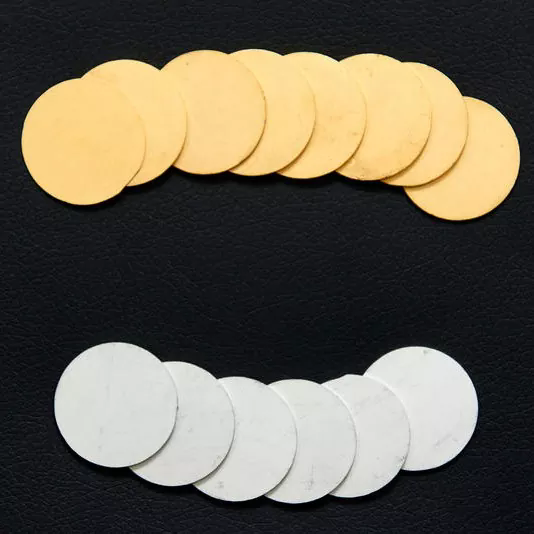
Slices with Diffusion Barriers


Table of Contents


1. What Is a Diffusion Barrier Layer and Why Is It Needed?

A diffusion barrier layer is a thin film of material deposited between the thermoelectric material and the metallic contact. Its primary function is to prevent the interdiffusion of atoms between the thermoelectric material and the contact. In a thermoelectric module, the thermoelectric material is joined to metallic contacts (typically copper) to form the electrical circuit. At the operating temperature, which can range from 200°C to 600°C or higher, atoms from the thermoelectric material can diffuse into the contact, and atoms from the contact can diffuse into the thermoelectric material. This interdiffusion creates unwanted phases, increases contact resistance, and degrades the thermoelectric properties. The barrier layer acts as a physical and chemical barrier that blocks this diffusion while still allowing electrical current to pass. The table below summarizes the functions of a diffusion barrier layer.

Function Description Benefit to Module Performance
Prevent Interdiffusion Blocks atomic migration between materials Maintains material properties
Maintain Low Contact Resistance Provides stable electrical interface Maximizes power output
Improve Thermal Stability Withstands high operating temperatures Extends module lifetime
Prevent Embrittlement Stops formation of brittle phases Improves mechanical integrity
Enhance Reliability Reduces degradation over time Lowers total cost of ownership

At Fuzhou X-Meritan Technology Co., Ltd., our factory specializes in the supply of Thermoelectric Materials with optimized diffusion barrier layers. We understand the critical role that the barrier plays in module performance, and we work with our customers to select the right barrier material and thickness for their specific application. Our technical team can provide detailed data on barrier performance and compatibility with different thermoelectric materials.


2. What Happens to Thermoelectric Materials Without a Barrier?

To appreciate why a diffusion barrier layer is necessary, it is helpful to understand what happens when it is absent. Without a barrier, the thermoelectric material and the metallic contact are in direct contact. At elevated temperatures, this contact becomes a reaction zone. Atoms from the thermoelectric material, such as bismuth, tellurium, lead, or antimony, diffuse into the copper contact. Similarly, copper atoms diffuse into the thermoelectric material. This interdiffusion has several detrimental effects. First, it creates intermetallic compounds at the interface. These compounds are often brittle and have high electrical resistance. Second, it depletes the thermoelectric material of its constituent elements, changing its composition and degrading its thermoelectric properties. Third, it increases the contact resistance, which reduces the power output of the module. Fourth, it can lead to mechanical failure due to the volume changes associated with the formation of intermetallic compounds. The table below summarizes the degradation mechanisms that occur without a barrier layer.

Degradation Mechanism Description Effect on Module Performance
Intermetallic Compound Formation Reaction between thermoelectric material and contact Increased resistance, brittleness
Material Depletion Loss of elements from thermoelectric material Reduced Seebeck coefficient, increased resistivity
Contact Resistance Increase Formation of resistive layers at interface Reduced power output
Mechanical Failure Cracking due to volume changes Open circuit, module failure
Solder Embrittlement Diffusion of elements into solder joints Joint failure, reduced reliability

At our factory, we have conducted extensive studies on the degradation of Thermoelectric Materials without barrier layers. Our data shows that the contact resistance can increase by a factor of 10 or more within 1,000 hours of operation at 500°C. The power output of the module can decrease by 30-50% over the same period. These findings underscore the importance of the diffusion barrier layer for module reliability and performance.


3. What Materials Are Used for Diffusion Barrier Layers?

Several materials are used as diffusion barrier layers for Thermoelectric Materials, each with its own advantages and limitations. The choice of barrier material depends on the thermoelectric material, the operating temperature, and the contact material. The most common barrier materials are nickel, molybdenum, tungsten, titanium, and various alloys. Nickel is widely used because it is an effective diffusion barrier, has good electrical conductivity, and is compatible with many thermoelectric materials. Molybdenum and tungsten are used for higher-temperature applications because of their high melting points and low diffusivity. Titanium is used as an adhesion layer and a barrier for some materials. The table below compares these barrier materials.

Barrier Material Max Operating Temperature Electrical Conductivity Compatibility Typical Application
Nickel (Ni) 600°C High Bi2Te3, PbTe, Skutterudites General purpose
Molybdenum (Mo) 800°C Moderate PbTe, SiGe, Skutterudites High temperature
Tungsten (W) 1,000°C Moderate SiGe, high-temperature materials Very high temperature
Titanium (Ti) 500°C Moderate Bi2Te3, adhesion layer Adhesion promotion
Nickel-Chromium (NiCr) 700°C Moderate PbTe, TAGS Corrosion resistant

At Fuzhou X-Meritan Technology Co., Ltd., our factory supplies Thermoelectric Materials with a range of barrier layer options. We work with our customers to select the optimal barrier material and thickness for their specific module design. Our technical team can provide data on diffusion rates, contact resistance, and thermal stability for each barrier option.


4. How Do You Select the Right Barrier for Your Thermoelectric Material?

Selecting the right diffusion barrier layer for your Thermoelectric Materials requires a systematic evaluation of several factors. The first factor is the thermoelectric material itself. Different materials have different diffusion characteristics. For example, bismuth telluride (Bi2Te3) has a relatively low operating temperature and can use a nickel barrier. Lead telluride (PbTe) operates at higher temperatures and may require a molybdenum or NiCr barrier. Silicon germanium (SiGe) operates at very high temperatures and requires a tungsten or other refractory metal barrier. The second factor is the operating temperature. The barrier must be stable at the maximum operating temperature and must not react with either the thermoelectric material or the contact. The third factor is the contact material. The barrier must be compatible with the contact and must provide good adhesion. The fourth factor is the thickness of the barrier. The barrier must be thick enough to block diffusion but thin enough to minimize electrical resistance. The table below summarizes the selection criteria.

Selection Factor Consideration Impact on Performance
Thermoelectric Material Diffusion characteristics, operating temperature Determines barrier material compatibility
Operating Temperature Maximum and cycling temperature Determines barrier stability
Contact Material Adhesion, thermal expansion match Determines interface quality
Barrier Thickness Balance between diffusion blocking and resistance Affects contact resistance and lifetime
Deposition Method Sputtering, evaporation, electroplating Affects barrier quality and uniformity

At our factory, we help our customers select the right barrier for their Thermoelectric Materials. We have extensive experience with a wide range of material systems and can provide guidance on the optimal barrier material, thickness, and deposition method. Our goal is to help our customers achieve the highest possible module performance and reliability.


5. How Do You Evaluate a Thermoelectric Materials Supplier?

Evaluating a supplier of Thermoelectric Materials with diffusion barrier layers requires looking beyond the unit price. The supplier's technical capability, quality control, and ability to provide consistent material properties are critical for your module performance. The key criteria for evaluating a supplier are material quality, barrier layer quality, technical support, delivery performance, and cost. Material quality includes the purity, stoichiometry, and homogeneity of the thermoelectric material. Barrier layer quality includes the thickness uniformity, adhesion, and diffusion blocking effectiveness. Technical support includes the ability to provide data, to assist with design, and to solve problems. Delivery performance includes the ability to meet lead times and to provide consistent quality from batch to batch. Cost includes the total cost of ownership, considering module lifetime and performance. The table below summarizes these criteria.

Evaluation Criterion What to Look For Why It Matters
Material Quality Purity, stoichiometry, homogeneity Determines thermoelectric performance
Barrier Layer Quality Thickness uniformity, adhesion, diffusion blocking Determines module lifetime
Technical Support Data sheets, design assistance, problem solving Helps optimize module design
Delivery Performance On-time delivery, batch-to-batch consistency Keeps production running smoothly
Cost Total cost of ownership Ensures long-term value

At X-Meritan, our factory is committed to supplying high-quality Thermoelectric Materials with optimized diffusion barrier layers. We have a comprehensive quality control system that includes material characterization, barrier layer inspection, and performance testing. We provide detailed data sheets and technical support to our customers. And we have a strong track record of on-time delivery. We invite you to evaluate us against these criteria and to consider us as your partner for thermoelectric materials.


6. What Are the Key Product Parameters from Our Factory?

The following table provides the key product parameters for our Thermoelectric Materials with diffusion barrier layers. These materials are available in a range of compositions and configurations to suit different module designs and operating conditions. Our factory can also produce custom materials to meet specific requirements.

Parameter Specification Range Notes
Material Type Bi2Te3, PbTe, Skutterudites, SiGe Other materials available on request
Operating Temperature 200°C - 800°C Depends on material
Barrier Material Ni, Mo, W, Ti, NiCr Selected based on application
Barrier Thickness 1 - 20 µm Optimized for diffusion blocking
Contact Resistance < 10 µΩ·cm² After barrier deposition
Seebeck Coefficient 150 - 250 µV/K Depends on material
Electrical Resistivity 0.5 - 3.0 mΩ·cm Depends on material
Thermal Conductivity 1.0 - 4.0 W/m·K Depends on material
Form Ingots, powders, wafers Custom shapes available
Quality Control XRD, SEM, EDS, Seebeck, resistivity Full characterization

At our factory, we manufacture our Thermoelectric Materials to meet these specifications and more. We can customize the material composition, barrier layer, and form to suit your specific module design. Our technical team can provide detailed data and support for your application.


7. Frequently Asked Questions (FAQ)

Question 1: How thick should a diffusion barrier layer be?

Answer: The optimal thickness of a diffusion barrier layer depends on the material system and the operating temperature. Typically, the thickness ranges from 1 to 20 micrometers. The barrier must be thick enough to block diffusion for the intended lifetime of the module, but thin enough to minimize electrical resistance. Our factory can recommend the optimal thickness for your specific thermoelectric material and application.

Question 2: What happens if the diffusion barrier layer is too thin?

Answer: If the diffusion barrier layer is too thin, it will not effectively block the interdiffusion of atoms between the thermoelectric material and the contact. This will lead to the formation of intermetallic compounds, increased contact resistance, and degradation of the thermoelectric properties. The module will fail prematurely. Our factory tests the barrier layer thickness and diffusion blocking performance to ensure that it meets the requirements of your application.

Question 3: Can I use the same barrier material for all thermoelectric materials?

Answer: No, the barrier material must be selected based on the thermoelectric material and the operating temperature. For example, nickel is suitable for bismuth telluride but may not be suitable for silicon germanium at high temperatures. The barrier must be chemically compatible with both the thermoelectric material and the contact, and it must be stable at the operating temperature. Our technical team can help you select the right barrier material for your application.

Question 4: How do I know if my thermoelectric material supplier provides a good barrier layer?

Answer: To evaluate the quality of a diffusion barrier layer, ask the supplier for data on barrier thickness uniformity, adhesion strength, and diffusion blocking performance. You can also request samples and conduct your own testing, such as accelerated aging tests and contact resistance measurements. A reputable supplier will provide this data and will work with you to ensure that the barrier meets your requirements. At Fuzhou X-Meritan Technology Co., Ltd., we provide comprehensive data and support to our customers.

Question 5: What is the typical lifetime of a thermoelectric module with a diffusion barrier layer?

Answer: The lifetime of a thermoelectric module with a properly designed diffusion barrier layer depends on the operating temperature and the cycling conditions. For a module operating continuously at 500°C, the lifetime can be 5 to 10 years or more. With thermal cycling, the lifetime may be reduced. The barrier layer is critical for achieving long lifetimes. Our factory designs our materials and barrier layers to maximize module lifetime.


8. Conclusion

The diffusion barrier layer is an essential component of Thermoelectric Materials for high-performance modules. It prevents interdiffusion, maintains low contact resistance, and extends module lifetime. When sourcing Thermoelectric Materials, buyers must consider the barrier layer as a critical specification, not an afterthought. The choice of barrier material, thickness, and deposition method affects the performance and reliability of the final module. At Fuzhou X-Meritan Technology Co., Ltd., our factory has the expertise and the experience to supply Thermoelectric Materials with optimized diffusion barrier layers. We work with our customers to understand their requirements and to provide the optimal material solution. Whether you are manufacturing modules for power generation or cooling, we can provide the materials you need.

Our commitment to quality and customer satisfaction has made us a trusted partner for thermoelectric module manufacturers around the world. We invite you to contact us to discuss your Thermoelectric Materials requirements. We can provide technical data, samples, and design assistance. Let us help you achieve the highest performance and reliability for your thermoelectric modules.

Contact Fuzhou X-Meritan Technology Co., Ltd. today to discuss your Thermoelectric Materials requirements and discover how our diffusion barrier layers can improve your module performance and lifetime.

Related News
Leave me a message
X
We use cookies to offer you a better browsing experience, analyze site traffic and personalize content. By using this site, you agree to our use of cookies. Privacy Policy
RejectAccept