A design engineer is prototyping a compact medical sample cooler using Thermoelectric Coolers. The cold side reaches the target temperature within minutes during bench testing. But when the unit is installed in its enclosure, the cold side temperature begins to drift upward and never stabilizes. The engineer checks the TEC current, the insulation, and the control loop. Everything appears correct. The problem is not on the cold side at all. It is on the hot side. The heat rejected by the TEC is not being removed effectively, and that heat is conducting back through the module, degrading its cooling capacity. This is the single most common mistake in thermoelectric cooling design, and it is a costly one. For procurement engineers and product developers, understanding why heat rejection on the hot side is critical is the difference between a product that works and one that fails in the field.
This guide is written for buyers and engineers who are sourcing Thermoelectric Coolers and the associated thermal management components. We will explain the thermal balance of a TEC, why the hot side is the limiting factor in cooling performance, how heat sink and fan selection affects the result, what specifications to include in a purchase order, and how to evaluate a supplier. We will also provide detailed product parameters from our factory at Fuzhou X-Meritan Technology Co., Ltd. Whether you are designing a beverage cooler, a laser module, a medical device, or an electronics enclosure, this guide will help you specify a thermoelectric cooling system that performs reliably.
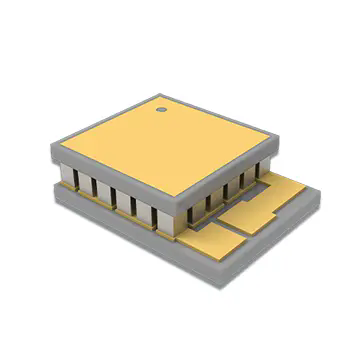
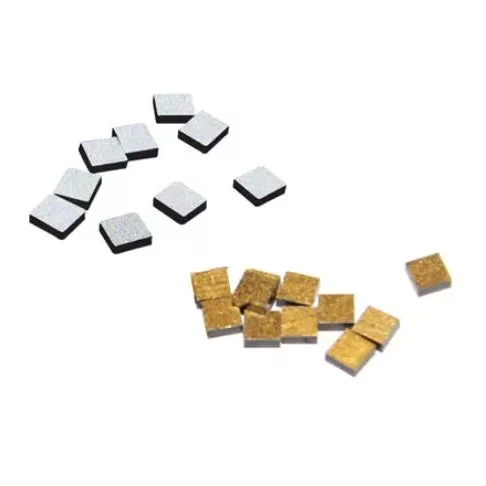
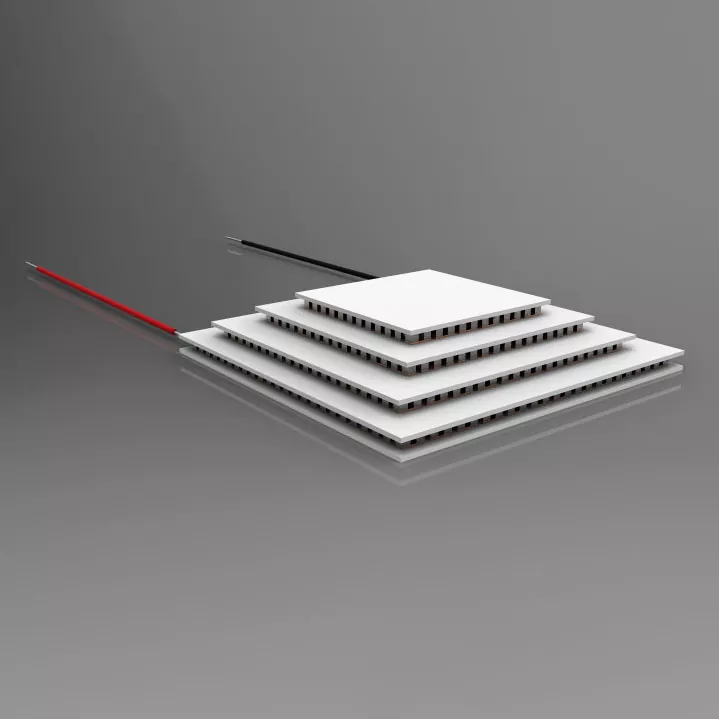
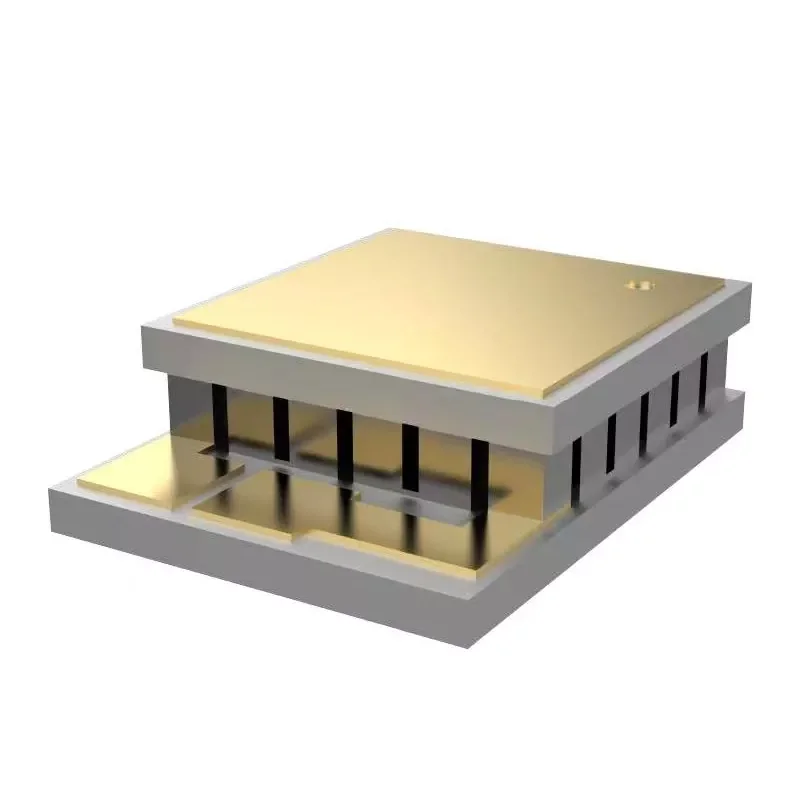
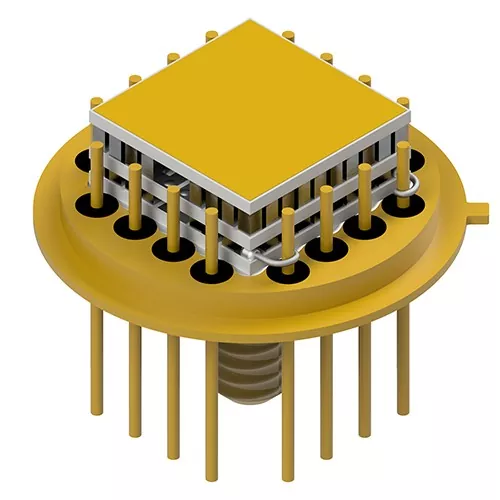
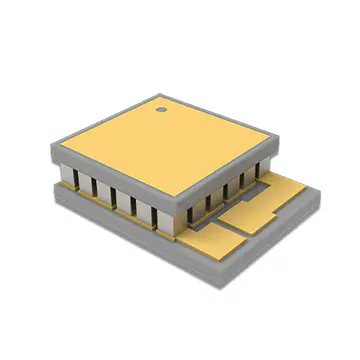
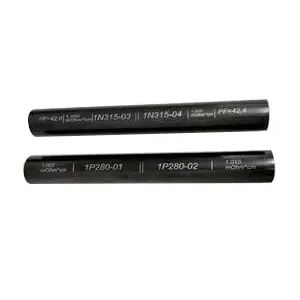
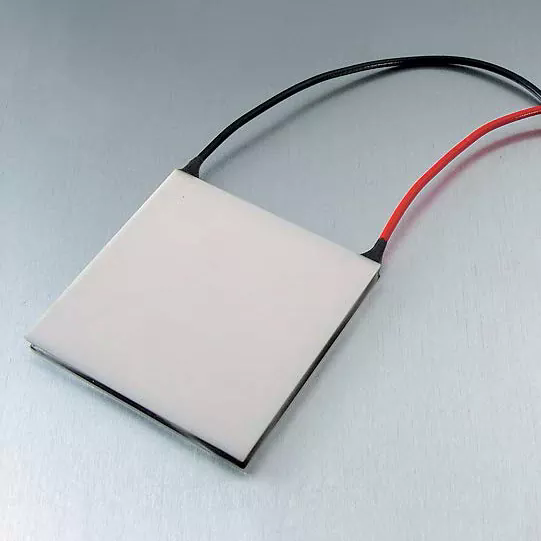
A Thermoelectric Cooler, also known as a Peltier module, is a solid-state heat pump that moves heat from one side of the device to the other when an electric current is applied. The module consists of an array of semiconductor pellets, typically bismuth telluride, sandwiched between two ceramic substrates. When current flows through the pellets, electrons absorb heat at one junction and release it at another. The side that absorbs heat becomes cold, and the side that releases heat becomes hot. There are no moving parts, no refrigerants, and no compressors. The module is compact, silent, and can be controlled with precision. The table below summarizes the basic operating characteristics of a Thermoelectric Cooler.
| Parameter | Description | Typical Value |
| Operating Principle | Peltier effect (heat pumping via current) | Solid-state, no moving parts |
| Cold Side | Absorbs heat from the load | Temperature below ambient |
| Hot Side | Releases heat to the environment | Temperature above ambient |
| Heat Pumped (Qc) | Cooling capacity | Depends on module size and current |
| Input Power (Pin) | Electrical power consumed | Depends on voltage and current |
| Heat Rejected (Qh) | Qc + Pin | Always greater than Qc |
| COP | Qc / Pin | Typically 0.3 - 0.7 |
At Fuzhou X-Meritan Technology Co., Ltd., our factory manufactures Thermoelectric Coolers for a wide range of cooling applications. We understand that the module is only one part of the system. The heat rejection on the hot side is equally important, and we work with our customers to ensure that the entire thermal system is designed for success.
The fundamental reason the hot side is the limiting factor is the first law of thermodynamics. A Thermoelectric Cooler does not destroy heat; it moves it. The heat absorbed on the cold side (Qc) plus the electrical power consumed by the module (Pin) must be rejected on the hot side (Qh). The relationship is simple: Qh = Qc + Pin. This means that the hot side always has more heat to reject than the cold side absorbs. In a typical module operating at a COP of 0.5, the heat rejected on the hot side is three times the cooling capacity. If the hot side cannot reject this heat, the temperature of the hot side rises. And as the hot side temperature rises, the temperature difference across the module increases, which reduces the cooling capacity and the efficiency of the module. The table below illustrates the thermal balance for a typical TEC.
| Parameter | Value | Note |
| Cooling Capacity (Qc) | 50 W | Heat absorbed on cold side |
| Input Power (Pin) | 100 W | Electrical power to module |
| Heat Rejected (Qh) | 150 W | Qc + Pin |
| COP | 0.5 | Qc / Pin |
| Heat Rejection Ratio | 3:1 | Qh / Qc |
At our factory, we help our customers understand this thermal balance. We provide detailed performance curves that show how cooling capacity changes with hot side temperature. We also provide guidance on heat sink sizing and fan selection to ensure that the hot side can reject the required heat. Our goal is to help our customers design a system that achieves the desired cold side temperature reliably.
When heat rejection on the hot side is insufficient, a cascade of negative effects occurs. The first effect is a rise in the hot side temperature. This reduces the temperature difference that the module can maintain, which means the cold side temperature rises. The second effect is a reduction in cooling capacity. As the hot side temperature rises, the module's ability to pump heat decreases. The third effect is an increase in power consumption. The module must work harder to maintain the cold side temperature, which increases the input power. The fourth effect is a reduction in reliability. High hot side temperatures accelerate the degradation of the module and the thermal interface materials. In extreme cases, the module can overheat and fail. The table below summarizes the effects of insufficient heat rejection.
| Effect | Cause | Consequence |
| Hot Side Temperature Rise | Insufficient heat sink or fan capacity | Reduced cooling performance |
| Cooling Capacity Drop | Increased temperature differential | Cold side cannot reach target temperature |
| Power Consumption Increase | Module works harder to compensate | Higher operating cost, more heat to reject |
| Module Degradation | Thermal stress on pellets and solder joints | Reduced life, premature failure |
| Thermal Interface Failure | High temperature degrades thermal grease | Increased thermal resistance, further performance loss |
At X-Meritan, we have seen many cases where a system failed not because the TEC was inadequate, but because the heat rejection was insufficient. We work with our customers to avoid these problems by providing complete thermal solutions, including heat sinks, fans, and thermal interface materials. Our engineering team can help you calculate the required heat rejection capacity and select the right components.
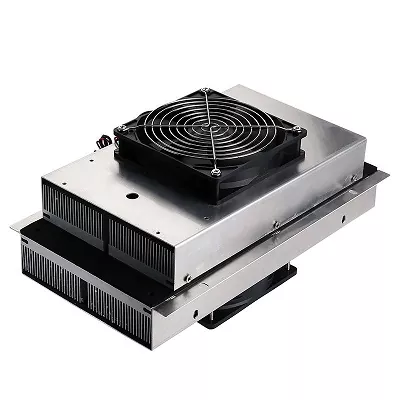
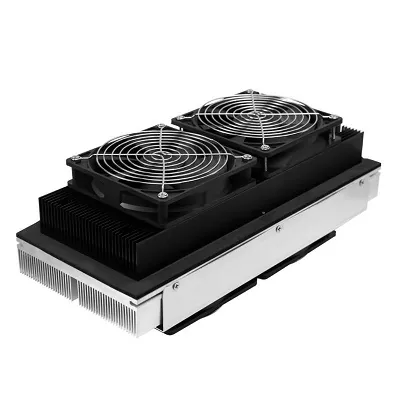
Specifying the right heat rejection system requires a systematic approach. The first step is to determine the total heat to be rejected (Qh). This is the sum of the cooling capacity (Qc) and the input power (Pin). The second step is to determine the maximum allowable hot side temperature. This is typically the ambient temperature plus the temperature rise across the heat sink. The third step is to select a heat sink with a thermal resistance that can achieve the required temperature rise at the available airflow. The fourth step is to select a fan that provides sufficient airflow and static pressure. The fifth step is to select a thermal interface material that minimizes the contact resistance between the module and the heat sink. The table below summarizes the specification process.
| Step | Action | Key Parameter |
| 1 | Determine total heat to reject | Qh = Qc + Pin |
| 2 | Determine allowable hot side temperature | Th = Tamb + ΔT |
| 3 | Select heat sink thermal resistance | Rth = ΔT / Qh |
| 4 | Select fan airflow and static pressure | CFM, Pa |
| 5 | Select thermal interface material | Thermal conductivity (W/m·K) |
At our factory, we provide complete thermal solutions for our Thermoelectric Coolers. We can supply heat sinks with optimized fin geometry, fans with low noise and high airflow, and thermal interface materials with high conductivity. Our engineering team can assist with the specification process and provide detailed thermal calculations for your application.
Evaluating a supplier of Thermoelectric Coolers and thermal management components requires a focus on product quality, thermal expertise, testing capability, and technical support. The supplier must have the capability to manufacture modules with consistent performance. They must have expertise in thermal system design. They must have the equipment to test modules and systems under load. And they must provide technical support to help you select the right components. The table below summarizes these evaluation criteria.
| Evaluation Criterion | What to Look For | Why It Matters |
| Module Quality | Consistent performance, reliability testing | Ensures the module meets specifications |
| Thermal Expertise | System design capability, thermal simulation | Ensures the complete system works |
| Testing Capability | Performance testing under load, life testing | Verifies performance and reliability |
| Technical Support | Application engineering, thermal calculations | Helps select the right components |
| Delivery Performance | On-time delivery record, inventory capability | Keeps your production line running |
At Fuzhou X-Meritan Technology Co., Ltd., our factory has been producing Thermoelectric Coolers and thermal solutions for over a decade. We have extensive experience in thermal system design and testing. We are ISO 9001 certified, and we maintain detailed records of all inspections. Our technical team is available to assist with thermal calculations and component selection. We invite you to evaluate us against these criteria and to consider us as your partner for thermoelectric cooling solutions.
The following table provides the key product parameters for our Thermoelectric Coolers. These modules are designed for cooling applications ranging from consumer products to medical devices. Our factory can also provide matched heat sinks, fans, and thermal interface materials.
| Parameter | Specification Range | Notes |
| Cooling Capacity (Qc) | 10 W - 200 W | Depends on module size and current |
| Max Temperature Differential (ΔTmax) | 60°C - 75°C | At Th = 27°C, no load |
| Rated Voltage | 5 V - 24 V | Custom voltages available |
| Rated Current | 2 A - 15 A | Depends on module size |
| COP | 0.3 - 0.7 | Depends on operating point |
| Module Size | 20 x 20 mm to 62 x 62 mm | Custom sizes available |
| Heat Sink Type | Aluminum extruded, skived, bonded | Selected for thermal resistance |
| Fan Type | Axial, blower | Selected for airflow and noise |
| Thermal Interface Material | Thermal grease, phase change, pad | Selected for conductivity and thickness |
| MOQ | 100 pieces | Negotiable for large orders |
| Lead Time | 2 - 4 weeks | Depends on quantity and customization |
At our factory, we manufacture our Thermoelectric Coolers to meet these specifications and more. We can customize the cooling capacity, voltage, current, and size to suit your specific requirements. We also provide complete thermal solutions, including heat sinks, fans, and thermal interface materials. Our goal is to provide our customers with reliable, high-performance cooling solutions.
Question 1: How much heat must be rejected on the hot side of a TEC?
Answer: The heat rejected on the hot side (Qh) is the sum of the cooling capacity (Qc) and the input power (Pin). For a module operating at a COP of 0.5, the heat rejected is three times the cooling capacity. This means that for every watt of cooling, three watts of heat must be removed. If the hot side cannot reject this heat, the module performance will degrade. Our engineering team can calculate the exact Qh for your application.
Question 2: What happens if I use a heat sink that is too small?
Answer: If the heat sink is too small, its thermal resistance will be too high, and the hot side temperature will rise. This reduces the cooling capacity and increases the power consumption. In extreme cases, the module may overheat and fail. Always size the heat sink based on the total heat to be rejected and the allowable temperature rise. Our factory can help you select the right heat sink for your application.
Question 3: Can I use a fan to improve heat rejection?
Answer: Yes, a fan can significantly improve heat rejection by increasing the airflow over the heat sink. The forced convection reduces the thermal resistance of the heat sink, which lowers the hot side temperature. The fan must be selected to provide sufficient airflow and static pressure for the heat sink design. We offer matched fan and heat sink combinations for our Thermoelectric Coolers.
Question 4: What is the best thermal interface material for a TEC?
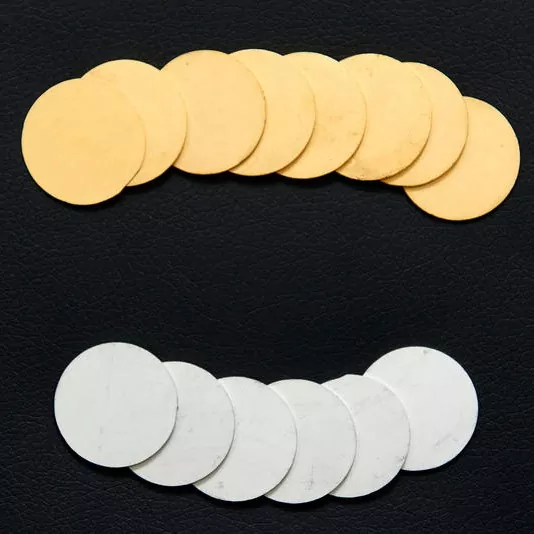
Answer: The best thermal interface material depends on the application. Thermal grease offers the lowest thermal resistance but can be messy and may dry out over time. Phase change materials offer good performance and are easier to apply. Thermal pads are convenient but have higher thermal resistance. For high-performance applications, we recommend thermal grease or a phase change material. Our technical team can advise on the best material for your application.
Question 5: How do I know if my heat rejection system is adequate?
Answer: To determine if your heat rejection system is adequate, measure the hot side temperature under full load and compare it to the design target. If the hot side temperature is higher than expected, the heat rejection is insufficient. You can also measure the cooling capacity and compare it to the performance curve. If the capacity is lower than expected, the hot side temperature is likely too high. Our engineering team can help you diagnose and resolve heat rejection problems.
Effective heat rejection on the hot side is essential for the performance and reliability of Thermoelectric Coolers. The hot side must reject the cooling capacity plus the input power, which is typically three times the cooling capacity. If the heat rejection is insufficient, the hot side temperature rises, the cooling capacity drops, the power consumption increases, and the module life is reduced. For buyers and engineers, understanding this thermal balance is the key to designing a successful thermoelectric cooling system. At Fuzhou X-Meritan Technology Co., Ltd., our factory has the expertise and the products to help you achieve effective heat rejection. We offer Thermoelectric Coolers, heat sinks, fans, and thermal interface materials, along with engineering support to ensure that your system performs as designed.
Whether you are designing a beverage cooler, a medical device, a laser module, or an electronics enclosure, we invite you to contact us to discuss your requirements. We can provide samples, thermal calculations, and customized solutions. Our commitment to quality and customer satisfaction has made us a trusted partner for businesses around the world.
Contact Fuzhou X-Meritan Technology Co., Ltd. today to discuss your Thermoelectric Cooler requirements and discover how our thermal solutions can improve your cooling performance.