An engineer designing a cooled enclosure for a CCD sensor needs to hold the sensor at -20°C while the ambient temperature is 25°C. A single-stage Thermoelectric Cooler can achieve a temperature differential of about 65°C to 70°C, which should be sufficient. But the engineer discovers that at the required cooling capacity, the single-stage unit cannot reach the target temperature without drawing more current than the power supply can deliver. The solution is a multi-stage Thermoelectric Cooler, where two or more stages are stacked to achieve a larger temperature differential at the same or lower input power. This scenario illustrates the core question in thermoelectric cooling: when does a multi-stage design make more sense than a single-stage unit? The answer depends on the required temperature differential, the cooling capacity, the available power, and the physical size constraints of the application.
This guide is written for buyers who need to select the right Thermoelectric Cooler for their application. We will explain the difference between single-stage and multi-stage designs, the relationship between temperature differential and cooling capacity, the applications where multi-stage cooling is the better choice, the trade-offs involved, and the criteria for evaluating a supplier. We will also provide detailed product parameters from our factory at Fuzhou X-Meritan Technology Co., Ltd. Whether you are cooling a laser diode, a laboratory instrument, a medical device, or an industrial enclosure, this guide will help you make an informed decision about the number of stages required.
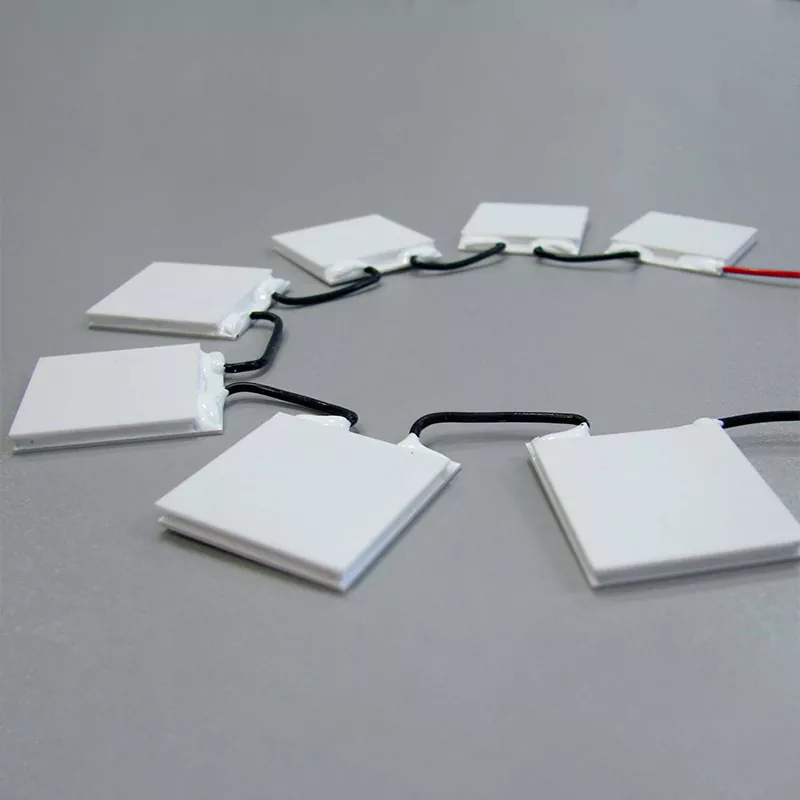
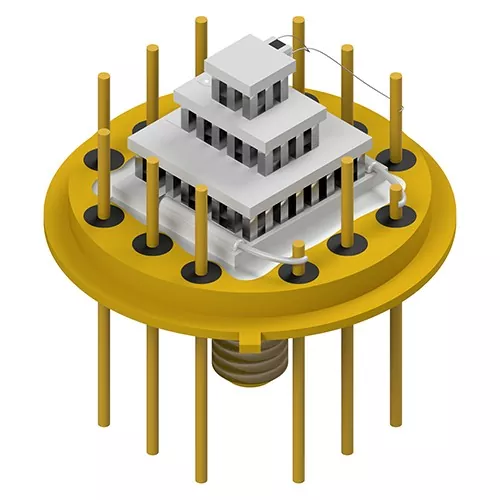
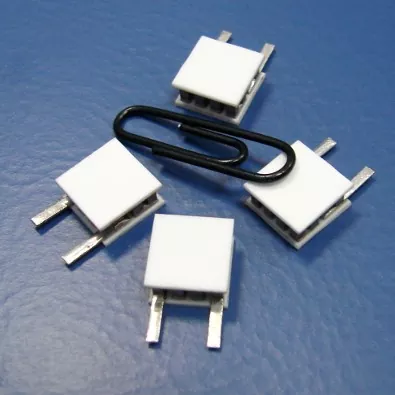
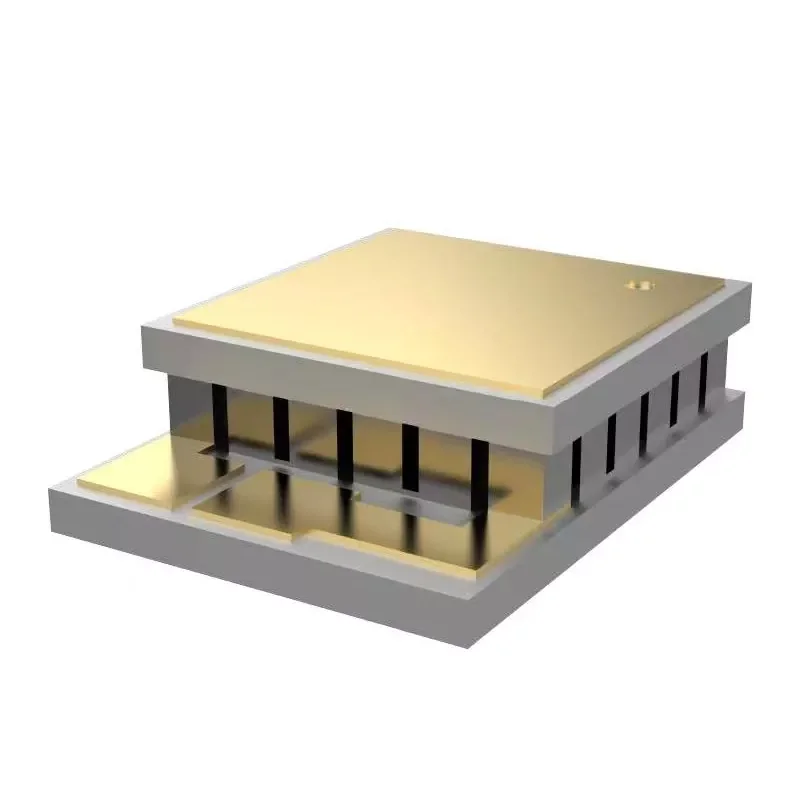
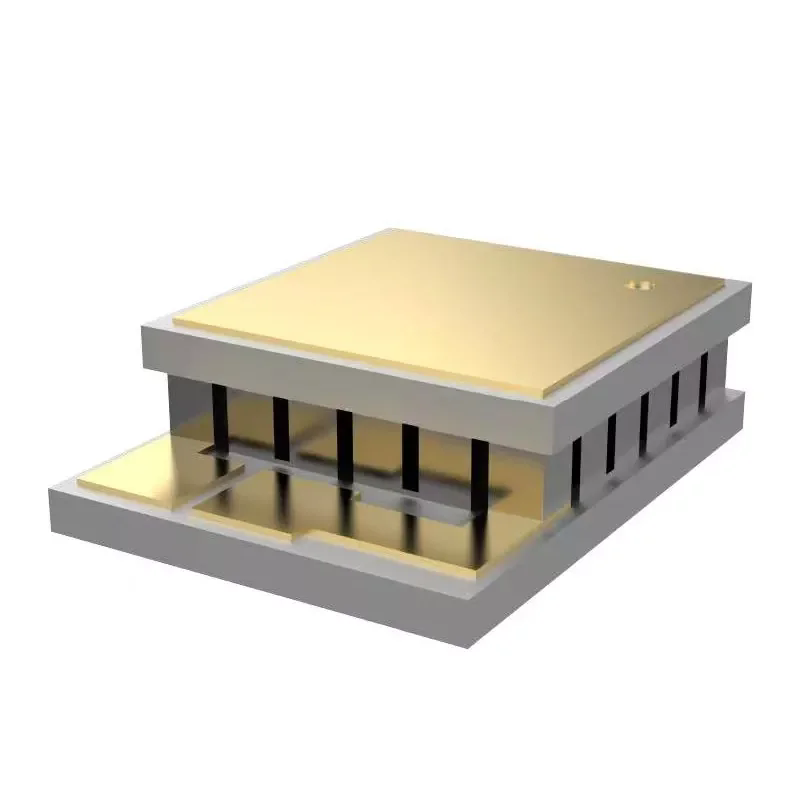
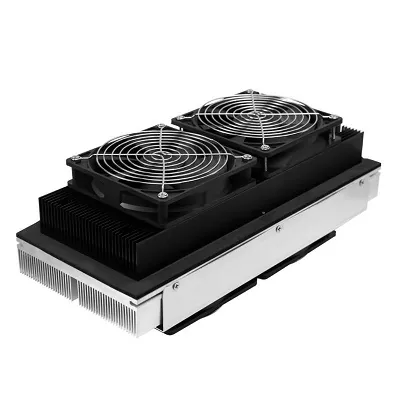
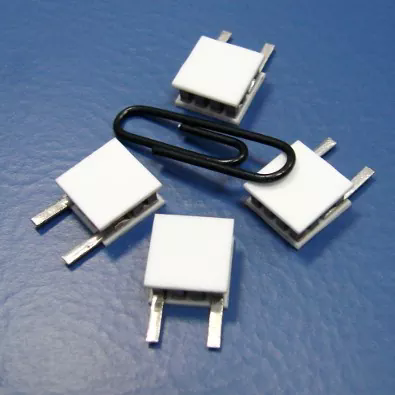
A Thermoelectric Cooler is a solid-state heat pump that uses the Peltier effect to transfer heat from one side of the device to the other when a direct current is applied. A single-stage Thermoelectric Cooler consists of one layer of semiconductor pellets sandwiched between two ceramic substrates. It can achieve a maximum temperature differential of about 65°C to 70°C, with the exact value depending on the material and the design. A multi-stage Thermoelectric Cooler consists of two or more single-stage units stacked on top of each other, with each stage removing heat from the previous stage. The stages are thermally in series but electrically in parallel or series, depending on the design. The stacked arrangement allows the cooler to achieve a larger temperature differential than a single stage. The table below summarizes the key differences.
| Feature | Single-Stage Thermoelectric Cooler | Multi-Stage Thermoelectric Cooler |
| Number of Stages | 1 | 2 to 6 |
| Maximum Temperature Differential | 65°C - 70°C | 90°C - 130°C |
| Cooling Capacity | High at low ΔT | Lower at high ΔT |
| Power Consumption | Lower for the same cooling capacity | Higher for the same cooling capacity |
| Size | Compact | Larger, taller |
| Cost | Lower | Higher |
At Fuzhou X-Meritan Technology Co., Ltd., our factory manufactures both single-stage and multi-stage Thermoelectric Coolers. We understand that the choice between the two is determined by the application's requirements for temperature differential, cooling capacity, and power. Our engineering team can help you evaluate which design is appropriate for your specific application.
The temperature differential, or ΔT, is the difference between the hot side and the cold side of the Thermoelectric Cooler. It is the primary parameter that determines the number of stages required. A single-stage cooler can achieve a maximum ΔT of about 65°C to 70°C, but the cooling capacity at that ΔT is zero. In practice, a single-stage cooler is used at ΔT values of 30°C to 50°C, where it can provide meaningful cooling capacity. If the application requires a ΔT greater than 60°C, a single-stage cooler may not be able to provide enough cooling capacity. A multi-stage cooler, with its stacked arrangement, can achieve a larger ΔT while still providing useful cooling capacity. The table below shows the relationship between ΔT and the number of stages.
| Required ΔT | Recommended Number of Stages | Typical Application |
| < 40°C | 1 | Consumer cooling, small enclosures |
| 40°C - 60°C | 1 (high-performance grade) | Industrial enclosures, electronics cooling |
| 60°C - 80°C | 2 | Laser diodes, laboratory instruments |
| 80°C - 100°C | 3 | CCD sensors, medical devices |
| 100°C - 130°C | 4 - 6 | Cryogenic applications, scientific instruments |
At our factory, we manufacture multi-stage Thermoelectric Coolers with 2 to 6 stages to achieve temperature differentials up to 130°C. We can help you calculate the required ΔT for your application and recommend the appropriate number of stages. Our goal is to provide our customers with the cooler that meets their temperature requirements without over-engineering.
Multi-stage cooling makes more sense than single-stage cooling in several specific scenarios. The first is when the required temperature differential exceeds the capability of a single-stage cooler. If the application requires a ΔT greater than 60°C, a multi-stage design is usually necessary. The second is when the cooling capacity at the required ΔT is insufficient with a single stage. A single-stage cooler may be able to reach a high ΔT, but with very low cooling capacity. If the application requires meaningful cooling at that ΔT, a multi-stage design is the better choice. The third is when the available power is limited. A multi-stage cooler can achieve a given ΔT with lower input power than a single-stage cooler operating at its limit. The fourth is when the physical size is not a constraint. Multi-stage coolers are larger and taller than single-stage units, so they are suitable for applications where space is available. The table below summarizes the scenarios where multi-stage cooling is preferred.
| Scenario | Why Multi-Stage Is Preferred | Typical Application |
| High ΔT Requirement | Single-stage cannot achieve the required ΔT | Laser diodes, CCD sensors |
| Cooling Capacity at High ΔT | Single-stage capacity is too low at high ΔT | Laboratory instruments, medical devices |
| Limited Power | Multi-stage achieves ΔT with lower power | Portable instruments, battery-powered devices |
| Space Available | Larger size is acceptable | Industrial enclosures, benchtop equipment |
At Fuzhou X-Meritan Technology Co., Ltd., our factory works with our customers to determine whether a multi-stage design is the right choice for their application. We can provide thermal modeling, performance curves, and application support. Our goal is to help our customers select the cooler that delivers the best performance for their specific requirements.
While multi-stage cooling offers significant advantages in high-ΔT applications, it also comes with trade-offs that buyers should understand. The first trade-off is efficiency. Multi-stage coolers are less efficient than single-stage coolers because each stage adds its own losses. The coefficient of performance (COP) decreases with the number of stages. The second trade-off is size and weight. Multi-stage coolers are larger and heavier than single-stage units, which can be a constraint in compact applications. The third trade-off is cost. Multi-stage coolers are more expensive to manufacture and therefore more expensive to purchase. The fourth trade-off is complexity. Multi-stage coolers require more careful thermal design, including proper heat sinking and insulation between stages. The table below summarizes these trade-offs.
| Trade-Off | Effect | Mitigation |
| Lower Efficiency | Higher power consumption for the same cooling | Optimize stage count and operating point |
| Larger Size and Weight | May not fit compact applications | Use custom designs, optimize stage thickness |
| Higher Cost | Higher initial investment | Evaluate total cost of ownership |
| Design Complexity | Requires careful thermal design | Work with an experienced supplier |
At our factory, we help our customers navigate these trade-offs by providing custom designs that optimize the number of stages, the stage thickness, and the thermal interface. We also provide thermal modeling to predict the performance of the multi-stage cooler in the actual application. Our goal is to help our customers achieve the required ΔT without unnecessary efficiency loss, size increase, or cost.
Matching the Thermoelectric Cooler to the application requires a systematic evaluation of the thermal requirements, the power available, the space constraints, and the environmental conditions. The first step is to define the required temperature differential and the cooling capacity at that ΔT. The second step is to determine the available power and the heat rejection capability. The third step is to evaluate the space available for the cooler and the heat sink. The fourth step is to consider the environmental conditions, such as ambient temperature and humidity. The fifth step is to select the cooler that meets these requirements with an adequate margin. The table below summarizes this matching process.
| Step | Action | Data Required |
| 1 | Define ΔT and cooling capacity | Thermal load, target temperature |
| 2 | Determine available power and heat rejection | Power supply, heat sink specification |
| 3 | Evaluate space constraints | Enclosure dimensions |
| 4 | Consider environmental conditions | Ambient temperature, humidity |
| 5 | Select cooler with margin | Performance curves, supplier data |
At X-Meritan, our factory provides performance curves and thermal modeling for our Thermoelectric Coolers. We can help you match the cooler to your application by simulating the thermal performance under your specific conditions. Our goal is to ensure that the cooler you select delivers the required performance in the field.
Evaluating a supplier of Thermoelectric Coolers requires a focus on design capability, manufacturing quality, performance data, and technical support. The supplier must have the capability to design single-stage and multi-stage coolers to meet specific requirements. They must manufacture to high standards of quality, with reliable materials and processes. They must provide accurate performance data, including cooling capacity, ΔT, and power consumption. And they must provide technical support to help you select and integrate the cooler. The table below summarizes the evaluation criteria.
| Evaluation Criterion | What to Look For | Why It Matters |
| Design Capability | Custom single-stage and multi-stage designs | Ensures the cooler meets the application |
| Manufacturing Quality | Certified materials, controlled processes | Ensures reliability and performance |
| Performance Data | Cooling capacity curves, ΔT vs. current | Enables accurate selection |
| Technical Support | Thermal modeling, application engineering | Helps integrate the cooler |
| Project Experience | References in relevant industries | Demonstrates capability and reliability |
At our factory, we have been producing Thermoelectric Coolers for over a decade. We offer custom designs for single-stage and multi-stage coolers, and we provide detailed performance data and thermal modeling. Our technical team is available to assist with selection and integration. We invite you to evaluate us against these criteria and to consider us as your partner for Thermoelectric Coolers.
The following table provides the key product parameters for our Thermoelectric Coolers. These coolers are available in single-stage and multi-stage configurations to suit different temperature differential requirements. Our factory can also produce custom coolers to meet specific requirements.
| Parameter | Single-Stage | Multi-Stage |
| Number of Stages | 1 | 2 - 6 |
| Maximum ΔT (Th=27°C) | 65°C - 70°C | 90°C - 130°C |
| Cooling Capacity | Up to 200W | Up to 50W (at high ΔT) |
| Input Voltage | 12V - 48V DC | 12V - 48V DC |
| Maximum Current | Up to 10A | Up to 15A |
| Dimensions | Compact | Larger (stacked) |
| Operating Temperature | -40°C to +80°C | -40°C to +80°C |
| MOQ | 10 pieces | 10 pieces |
| Lead Time | 2 - 4 weeks | 3 - 6 weeks |
At our factory, we manufacture our Thermoelectric Coolers to meet these specifications and more. We can customize the number of stages, the cooling capacity, the voltage, and the dimensions to suit your specific requirements. Our quality control system includes inspection of raw materials, in-process inspection, and final inspection before shipment. Our goal is to provide our customers with high-quality Thermoelectric Coolers that meet their performance requirements.
Question 1: What is the maximum temperature differential a single-stage Thermoelectric Cooler can achieve?
Answer: A single-stage Thermoelectric Cooler can achieve a maximum temperature differential of about 65°C to 70°C under ideal conditions, with the hot side at 27°C and zero cooling load. In practice, the achievable ΔT is lower when the cooler is providing useful cooling capacity. For applications requiring a ΔT greater than 60°C with meaningful cooling capacity, a multi-stage design is usually necessary.
Question 2: How many stages do I need for my application?
Answer: The number of stages depends on the required temperature differential and the cooling capacity at that ΔT. As a general guideline, one stage is sufficient for ΔT up to 40°C, two stages for 60°C to 80°C, three stages for 80°C to 100°C, and four to six stages for 100°C to 130°C. Our engineering team can calculate the exact number of stages required for your specific thermal load and ambient conditions.
Question 3: Are multi-stage Thermoelectric Coolers less efficient than single-stage?
Answer: Yes, multi-stage coolers are less efficient because each stage adds its own losses. The coefficient of performance (COP) decreases with the number of stages. However, in applications that require a high ΔT, the multi-stage cooler may still be the only practical option. The efficiency trade-off is usually justified by the ability to reach the required temperature.
Question 4: Can multi-stage Thermoelectric Coolers be used in compact applications?
Answer: Multi-stage coolers are larger and taller than single-stage units, which can be a constraint in compact applications. However, custom designs with optimized stage thickness and integrated heat sinks can reduce the overall size. Our factory can work with you to develop a multi-stage cooler that fits your space constraints.
Question 5: How do I evaluate the performance of a multi-stage Thermoelectric Cooler?
Answer: The performance of a multi-stage Thermoelectric Cooler is evaluated using its cooling capacity curves, which show the cooling capacity as a function of ΔT at different input currents. You should also consider the COP, the power consumption, and the heat rejection requirement. Our factory provides detailed performance data and thermal modeling to help you evaluate the cooler for your specific application.
Multi-stage Thermoelectric Coolers make more sense than single-stage units when the application requires a temperature differential greater than 60°C, when meaningful cooling capacity is needed at high ΔT, when the available power is limited, or when the physical size is not a constraint. The trade-offs are lower efficiency, larger size, higher cost, and greater design complexity. By evaluating the thermal requirements, the power available, the space constraints, and the environmental conditions, buyers can select the right number of stages for their application. At Fuzhou X-Meritan Technology Co., Ltd., our factory manufactures single-stage and multi-stage Thermoelectric Coolers to meet the most demanding requirements. We provide performance data, thermal modeling, and application support to help our customers select the right cooler.
Whether you are cooling a laser diode, a laboratory instrument, a medical device, or an industrial enclosure, we invite you to contact us to discuss your requirements. We can provide samples, technical data, and customized solutions. Our commitment to quality and customer satisfaction has made us a trusted partner for thermoelectric cooling projects around the world.
Contact Fuzhou X-Meritan Technology Co., Ltd. today to discuss your Thermoelectric Cooler requirements and discover how our single-stage and multi-stage designs can meet your thermal management needs.